The Rise of EV Charging in Apartment Communities
Apartments with EV charging are becoming one of the most sought-after amenities in rental communities. Key factors to consider when looking for an EV-friendly apartment include:
Quick Guide to Finding Apartments with EV Charging:
- Search online rental platforms - Use filters for "EV Charging" to find properties with on-site stations
- Look for Level 2 chargers - Most common in apartments, delivering 15-40 miles of range per hour
- Ask about access and billing - Some communities include charging as an amenity, others charge separately
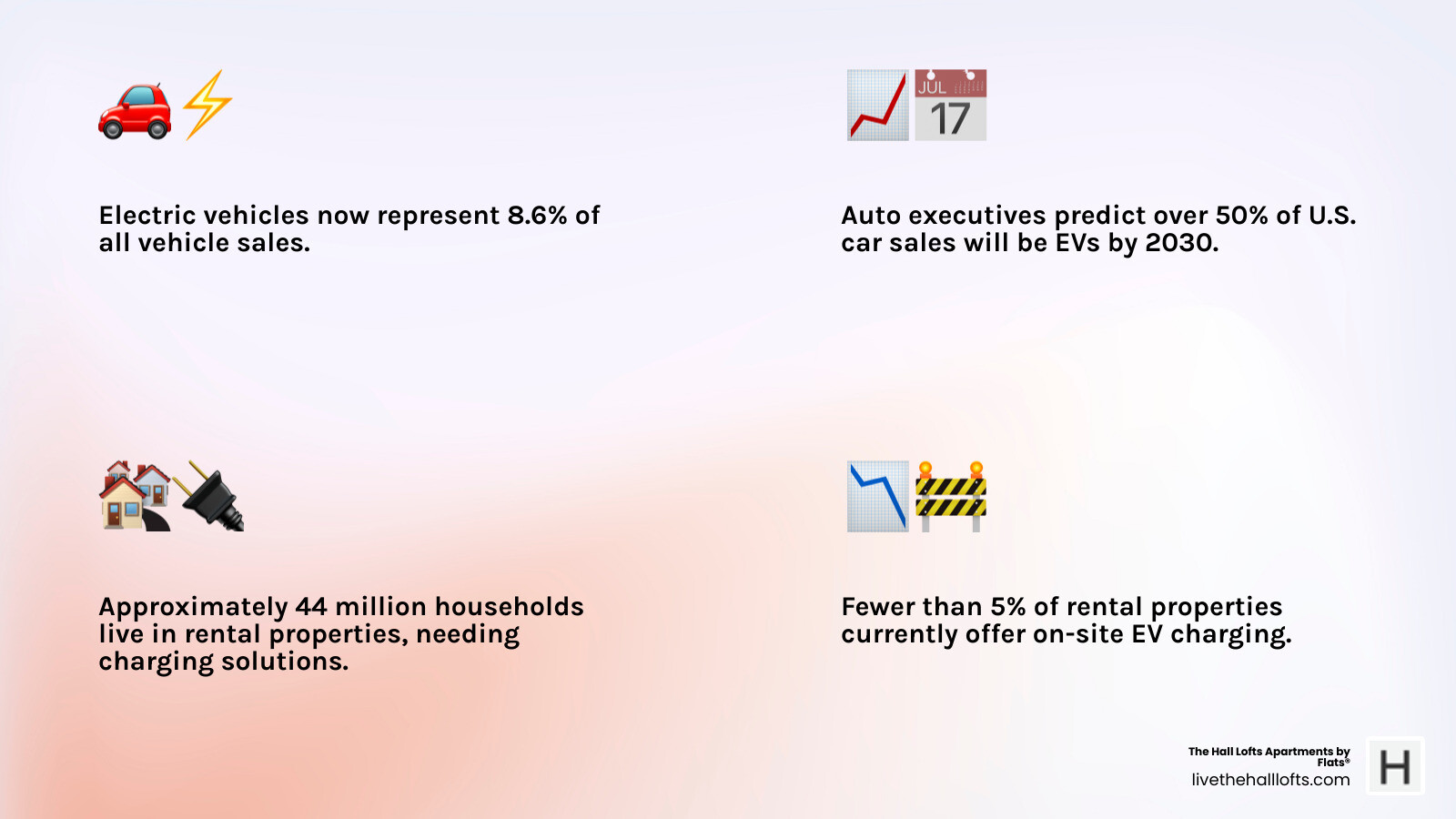
- Check availability - Fewer than 5% of rental properties currently offer EV charging
- Consider new construction - Modern developments often include EV infrastructure from the start
Electric vehicles now represent 8.6% of all vehicle sales, and that number keeps climbing. With approximately 44 million households living in rental properties, the math is simple: charging needs to become accessible where people live.
Right now, apartment EV charging is still in its early stages. But the gap between demand and availability is closing fast. Property managers recognize that 27% of tenants are interested in EV charging, making it a competitive advantage in attracting residents who value sustainability and convenience.
The transition from gas to electric isn't just about the vehicles themselves. It's about rethinking where and how charging happens. For apartment dwellers, that means finding communities that have already made the investment in charging infrastructure, or advocating for it in current buildings.
Decoding EV Charging: Levels, Access, and On-Site Benefits
As electric vehicles become a more common sight, understanding how they refuel is key to a seamless ownership experience. For those living in apartments, this understanding takes on even greater importance. Convenience, reliability, and security are all factors when it comes to powering an EV. It is helpful to break down the different types of EV chargers and why having them at a residential property is a game-changer.
Understanding the Types of EV Chargers
EV charging is generally categorized into three main levels, each offering different speeds and requiring different equipment.
Level 1 Charging: Level 1 is equivalent to plugging an EV into a standard wall outlet. This option uses a 120V AC outlet and delivers about 1 kWh of power. While it's universally accessible and requires no special installation, it's also the slowest option. Charging an EV battery from empty could take over 50 hours, making it less practical for daily use, especially for longer commutes. It is often best for topping off or for those who drive very few miles each day.
Level 2 Charging: This is the sweet spot for apartment living. Level 2 chargers use a 240V AC outlet, similar to what a clothes dryer or electric oven uses. They deliver significantly more power than Level 1, typically adding 15 to 40 miles of range per hour. This means a full charge usually takes between 4 to 10 hours, making it perfect for overnight charging. Most properties find that installing Level 2 EV chargers provides a great amenity to residents. They strike an excellent balance between installation complexity and charging speed, which is why they are often seen in multi-family residential buildings.
DC Fast Charging (Level 3): Also known as Level 3 charging, this is the fastest option available. DC Fast Chargers use direct current (DC) power and can charge an EV to 80% capacity in as little as 30 minutes. These are typically found at commercial charging stations, along highways, or in public areas. Due to their high power requirements and significant installation needs, they are the rarest type of charger to find in apartment settings. While incredibly convenient for long trips, they are generally overkill for daily home charging.
Here's a quick comparison of the charging levels:
| Charging Level | Power Output | Charging Speed (Miles/Hr) | Common Location | Hardware Requirements |
|---|---|---|---|---|
| Level 1 | 1.4 - 2.4 kW | 2-5 | Home, workplace, apartment | Standard 120V outlet |
| Level 2 | 3.3 - 19.2 kW | 15-40 | Home, workplace, apartment, public | 240V outlet, dedicated charging station |
| DC Fast Charge | 50 - 350+ kW | 100-1000+ | Public, highway rest stops, commercial | Specialized high-power DC charging station |
The Advantages of Living in Apartments with EV Charging
The ability to wake up every morning to a "full tank" is the primary benefit of living in apartments with EV charging. Residents can simply plug in their vehicle overnight and start the day with a fully charged battery.
- Overnight Charging & Eliminating Range Anxiety: The biggest perk is the sheer convenience of charging while sleeping. This removes the need to scout for public charging stations or worry about making it to the next destination. This eliminates "range anxiety" – the fear of running out of battery before reaching a charging point.
- Dedicated Parking Spaces: Many apartment communities that offer EV charging also provide dedicated parking spaces reserved for electric car owners. This means residents get not just a charger, but a guaranteed spot to power up.
- Improved Security Over Public Stations: Charging at an apartment building, especially in a secure parking garage or well-lit lot, offers a level of security and peace of mind that public charging stations might not. A vehicle can be left plugged in without concern.
- Supporting a Sustainable Lifestyle: For many, choosing an EV is about more than just transportation; it's a commitment to a greener lifestyle. Having on-site charging reinforces this commitment, making it easier to reduce one's carbon footprint and contribute to cleaner air in the community.
How to Find Apartments with EV Charging
Finding the perfect apartment that also accommodates an electric vehicle is entirely achievable with a strategic approach. As the demand for EV charging grows, so do the resources available to help in the search.
Using Online Search Tools and Apps
The best way to find apartments with EV charging is to start online. Rental listing websites have evolved to include advanced filters that make the process much easier.
- Apartment Listing Websites: Major apartment search platforms allow users to filter properties by specific amenities, and "EV Charging" or "Electric Vehicle Charging Stations" is becoming a standard option. For instance, when looking in Minneapolis, these filters can narrow down the search to communities that explicitly offer this amenity in areas like Downtown Minneapolis or the North Loop.
- Checking New Construction Communities: Many new apartment developments are incorporating EV charging as a standard amenity from the ground up. These modern buildings often boast state-of-the-art infrastructure, making them prime candidates for on-site charging. New projects in Minneapolis's vibrant North Loop often lead the way in offering cutting-edge features.
- Charging Station Locator Apps: Beyond rental sites, specialized apps can pinpoint EV charging stations. These apps often show public and semi-public chargers, and sometimes even those within residential communities. While these primarily show public access, they can sometimes indicate multi-family buildings that have existing chargers, which could be a starting point for inquiries.
When using these tools, it is recommended to be proactive. It can be helpful to call apartment complexes directly, even if the website doesn't explicitly list EV charging. Sometimes, it's an amenity that's available but not prominently advertised, or perhaps there's a new installation underway.

Advocating for EV Charging in a Community
What if a desirable apartment doesn't currently offer EV charging? Or what if a resident wishes for this essential amenity in their current building? It is possible to advocate for change. Property managers and landlords are increasingly aware of the demand, but a concerted effort from residents can often accelerate adoption.
- Communicating with Property Management: The first step is always open dialogue. Residents can reach out to their property manager or landlord to express interest in EV charging. It helps to be informed and polite, presenting the request as a valuable improvement to the community.
- Highlighting Tenant Demand: Many renters are interested in this amenity. Research shows that a significant portion of renters—27% of tenants are interested in EV charging. Pointing this out demonstrates a clear market need. Property managers are motivated to attract and retain residents, and meeting this demand can give them a competitive edge.
- Presenting Benefits for the Property: It's not just about the residents; it's about the property's value. It can be explained how installing EV charging can increase property value, attract new environmentally conscious tenants, and even help the building meet sustainability goals. It positions the property as forward-thinking and modern.
- Discussing Community Petitions or Surveys: Organizing a petition or conducting an informal survey among fellow residents who own or plan to purchase EVs can be very impactful. A collective voice carries more weight than individual requests. This shows property management a clear, quantifiable interest from their resident base. It is even possible to present information on the value of such an amenity based on case studies from other rental properties that have successfully implemented EV charging.
By educating and collaborating with property management, residents can help shape their communities to be more EV-friendly, making apartment living even better for everyone.
The Property Management Perspective and Future Outlook
From the other side of the fence, property managers and landlords have strong motivations for providing EV charging. It's not just about being "green," but also a strategic business decision that aligns with evolving market and future trends.
- Attracting and Retaining Residents: In a competitive rental market like Minneapolis, offering desirable amenities is crucial. EV charging is quickly becoming a must-have for a growing segment of renters. Properties that offer it gain a significant competitive edge, attracting new residents and improving retention rates for existing ones. Residents who can charge their EVs conveniently at home are more likely to stay.
- Increasing Property Value: Investing in EV infrastructure is an investment in the property's future. It improves the overall value of the building and future-proofs it against changing market demands. It also positions the property as modern and desirable.
- Meeting Sustainability Goals: Many property owners and management companies have corporate sustainability initiatives. Providing EV charging helps them meet these goals, broadcasting a commitment to environmental responsibility. This can also improve green building certification rankings, which is an increasingly important factor for many organizations.
Future Trends for EV Charging in Multi-Family Buildings
The landscape of EV charging in multi-family buildings is rapidly evolving, with exciting innovations and a clear direction towards greater integration and accessibility.
- EV-Ready New Construction: New apartment buildings are increasingly designed with EV charging infrastructure in mind. This means designated EV parking spots, pre-wired electrical conduits, and sufficient power capacity to support numerous chargers. This proactive approach makes it much easier and more efficient to install chargers from day one.
- Smart Charging Technology: The next generation of EV chargers will be even smarter. Features to expect include remote monitoring and control via apps, scheduling charging times to take advantage of off-peak electricity rates, and detailed usage reports. This technology makes managing charging more efficient for both residents and property managers.
- Power-Sharing and Load Management: A challenge in older buildings is limited electrical capacity. New technologies like power-sharing and load management are addressing this. These systems intelligently distribute available power among multiple chargers, ensuring that all connected EVs get a charge without overloading the building's electrical grid. This means more chargers can be installed on existing infrastructure, optimizing the setup.
- Integration with Building Energy Systems: Looking ahead, EV charging will likely integrate more seamlessly with a building's overall energy management system, potentially even interacting with solar panels or battery storage to further optimize energy usage.
The momentum behind EVs is undeniable. Projections suggest that more than half of new-vehicle sales are expected to be all-electric by 2030. This rapid shift means that apartments with EV charging will not just be a desirable amenity, but an expected one. Property developers and managers who accept this trend now are setting themselves up for long-term success.
Frequently Asked Questions about Apartment EV Charging
Navigating EV charging in an apartment setting can bring up a few questions. Here are some of the most common inquiries.
How do billing and access for apartment EV chargers typically work?
The way residents pay for and access EV chargers in apartment communities can vary, so it's always important to get the specifics from property management.
- Pay-per-use via Mobile App: Many modern charging stations operate through a dedicated mobile app. A user downloads the app, links a payment method, and then uses it to start and stop charging sessions. The app typically shows the billing structure, such as per kilowatt-hour (kWh) or per minute/hour.
- Subscription-based Models: Some communities might offer a monthly subscription for unlimited or a set amount of charging. This can be convenient for heavy users, providing a predictable billing arrangement.
- Inclusion in Monthly Rent: In some cases, especially in more luxurious or newly constructed properties, the use of EV charging might be bundled into the monthly rent. This simplifies things, as there are no separate payments to manage.
- RFID Card or Fob for Access Control: For security and tracking, some systems use RFID cards or fobs. One might be issued upon moving in, or it could be available from the property office. This ensures only authorized residents can use the chargers.
- Community Rules and Etiquette: Regardless of the billing model, there are usually community rules in place. These often cover things like time limits for charging, moving a car once it's fully charged, and general respect for shared resources.
What are some key considerations with shared charging stations?
Shared charging stations are a fantastic amenity, but they do come with their own set of considerations to ensure a smooth experience for everyone.
- Limited Availability: While the demand for EV charging is high, the supply in apartment communities is still catching up. This can mean that the number of charging stations might be limited, especially during peak hours.
- Potential for Wait Times: If there are more EVs than available chargers, occasional wait times might be experienced. This is where good planning and communication with neighbors come in handy.
- Scheduling Systems: Some communities implement scheduling systems, either through the charging network's app or a separate booking platform. This helps manage demand and ensures everyone gets a fair turn.
- Community Charging Etiquette: It's essential for residents to be good neighbors. This means moving a vehicle once it's fully charged (or by a designated time), not hogging a spot longer than necessary, and being mindful of others who need to charge.
- Understanding the Number of Stations per Resident: When evaluating an apartment, it's helpful to ask about the ratio of charging stations to EV-owning residents. A higher ratio generally means less competition for a spot.
What should be asked about a property's EV charging facilities?
When on the hunt for apartments with EV charging, asking the right questions can prevent headaches down the road. Here is what is recommended to inquire about:
- Charger Type and Speed (Level 2): Confirm that the chargers are Level 2, as these are the most practical for apartment living. It is a good idea to ask about the specific power output (e.g., 9.6 kW, 11.5 kW), as higher numbers mean faster charging.
- Number of Stations Available: How many charging stations are there in total? And how many are typically available during the times one would most likely want to charge (e.g., overnight, after work)?
- Billing Structure: This is crucial. Is charging included in the rent? Is it pay-per-use, and what is the billing method? Are there any subscription options?
- Access Method: How are the chargers accessed? Is it an app, an RFID card, or simply plug-and-play?
- Maintenance and Support Plan: What happens if a charger isn't working? Who is the contact, and what's the typical response time? Is there 24/7 support available, especially for the charging network?
- Dedicated Parking: Are the EV charging spots dedicated, or are they first-come, first-served? Is there a designated parking area for EVs?
By asking these questions, a prospective resident can ensure that the EV charging facilities at an apartment truly meet their needs and expectations.
Conclusion: Powering Your Next Move
The journey of electric vehicle ownership is an exciting one, and for those living in apartments, having accessible and reliable charging is paramount. Apartments with EV charging are no longer a futuristic dream but a growing reality, driven by increasing EV adoption and the collective demand of renters.
From understanding the different charging levels to knowing how to find and advocate for these crucial amenities, this guide can empower an apartment search. The convenience of overnight charging, the peace of mind that comes with dedicated parking, and the ability to seamlessly integrate a sustainable lifestyle into urban living are invaluable.
The Hall Lofts understands the evolving needs of modern urban dwellers. Located in Minneapolis's historic North Loop, its renovated warehouse apartments blend industrial charm with contemporary amenities, creating a unique living experience. While the community is designed to provide a rich living experience, including pet-friendly spaces and in-unit laundry, all prospective residents are encouraged to inquire about specific EV charging options as they become available and integrated into the evolving infrastructure.
The future of urban living is electric. Prospective residents are invited to learn more about the commitment to modern living and explore what's next for the community.
Ready to find a new home in a vibrant, forward-thinking community? Explore new apartments in Minneapolis and find how The Hall Lofts combines historical character with the amenities needed today.