

Why Apartments with Bike Storage Are Becoming Essential for Urban Renters
Apartments with bike storage are in high demand among urban renters who commute, ride recreationally, or simply want a smarter way to live in the city. Here is a look at what to expect from bike-friendly apartments:
What bike-friendly apartments typically offer:
- Secure communal bike rooms with controlled access and surveillance
- Individual lockers or padded racks for protected, dedicated storage
- Repair stations and tool libraries for on-site maintenance
- Bike wash stations with hoses and floor drains
- High Bike Score locations with trail and transit access
- In-unit storage options like wall-mounted hooks or ceiling hoists
Bike culture in U.S. cities has grown fast. National bicycle ridership jumped 40% between 2008 and 2017 according to data from PeopleForBikes, and today roughly 870,000 people commute by bike daily. That shift has pushed bike storage from a rare bonus to a must-have amenity.
The numbers back it up. Over 71% of architects, developers, and property managers now rank secure bike storage as the top convenience service in apartment buildings — up from 66.5% just two years earlier.
Simply put: if a bike is part of daily life, the apartment needs to support it.
The challenge is knowing what separates genuinely bike-friendly buildings from those that just have a rusty rack in the basement. This guide breaks it all down.
The Rise of Apartments with Bike Storage in Urban Centers
The landscape of urban living is shifting. In major hubs like Minneapolis, the preference for apartments with bike storage has reached a record high. Recent industry data indicates that 71.6% of property professionals now view secure bike facilities as the most critical convenience service offered to residents. This represents a significant jump from 66.5% just a few years ago, signaling that the "bike room" has moved from a basement afterthought to a primary building feature.
This trend is fueled by a massive increase in cycling participation. National ridership grew by 40% over a decade, with nearly 870,000 people now reporting a bicycle as their primary commuting vehicle. Many of these riders are young urban residents who prioritize sustainability and health. By choosing a home that accommodates a bicycle, residents can significantly reduce their carbon footprint and embrace a multi-mode transportation lifestyle.
Sustainability goals are also driving this change from the top down. Many modern developments seek LEED certification, which awards credits for providing robust bicycle storage and changing facilities. This alignment between resident demand and environmental standards has transformed urban mobility, making it easier than ever to live a low-car or car-free life in the heart of the city.
Essential Amenities for Modern Cyclists
Modern apartments with bike storage go far beyond providing a simple metal rack. To truly serve the needs of a daily commuter or a weekend trail enthusiast, a building must offer a comprehensive suite of maintenance and convenience features. These amenities do more than just store equipment; they foster a sense of community among residents who share a passion for active living.
Specialized Features in Apartments with Bike Storage
A high-end bike facility functions like a professional-grade workshop. Residents often look for the following specialized features:
- Repair Stands and Tool Libraries: Dedicated workstations equipped with wrenches, hex keys, and screwdrivers allow for quick adjustments or more involved repairs without needing to own a full set of personal tools.
- Air Compressors: Maintaining proper tire pressure is essential for safety and speed. On-site compressors or high-quality floor pumps make it easy to top off tires before a morning commute.
- Wash Stations: Riding through urban environments or on trails can lead to a buildup of grime. Dedicated wash bays with hoses, specialized cleaning solutions, and proper floor drains prevent residents from having to clean their bikes in their bathtubs.
- Mudrooms and Bottle Filling Stations: Transition spaces near the bike entrance allow riders to shed wet gear or refill water bottles before heading up to their units.
Security and Access Control for Resident Peace of Mind
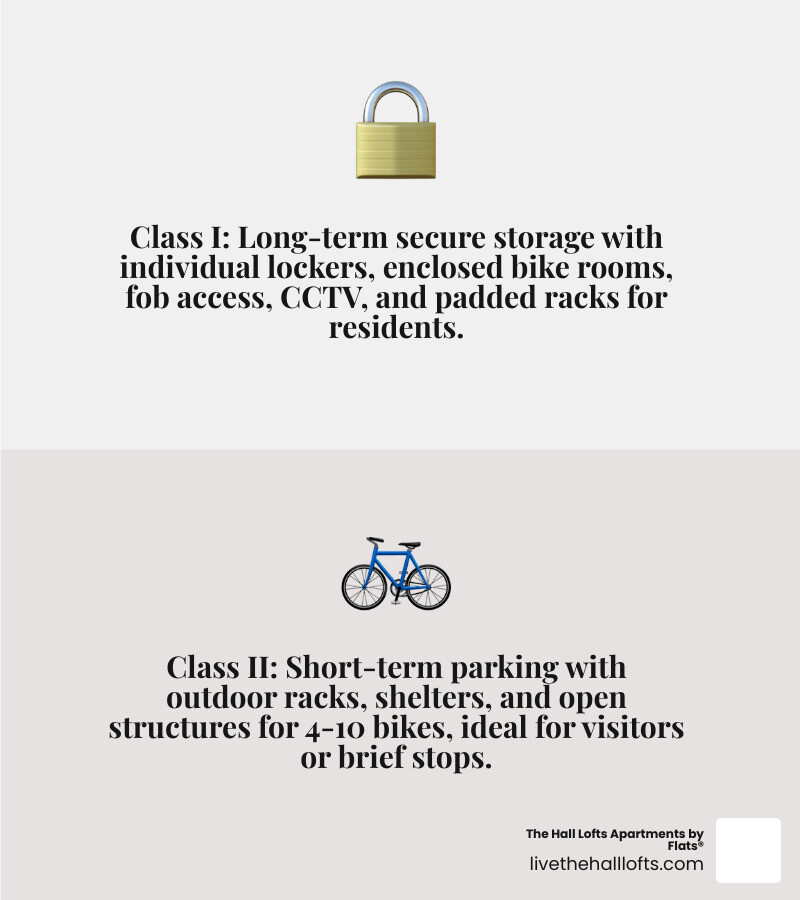
For many cyclists, a bike is a significant investment. Security is the number one concern when using communal storage areas. Effective theft prevention requires multiple layers of protection. Managed entry systems, such as fob or app-based access, ensure that only residents can enter the storage room.
Surveillance is another critical component. 24/7 CCTV monitoring acts as a deterrent and provides a record of activity. Within the storage room, individual lockers or cages offer an extra level of security for high-value equipment. Property managers often recommend double-locking strategies—using both a U-lock and a cable lock—even within a secured room to maximize protection. These controlled-access environments provide peace of mind that a bicycle will be exactly where it was left.
Maximizing Space: In-Unit and Communal Storage Solutions
Space optimization is a hallmark of intelligent urban design. In apartments with bike storage, the goal is to accommodate as many bicycles as possible without creating a cluttered or inaccessible environment.
Creative In-Unit Apartments with Bike Storage Options
When communal space is full or if a resident prefers to keep their bike inside their home, creative storage solutions are necessary. Many modern apartments feature high ceilings or open layouts that lend themselves to vertical storage.
- Wall-Mounted Hooks and Zero-Gravity Racks: These systems lift the bike off the floor, utilizing vertical wall space to keep walkways clear.
- Tension Rods and Ceiling Hoists: For those who cannot drill into walls, tension rods provide a secure, floor-to-ceiling mounting point. Ceiling hoists are excellent for long-term storage of bikes not used daily.
- Furniture Integration: Some specialized cabinets and shelving units are designed to dock a bicycle, blending the equipment into the home's decor.
- Folding Bikes: For smaller studio layouts, folding bikes can be tucked away in closets or under furniture.
Communal Room Design and Climate Control
The best communal bike rooms are designed with the bicycle's longevity in mind. Climate control is a major trend; heated and ventilated rooms prevent rust and keep rubber components from degrading in extreme temperatures.
High-density racks, such as two-tier systems or staggered vertical mounts, allow for efficient use of square footage. These rooms are often equipped with floor drains to manage snow melt or rainwater, and padded racks to prevent scratches on delicate frames. Advanced facilities may even include e-bike charging stations, recognizing the growing popularity of electric-assist bicycles in hilly or high-traffic urban areas.
Evaluating Bike-Friendly Features During an Apartment Search
Finding the right apartments with bike storage requires looking beyond the building's walls. The surrounding infrastructure is just as important as the storage room itself. A high Bike Score—a metric that measures how easy it is to get around by bicycle—is a strong indicator of a neighborhood's suitability for cyclists.
Proximity to established paths, such as the Cedar Lake Trail in Minneapolis, offers a seamless connection to the rest of the city. Transit-oriented developments often place bike-friendly apartments near light rail or bus lines, facilitating a multi-modal commute where a bike covers the "last mile" of the journey.
Questions to Ask Management About Apartments with Bike Storage
When touring a potential new home, it is important to dig into the details of the bike amenities. Consider asking the following:
- What is the total storage capacity? Is there a waitlist for a spot in the secure room?
- Are there additional fees? Some buildings include storage in the rent, while others charge a monthly fee or a one-time deposit for a key fob.
- What are the access hours? Ensure the bike room is accessible 24/7 to accommodate varying work schedules.
- What security measures are in place? Ask about cameras, the frequency of access log reviews, and the type of locks required.
- What is the liability policy? Understand if the building's insurance covers theft from communal areas or if a rider needs to be added to renter's insurance.
Frequently Asked Questions
How do city regulations affect apartment bike storage?
Municipalities are increasingly recognizing the importance of cycling infrastructure. In many urban centers, building codes now mandate a certain number of bike parking spaces per residential unit. For example, some cities require one indoor, secure bike space for every two apartments in new developments. These regulations ensure that as cities grow, the infrastructure for sustainable transportation grows with them.
What are the benefits of car-free or low-car living?
Living in a bike-friendly apartment enables a lifestyle that is both environmentally and physically rewarding. By relying on a bicycle, residents significantly reduce their carbon footprint and contribute to less traffic congestion. The health benefits are equally notable, as daily cycling provides consistent cardiovascular exercise. Furthermore, urban accessibility is often higher on two wheels, allowing residents to bypass parking headaches and reach their destinations faster.
Are there specific security measures recommended for shared bike rooms?
Even in a secured room, individual responsibility is key. It is highly recommended to use a heavy-duty U-lock to secure the frame and at least one wheel to the rack. Registering a bicycle with local police or a national database can also aid in recovery if a theft occurs. Some buildings offer individual cages or lockers, which provide the highest level of security in a shared environment.
Conclusion
Finding the right home means finding a space that supports a lifestyle. For those who value movement, sustainability, and the energy of the city, apartments with bike storage are the gold standard of modern urban living.
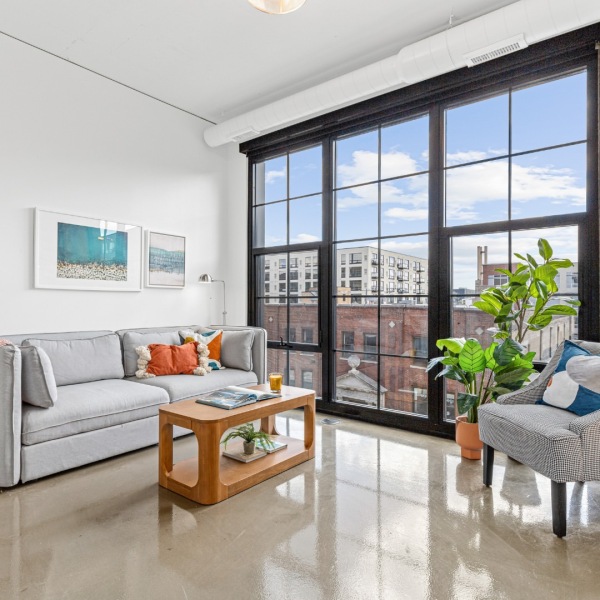
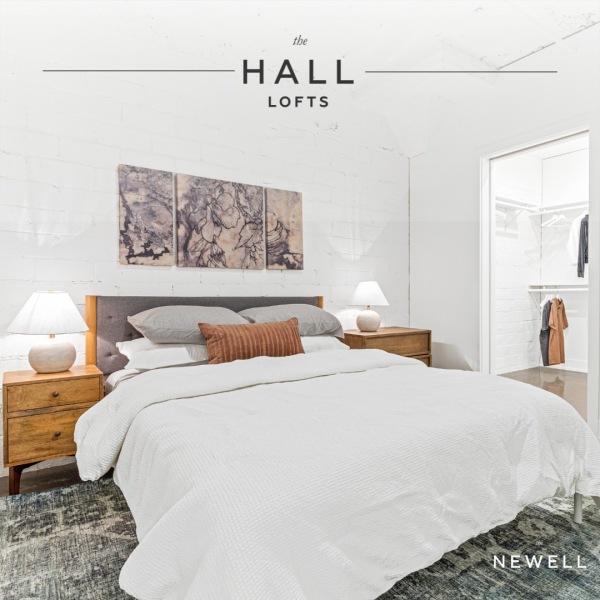
The Hall Lofts Apartments by Flats® offers this exact blend of functionality and style in the heart of the North Loop in Minneapolis, MN. These renovated warehouse apartments combine historical charm with contemporary design, featuring must-have amenities like in-unit laundry and pet-friendly spaces (with a two-pet limit). Located in one of the most walkable and bikeable districts in the Twin Cities, these homes provide the perfect base for urban adventures.
Explore the unique lifestyle waiting at https://livethehalllofts.com/.