Why Smart Climate Control Matters for Modern Living
Smart climate control transforms how homes manage heating, cooling, and air quality through internet-connected devices that learn preferences and adjust automatically. These systems combine thermostats, sensors, and apps to create personalized comfort while optimizing energy use.
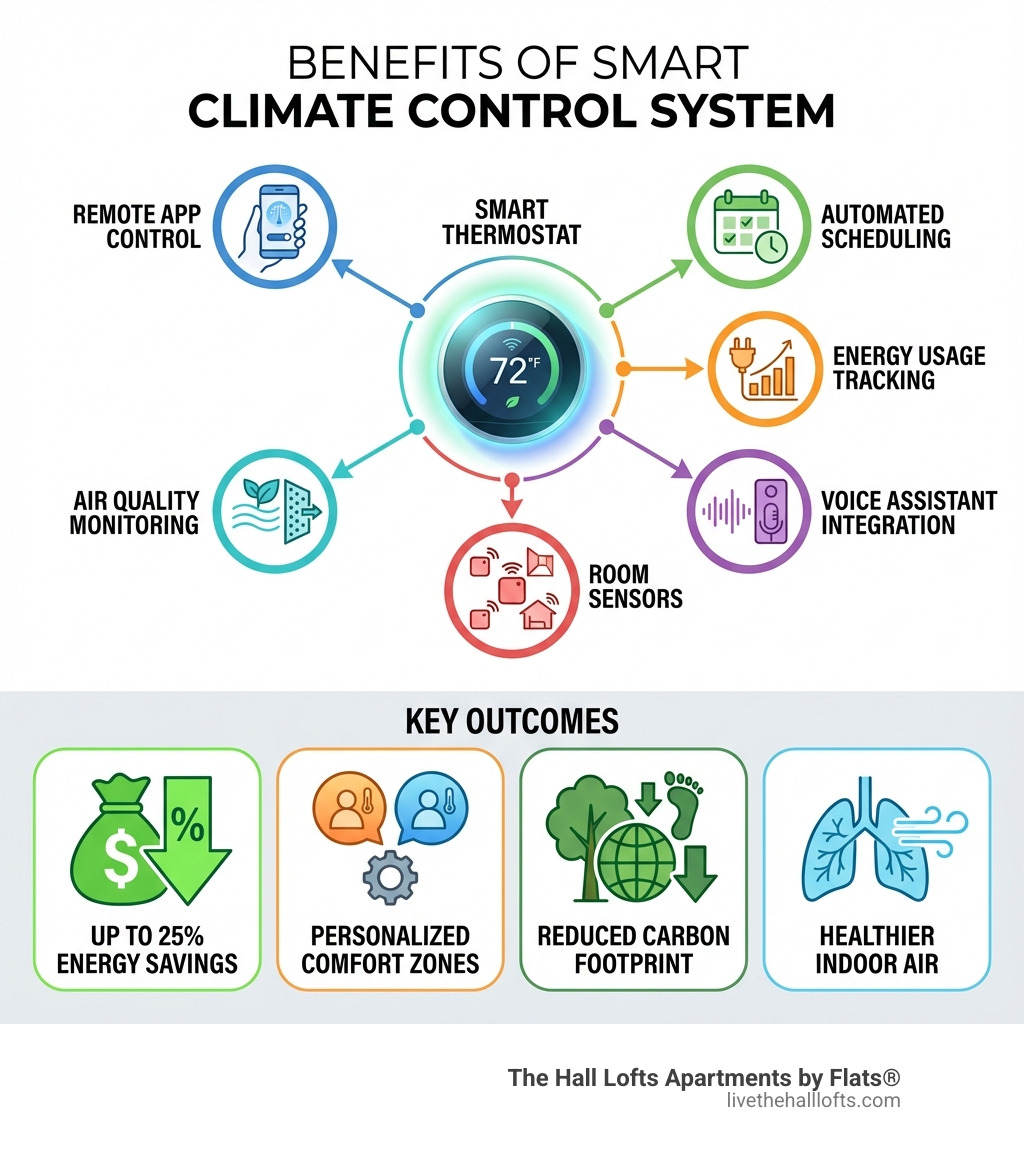
Key Benefits of Smart Climate Control:
- Remote Control - Adjust temperature from anywhere using a smartphone app
- Energy Optimization - Enhance efficiency through automated scheduling
- Personalized Comfort - Set different temperatures for different rooms and times of day
- Voice Control - Change settings hands-free with Alexa, Google Assistant, or Siri
- Environmental Impact - Lowers the carbon footprint by optimizing HVAC system performance
The growth of the smart home market reflects a simple truth: occupants prefer returning to a comfortable living space. Traditional thermostats require manual adjustments and guesswork. Smart systems eliminate that friction.
Consider a common scenario: on a scorching summer day, an occupant rushes out, wondering if the air conditioner was turned off. Smart climate control solves this automatically. The system can detect when occupants leave and adjust accordingly, then cool or heat the home before anyone returns.
Modern apartments deserve modern solutions. Smart climate control brings convenience, efficiency, and comfort together in one integrated system.
The Core Benefits of Smart Climate Control Systems
Smart climate control devices offer an approach to managing indoor environments, moving beyond simple temperature adjustments to create a truly intelligent home. The advantages span across personal comfort, energy management, and overall well-being.
Improved Comfort and Convenience
Returning home after a day out to an ideal temperature, without ever touching a thermostat, is the promise of smart climate control.
These systems allow for personalized routines, letting occupants program heating and cooling schedules that align with daily life. Whether it's a cooler temperature for sleeping or a warmer setting for the morning, preferences can be precisely met. Remote adjustments via a smartphone app mean settings can be tweaked from anywhere. This level of control offers unparalleled convenience.
Voice assistant integration further simplifies interaction, allowing for hands-free setting changes with simple commands. Devices that support geofencing technology take convenience a step further by using a phone's location to automatically adjust the temperature when an occupant leaves or arrives home. This ensures energy isn't wasted heating or cooling an empty apartment, while also guaranteeing comfort upon return. Some systems even offer "pre-heating" or "pre-cooling" features, learning commuting patterns to ensure the apartment is just right the moment an occupant walks through the door.
Optimizing Energy and Environmental Impact
One of the most compelling reasons for adopting smart climate control is its ability to optimize energy use and reduce the carbon footprint. Minneapolis residents, especially during distinct seasons, know the importance of efficient heating and cooling.
Smart climate control devices excel at optimizing energy use through features like intelligent scheduling and real-time adjustments. They ensure HVAC systems run only when needed, adapting to routines and external conditions. This optimization can lead to more efficient heating and cooling over time.

Many devices can learn habits and automatically create a heating and cooling schedule customized to when the home is usually occupied or away, factoring in preferred temperatures. This 'set it and forget it' approach maximizes efficiency without sacrificing comfort. Usage reporting is another helpful feature, providing historical data on how often the system runs and how long it takes to reach target temperatures. This insight allows for identifying opportunities to further reduce energy consumption.
The environmental benefits are equally significant. By optimizing energy use, smart appliances contribute to a greener home, lowering carbon footprints. Air conditioners alone account for 6% of all electricity produced in the United States, releasing 117 million metric tons of carbon dioxide into the air annually. Smart climate control helps mitigate this, making a tangible difference for the environment. Information on home cooling systems can provide more context on these impacts.
A Healthier Indoor Environment
Beyond temperature, smart climate control technology plays a crucial role in maintaining a healthy indoor environment. Since people spend a significant amount of time indoors, the quality of indoor air is paramount.
Many advanced systems incorporate indoor air quality monitoring. Smart air purifiers, for instance, go a step further by providing real-time data on indoor air quality. With a connected smartphone app, a home's air quality can be monitored at any time, enabling informed decisions. Some models even feature smart sensors that automatically adjust fan speeds based on current air quality, ensuring a healthy home environment by removing pollutants and allergens.
Humidity control is another vital aspect. Maintaining optimal humidity levels can prevent issues like dry skin, respiratory problems, or even mold growth. Smart humidifiers and dehumidifiers can automatically regulate moisture in the air, reacting to sensors and maintaining a comfortable and healthy balance.
Furthermore, CO2 monitoring, often integrated into more comprehensive systems or specialized sensors, helps ensure adequate ventilation. If CO2 levels rise, indicating stale or poorly circulated air, the system can automatically trigger ventilation systems to bring in fresh air. This proactive approach not only improves comfort but also contributes to preventing respiratory issues and improving overall well-being.
Exploring the Components of a Smart Climate Ecosystem
A comprehensive smart climate control system is more than just a thermostat on the wall. It’s an interconnected network of devices working in harmony to manage a home's atmosphere. From the central command unit to subtle sensors, each component plays a vital role. Shop for climate control devices is a good starting point for exploring these devices.
The Brains: Smart Thermostats
At the heart of most smart climate control systems is the smart thermostat. This isn't just a fancy digital display; it's the central control hub that communicates with the heating, ventilation, and air conditioning (HVAC) system.
Equipped with Wi-Fi connectivity, a smart thermostat allows for control of a home's temperature from anywhere using a smartphone app. It acts as the main user interface for setting schedules, adjusting temperatures, and monitoring energy usage. More importantly, it's the device that sends commands to the HVAC system, telling it when to turn on the heat, kick on the AC, or simply circulate air. Without this central brain, the individual components of a smart climate control system wouldn't know how to work together.
Beyond the Thermostat: Other Smart Climate Devices
While the smart thermostat is critical, a truly integrated smart climate control system often includes a variety of other intelligent devices that improve comfort, air quality, and efficiency.

- Smart Air Purifiers: As mentioned, these devices monitor indoor air quality in real-time, detecting pollutants and allergens. They can automatically adjust their fan speeds to clean the air, ensuring a healthier breathing environment. Some even feature integrated sensors for total volatile organic compounds (TVOC) and CO2 equivalent monitoring.
- Smart Ceiling Fans: These aren't just for moving air; smart fans can integrate with a thermostat to optimize cooling. For instance, using fans allows the AC to be set at a slightly higher temperature while still feeling comfortable, enhancing efficiency. They can also be automated to turn on based on room occupancy or temperature thresholds.
- Smart Humidifiers and Dehumidifiers: These appliances regulate indoor humidity. Smart humidifiers maintain ideal moisture levels to prevent dry air issues, while smart dehumidifiers tackle excess moisture, preventing mold and protecting a home's integrity. Many offer remote control, scheduling, and auto-shutdown features.
- Smart Blinds: While not directly part of the HVAC system, smart blinds play a significant role in smart climate control. They can be automated to open or close based on sunlight, outdoor temperature, or time of day. In winter, opening blinds on sunny days can let in natural heat, reducing heating needs. In summer, closing them can block direct sunlight, keeping the apartment cooler and easing the load on the AC.
- Smart Vents: For homes with zoned HVAC systems, smart vents offer precise temperature control in individual rooms. They automatically open and close to direct airflow where it's needed most, ensuring consistent comfort throughout the apartment and preventing overheating or overcooling in specific areas.
The Power of Sensors
The intelligence of smart climate control lies heavily in its sensors. These small but mighty devices gather crucial data about the environment, allowing the system to make informed decisions.
- Remote Room Sensors: Some smart thermostats come with remote room sensors. These are invaluable for maintaining uniform temperatures throughout an apartment, especially in rooms far from the main thermostat or those that tend to be warmer or cooler due to sunlight exposure or other factors. By sensing the temperature in different areas, the system can better balance heating and cooling.
- Occupancy Sensors: These sensors detect when a room or apartment is occupied. The system can then adjust climate settings accordingly, reducing heating or cooling in empty spaces to optimize energy use, and ensuring comfort only where it's needed.
- Motion Detection: Similar to occupancy sensors, motion detectors can inform the system about activity, contributing to intelligent climate adjustments.
- Air Quality Sensors: As discussed, these sensors measure various air quality parameters like TVOCs, particulate matter, and CO2 levels. They provide the data necessary for smart air purifiers and ventilation systems to maintain a healthy indoor environment.
These sensors provide the "eyes and ears" for a smart climate control system, enabling it to react dynamically to occupant presence, preferences, and environmental conditions.
Choosing and Integrating a Smart Climate Control System
Deciding to accept smart climate control is a fantastic step towards a more comfortable, efficient, and healthy living space. The next step is choosing the right components and ensuring they integrate seamlessly into a smart home ecosystem.
Key Features to Look for in a Smart Thermostat
When selecting a smart thermostat, several features can improve the experience and maximize benefits:
- Learning Capabilities: Thermostats with learning capabilities can observe habits over time and create a personalized heating and cooling schedule automatically. This means less manual programming and more intuitive energy optimization.
- Geofencing: This feature uses a smartphone's location to detect when an occupant leaves or approaches the apartment. The thermostat can then automatically switch to an "away" setting to optimize energy use and return to a "home" setting before arrival, ensuring comfort.
- Usage Reports: A helpful feature that provides historical data on energy consumption patterns. This allows for tracking efficiency, identifying inefficiencies, and fine-tuning schedules for even greater optimization.
- Remote Sensor Support: For apartments with varying temperatures in different rooms, remote sensors can provide more accurate temperature readings from multiple locations, allowing the system to average temperatures or prioritize comfort in specific areas.
- Touchscreen Interface: While app control is primary, a responsive touchscreen interface on the thermostat itself offers convenient direct control when at home.
- Smart Home Platform Compatibility: Crucially, a thermostat should work well with an existing or preferred smart home ecosystem (e.g., Google Home, Amazon Alexa, Apple HomeKit). This ensures smooth integration and unified control.
Understanding Different Smart Thermostat Types
Not all smart thermostats are created equal. They generally fall into a few categories, each offering different levels of automation and functionality:
| Type | Features | Automation Level |
|---|---|---|
| Wi-Fi Thermostats | Remote control via app, basic scheduling, energy usage tracking. | Basic; requires manual scheduling, but offers remote access. |
| Programmable Thermostats | Manual scheduling (e.g., 7-day, 5-2 day), some offer remote access. | Medium; follows pre-set schedules, less dynamic. |
| Learning Thermostats | Learns habits, geofencing, advanced scheduling, energy optimization, AI-driven. | High; adapts to lifestyle, makes automatic adjustments, highly dynamic and efficient. |
- Wi-Fi Thermostats: These are the entry point into smart climate control. They connect to a home Wi-Fi network, allowing remote control via a smartphone app. Schedules can be set, temperatures adjusted, and energy usage often monitored from anywhere.
- Programmable Thermostats: While many smart thermostats are programmable, this category generally refers to devices that allow for setting a schedule (e.g., 7-day, 5-2 day) but lack the advanced features like learning or geofencing. Some programmable thermostats also offer Wi-Fi connectivity for remote access.
- Learning Thermostats: These represent the pinnacle of smart thermostat technology. They go beyond simple programming by observing daily routines, preferred temperatures, and even factoring in external weather. Over time, they learn comfort preferences and automatically create efficient schedules, constantly optimizing for energy efficiency and comfort.
Integrating with a Smart Home
The true power of smart climate control is released when it integrates seamlessly with a broader smart home ecosystem. This concept, often referred to as the Internet of Things (IoT), means that all smart devices can communicate and work together.
The emerging Matter standard aims to simplify this integration, allowing devices from different manufacturers to speak the same language. This means a smart thermostat could potentially interact effortlessly with smart lights, smart blinds, and even smart security systems.
Voice assistants like Google Assistant and Amazon Alexa are key to this integrated experience. A smart speaker can be told to adjust the thermostat, without lifting a finger. Shop for compatible smart home devices to explore devices that work with these platforms.
Automated routines can also be created. For example, a "Good Morning" routine could simultaneously raise the thermostat temperature, open smart blinds, and turn on the coffee maker. Conversely, an "Away" routine could lower the thermostat, turn off lights, and activate a security camera. This level of automation not only improves convenience but also maximizes energy efficiency and peace of mind.
Installation and Advanced Technology
Implementing smart climate control in an apartment involves understanding a few technical considerations, especially regarding installation, and appreciating the advanced technologies that make these systems so intelligent.
Installation Considerations
While many smart thermostats are designed for relatively easy DIY installation, it's crucial to understand the requirements specific to the HVAC system.
- HVAC System Compatibility: Before purchasing, it's necessary to ensure the chosen smart thermostat is compatible with the specific heating and cooling system. Most are designed for 24V gas, oil, heat pump, electric, forced air, and conventional HVAC systems. Checking compatibility is often as simple as looking at the existing thermostat's wiring.
C-wire Requirement: Almost all smart thermostats require a "C-wire" (common wire) to function. This wire provides continuous power to the thermostat, which is necessary for its Wi-Fi connectivity and advanced features. Older houses with older heating systems, such as the renovated warehouse apartments in Minneapolis' North Loop, often lack a C-wire.
Power Extender Kits: If a system lacks a C-wire, some smart thermostats offer a power extender kit as a workaround. These kits typically draw power from other wires in the thermostat bundle.
- Professional Installation: For older systems, complex multi-stage HVAC setups, or for those uncomfortable with electrical wiring, professional installation is always a wise choice. A qualified technician can ensure proper wiring, install a C-wire if necessary, and configure the thermostat for optimal performance, preventing potential issues with the HVAC system.
The Role of AI in Advanced Smart Climate Control
Artificial intelligence (AI) and machine learning are the secret sauce behind the most advanced smart climate control systems. They transform a programmable device into a truly intelligent one.
- Predictive Adjustments: AI allows thermostats to make predictive adjustments. Instead of simply reacting to the current temperature, an AI-powered thermostat can anticipate future needs based on learned patterns, local weather forecasts, and even occupancy sensors. For instance, if it knows a hot afternoon is coming and the occupant usually prefers a cooler home, it might start cooling earlier to reach the desired temperature more efficiently.
- Learning User Habits: Machine learning algorithms continuously analyze interactions with the thermostat and presence patterns. They learn preferred temperatures at different times of the day, week, and even season. This data allows the system to fine-tune its schedules automatically, maximizing comfort and energy efficiency without constant manual input.
- Weather Data Integration: Advanced smart thermostats integrate real-time weather data and forecasts. This enables them to adjust heating or cooling strategies based on external conditions, optimizing performance and reducing energy waste.
- System Performance Optimization: AI can also monitor the performance of an HVAC system. It can detect inefficiencies, provide alerts for potential issues (like a dirty filter), or even suggest maintenance, helping to prolong the life of the heating and cooling equipment.
Through AI, a smart climate control system becomes a proactive, adaptive partner in managing the indoor environment, constantly learning and optimizing for ultimate comfort and efficiency.
Frequently Asked Questions about Smart Climate Control
Common inquiries often arise about how smart climate control works and its real-world impact.
How do smart thermostats work with different types of HVAC systems?
Smart climate control systems are designed to be quite versatile. Most smart thermostats are compatible with a wide range of common HVAC systems found in apartment buildings, including central air conditioning, heat pumps, furnaces (gas, oil, or electric), and even radiant floor heating systems. Before purchasing, it's always recommended to perform a compatibility check, often available on the manufacturer's website. This usually involves identifying the type of system and the existing wiring configuration to ensure a seamless fit.
Can smart climate control really help optimize energy usage?
Absolutely! Smart climate control is a powerhouse when it comes to energy optimization. It achieves this through several key mechanisms:
- Scheduling: Highly personalized schedules can be created that ensure heating or cooling only occurs when needed, avoiding wasted energy when the home is unoccupied or during sleep hours.
- Geofencing: By using a smartphone's location, the system can automatically adjust temperatures when an occupant leaves or returns, ensuring comfort upon arrival while optimizing energy use when the apartment is empty.
- Learning Algorithms: Advanced thermostats learn preferences and daily routines, automatically creating and refining energy-efficient schedules over time, requiring less manual intervention.
- Usage Tracking: Many systems provide detailed reports on energy consumption, allowing for insight into where the most energy is used and enabling informed decisions to improve efficiency.
- Real-time Adjustments: Integrating with external weather data and internal sensors, smart systems can make real-time adjustments to maintain comfort with minimal energy use.
These features combined can lead to significant improvements in energy efficiency and a smaller carbon footprint.
What is the difference between a smart thermostat and a Wi-Fi thermostat?
While the terms are sometimes used interchangeably, there's a subtle but important distinction:
- Wi-Fi Thermostat: This is a thermostat that connects to a home's Wi-Fi network, allowing it to be controlled remotely via a smartphone app. It offers convenience and basic scheduling capabilities, essentially giving remote access to a traditional programmable thermostat.
- Smart Thermostat: This term encompasses Wi-Fi connectivity but adds a layer of advanced intelligence. A true smart climate control thermostat includes features like learning capabilities (it learns habits), geofencing (location-based adjustments), advanced energy optimization algorithms, and often integrates more deeply with other smart home devices and platforms. It proactively manages the climate rather than just executing pre-set commands.
Essentially, all smart thermostats are Wi-Fi thermostats, but not all Wi-Fi thermostats are fully "smart" in the sense of offering advanced automation and learning.
Conclusion
Embracing smart climate control is a clear step towards modern, efficient, and comfortable living. From personalized comfort and remote adjustments to significant energy optimization and a healthier indoor environment, the benefits are undeniable. For residents in Minneapolis, especially in unique renovated warehouse apartments, integrating these intelligent systems means enjoying consistent comfort through all seasons, while also contributing to a greener planet.
At The Hall Lofts Apartments, modern amenities that improve residents' quality of life are a priority. Exploring the possibilities of smart climate control is just one way living spaces can be created that are not only stylish but also intelligently designed for well-being. To find more about the conveniences and features that lift the community, explore the modern amenities.