The Urban Renaissance: Warehouse Living Redefined
Imagine waking up in a space where history meets modern comfort—that's the magic of warehouse apartments for rent. These aren't your typical cookie-cutter units; they're spaces with stories to tell and character that can't be manufactured.
What makes these industrial-chic homes so special? It starts with the bones of the building. High ceilings that soar overhead create an airy, expansive feel you simply can't find in conventional apartments. The open floor plans invite creativity in how you arrange your space, making even studio units feel generous and flowing.
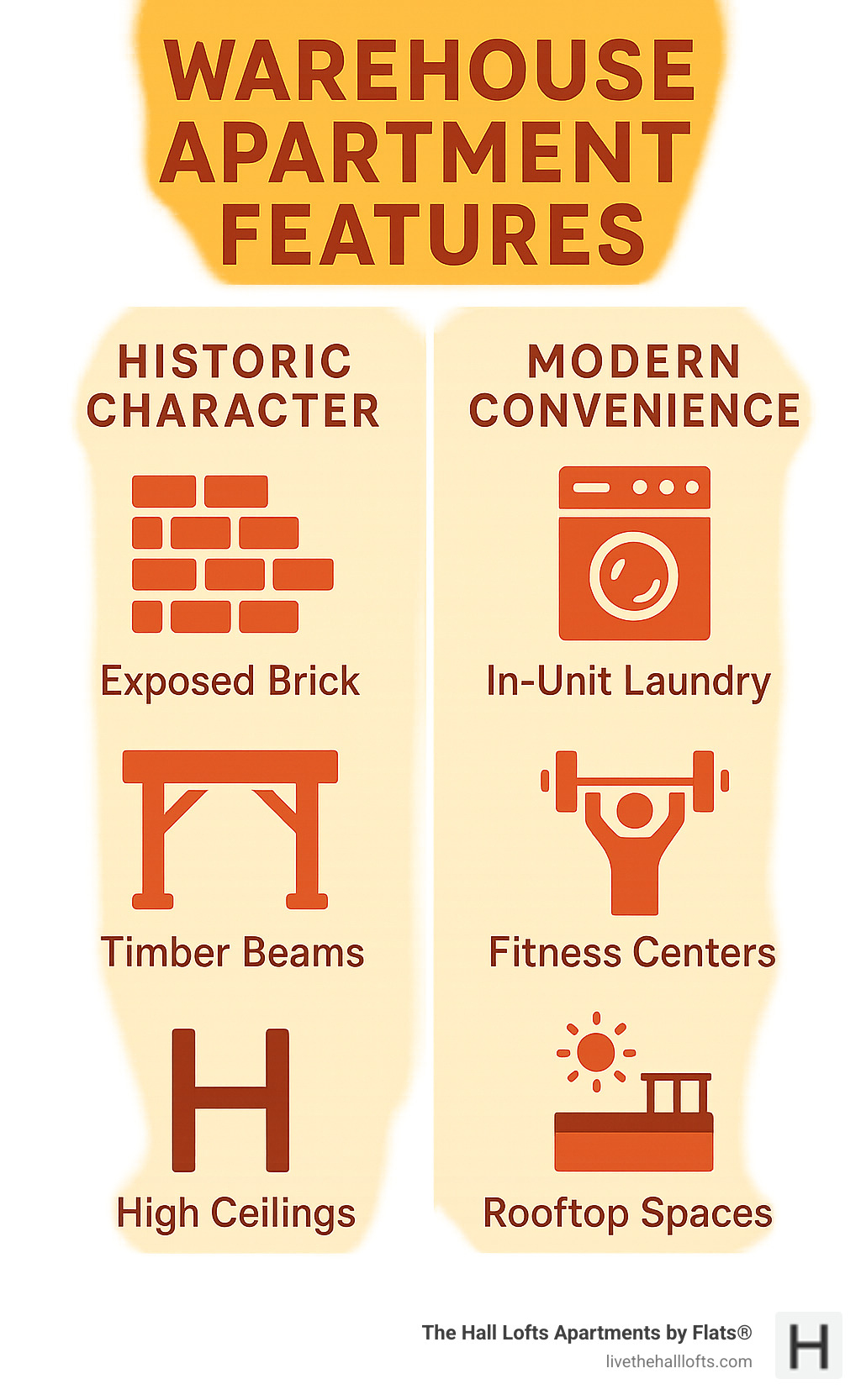
Look around and you'll notice the original architectural features that have been thoughtfully preserved. That exposed brick wall? It witnessed decades of industrial innovation before becoming the backdrop for your living room. Timber beams overhead and concrete floors underfoot connect you to the building's working past while grounding your modern lifestyle.
Most warehouse conversions occupy prime urban locations in revitalized downtown districts. These buildings once formed the manufacturing heart of the city, and now they're at the center of its cultural renaissance. Step outside and you're typically minutes from the best restaurants, shops, and entertainment venues the city has to offer.
"The relaxed industrial features and exposed concrete ceilings give the building a unique and cozy feel," notes one property description, perfectly capturing how these spaces transform utilitarian structures into welcoming homes.
Community living takes on new meaning in warehouse apartments. Many feature shared rooftop decks with skyline views, state-of-the-art fitness centers, and inviting social spaces where neighbors become friends. And four-legged family members are welcome too, with many buildings offering pet-friendly policies that include dog wash stations and nearby walking areas.
The warehouse apartment movement has taken hold in cities across America. In Philadelphia, historic textile mills now house creative professionals. Minneapolis' North Loop district has transformed from warehousing to wonderful living. Atlanta's former factories pulse with new energy as residential communities. And in Washington DC, industrial corridors have become sought-after addresses.
When you're hunting for the perfect warehouse apartment, you'll want to balance those gorgeous industrial aesthetics with practical comforts. Today's best conversions seamlessly integrate in-unit laundry, gleaming stainless steel appliances, and modern HVAC systems that keep these vast spaces comfortable year-round.
The beauty of warehouse living lies in this perfect balance—preserving what makes these buildings special while ensuring they meet the needs of today's urban dweller. It's not just an apartment; it's a lifestyle choice that values character, community, and connection to the city's past and future.
What Are Warehouse Apartments?
Ever walked into a space that instantly tells a story? That's the magic of warehouse apartments for rent. These distinctive homes breathe new life into former industrial buildings—factories, warehouses, and manufacturing facilities that once hummed with an entirely different kind of activity.
What makes these spaces special isn't just what they are now, but what they once were. The history remains embedded in every brick, beam, and concrete floor, creating living environments that simply can't be duplicated in new construction.

"Vintage buildings have unique histories and appeal," as one Atlanta property puts it—and that's exactly why urban dwellers are drawn to these spaces. They're not just places to live; they're pieces of local heritage you get to call home.
When you're looking at warehouse apartments for rent, you'll typically find:
- Generous square footage that gives you room to breathe
- Flexible layouts that invite personalization
- Historical elements that tell stories about your city's past
- Prime locations in evolving urban neighborhoods
Many of these buildings date back to the early-to-mid 20th century, with some grand dames from the late 1800s still standing proud after thoughtful rehabilitation. The conversion process walks a delicate line—bringing spaces up to modern residential standards while preserving the soul of what made them special in the first place.
Key Design Elements That Set Them Apart
Walk into a warehouse apartment and you'll immediately notice what makes these spaces so different from cookie-cutter new builds.
Those timber beams and columns overhead? They're not design choices—they're original structural elements, showcasing craftsmanship from an era when things were built to last. They add warmth and character, grounding these soaring spaces with their solid presence.
Look up and you'll see exposed ductwork and mechanical systems that most modern apartments would hide away. In warehouse conversions, these industrial elements become part of the visual interest, creating an honest aesthetic that celebrates how buildings actually work.
Under your feet, concrete floors tell their own story. Sometimes polished to a high shine, sometimes deliberately left with marks of their industrial past, these surfaces offer durability you simply won't find elsewhere. Some units feature original floors throughout, while others incorporate them as accents alongside more modern flooring options.
Perhaps the most coveted feature of warehouse living is the large, industrial windows. Originally designed to flood workspaces with natural light, these oversized openings now do the same for your living room, often framing dramatic city views that become living art.
And those brick walls? They add texture, warmth, and a sense of permanence that drywall can never match. Whether it's an exterior wall or an interior partition, exposed brick brings color variation and character that changes subtly throughout the day as light shifts across its surface.
The Hall Lofts in Minneapolis perfectly captures this balance—maintaining industrial heritage while creating thoroughly modern homes. The contrast between raw, historical elements and sleek, contemporary finishes creates spaces with depth and personality for those who want something beyond the ordinary.
Warehouse Apartments vs. Traditional Apartments
Choosing between a warehouse apartment and a traditional unit comes down to what you value most in a home.
Space and Layout: Warehouse apartments offer breathing room—higher ceilings, more square footage, and open plans that invite creativity. Traditional apartments provide more defined spaces with conventional room divisions. With warehouse apartments for rent, you get the freedom to create zones within your space, while traditional units come with predetermined layouts and less flexibility.
Character and Aesthetics: Warehouse conversions showcase history through their materials—brick, timber, concrete—elements with stories to tell. Traditional apartments feature more standardized finishes that feel familiar and predictable. Each warehouse building has its own quirks and personality, reflecting its specific industrial past, while traditional units offer more consistent environments.
Cost Considerations: There's no getting around it—warehouse apartments typically command premium rents, reflecting their uniqueness and character. Utility costs can run higher too, with more volume to heat and cool. Traditional apartments generally offer more predictable monthly expenses. That said, many warehouse conversions include premium amenities and finishes that help justify their higher price points.
As one St. Louis property puts it: "All the warehouse-inspired features that make you think 'loft'. High-end features that make you feel 'luxury'." This blend of industrial character with upscale comfort creates living spaces that stand apart from the ordinary.
Your choice ultimately reflects your priorities. If you value character, space, and connection to local history, warehouse living might be your perfect match. If you prefer predictability, efficiency, and conventional layouts, a traditional apartment might better suit your needs.
Benefits and Drawbacks of Loft-Style Living
Stepping into a warehouse apartment feels like entering another world—one where industrial heritage meets modern comfort. But is loft-style living right for you? Let's explore what makes these spaces special and what challenges you might face.
Benefits:
There's something magical about waking up in a space bathed in abundant natural light. Those massive industrial windows—originally designed for factory workers—now serve as stunning features that flood your home with sunshine throughout the day, creating a bright, energizing atmosphere that standard apartments rarely offer.
The architectural character of warehouse apartments simply can't be manufactured. Each exposed brick wall tells a story; every timber beam speaks to craftsmanship from another era. These authentic details create a sense of place and history that new construction can never quite capture.
One of the greatest joys of warehouse living is the freedom of flexible space planning. Without permanent interior walls dictating your layout, you can reimagine your living space as your needs evolve—creating a home office today that might become a dining area tomorrow.

Many warehouse conversions shine when it comes to community amenities. From stunning rooftop decks with skyline views to thoughtfully designed fitness centers and social lounges, these buildings often provide shared spaces that extend your living area beyond your apartment walls.
The prime locations of most warehouse apartments for rent put you at the heart of urban renaissance. Typically situated in evolving neighborhoods, you'll find yourself steps away from trendy restaurants, boutique shops, and vibrant nightlife—all while enjoying easy access to public transit.
Drawbacks:
Those gorgeous high ceilings come with a practical consideration: heating and cooling costs. The larger volume of air means your HVAC system works harder, potentially resulting in higher utility bills compared to conventional apartments with standard ceiling heights.
The very features that make warehouse apartments visually stunning—concrete floors, brick walls, and open layouts—can create acoustic challenges. Sound tends to bounce off hard surfaces, and without interior walls to block noise, you'll likely need to get creative with rugs, fabric panels, and furniture placement.
If you value privacy, the open concept layout might require some adjustment. Creating distinct spaces for sleeping, working, and relaxing often means using room dividers, strategic furniture placement, or even free-standing walls to carve out personal retreats within the larger space.
Older buildings sometimes come with maintenance complexities that newer construction avoids. Historic windows might be less energy-efficient, original plumbing might need occasional attention, and integrating modern systems into century-old structures can present unique challenges.
Finally, be prepared for premium pricing. The distinctive character, desirable locations, and unique features of warehouse apartments typically command higher rents than conventional units of similar size. You're paying not just for square footage but for architectural distinction and neighborhood amenities.
As one resident at The Hall Lofts shared: "I love the character and space in my loft, but I definitely had to get creative with room dividers and area rugs to create distinct zones and manage the acoustics."
Amenity Checklist Every Renter Should Review
When exploring warehouse apartments for rent, the amenities can make or break your experience. Think of this checklist as your guide to finding the perfect balance of character and convenience:
In-Unit Essentials make daily life seamless. Look for an in-unit washer and dryer (hauling laundry to a shared facility gets old fast), central air conditioning (crucial with those high ceilings), and updated kitchens with full-size appliances. Don't overlook storage solutions—open floor plans often lack traditional closets, so check for creative storage options. Also confirm high-speed internet readiness and whether any units offer private outdoor space like a balcony.
Building-wide amenities can transform your living experience. Secured entry systems provide peace of mind, while package acceptance service saves you from missed deliveries. If you're eyeing a multi-story conversion, elevator access is non-negotiable. Many warehouse communities excel with lifestyle perks like fitness centers, rooftop decks, resident lounges, and co-working spaces that extend your living area beyond your apartment walls.
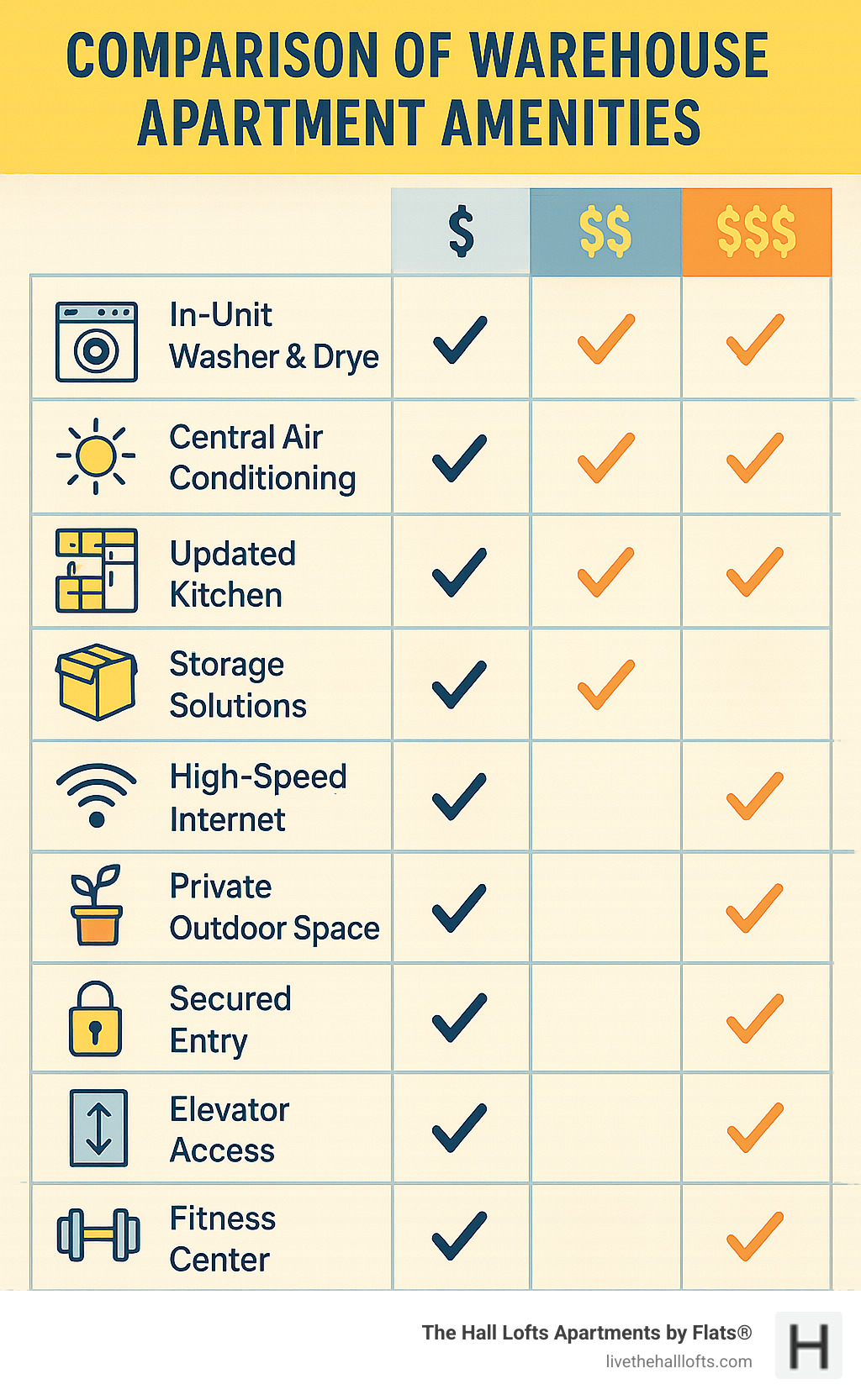
Don't forget the practical side of life. Parking availability (and associated costs) can significantly impact your budget in urban areas. If you have a furry friend, thoroughly review pet policies and check for pet-friendly features like dog wash stations or nearby green spaces. Having on-site management and maintenance provides invaluable peace of mind, especially in historic buildings that might have unique systems.
The Hall Lofts in Minneapolis exemplifies thoughtful amenity design, balancing practical necessities with lifestyle improvements that make warehouse living truly special. Particularly valuable is their 24-hour maintenance service—a reassuring feature in a building with character and history.
Amenities aren't just nice-to-haves; they're extensions of your home that improve daily life and provide value beyond your apartment walls. The right mix can transform a beautiful space into a truly livable community.
Warehouse Apartments for Rent: City-by-City Pricing Snapshot
Looking for warehouse apartments for rent in different cities? Each urban market has its own unique flavor when it comes to these distinctive living spaces. While these industrial-chic apartments typically command higher rents than conventional units (thanks to their character and prime locations), what you get varies widely from city to city.
Walkability is a huge factor in what makes warehouse apartments so desirable. Many of these buildings score impressively on walkability metrics—some Philadelphia locations even achieve perfect 100 Transit Scores and Walk Scores of 99/100, earning the coveted "Walker's Paradise" designation. This matters to your lifestyle and your wallet: research shows highly walkable locations can fetch 5-10% higher rents than similar but less accessible spots. That premium reflects the real value of being able to stroll to restaurants, shops, and transit without hunting for parking. For more information on how walkability benefits urban residents, check out Walk Score's research on walkability.
Philadelphia Snapshot — warehouse apartments for rent
Philadelphia shines with a rich selection of converted industrial buildings, especially in characterful neighborhoods like Old City and South Philadelphia.
The city's warehouse apartment scene features median rents around $1,765 for loft spaces, with a substantial 44% of residents choosing to rent rather than buy. Philly's warehouse dwellers enjoy some of the best urban mobility in the country, with exceptional Walk Scores (99/100) and Transit Scores (100/100) in prime locations. With more than 1,000 loft apartments available across the metro area, there's plenty of inventory to explore.
Many of these buildings showcase Philly's industrial roots, with conversions dating back to the early 20th century. The Storehouse Lofts exemplifies this trend with 161 thoughtfully converted residential units in a historic structure. As one Philadelphia warehouse community describes its setting: "Situated in a culturally diverse neighborhood that celebrates new and old traditions"—perfectly capturing the appeal of these historic-meets-contemporary living spaces.
Minneapolis Snapshot — warehouse apartments for rent
Minneapolis—especially the trendy North Loop neighborhood—has become a hotspot for warehouse living. Developers like Schafer Richardson have been changing the area since 1995, creating vibrant communities in former industrial spaces.
The North Loop demonstrates what successful urban revitalization looks like, evolving from an industrial district into one of Minneapolis' most coveted residential areas over the past 25 years. Demand for these spaces remains strong, with some properties offering promotional incentives like "1 month free on a 13-month lease" to attract new residents.
Many Minneapolis warehouse apartments feature luxury amenities that would make hotel guests jealous—rooftop pools, state-of-the-art fitness centers, and saunas aren't uncommon. The city offers both authentic historic conversions and newer construction with warehouse-inspired design elements.
The Hall Lofts exemplifies Minneapolis' warehouse living at its finest. These thoughtfully converted spaces honor the building's historic character while incorporating thoroughly modern amenities and finishes that today's urban dwellers crave.
Atlanta Snapshot — warehouse apartments for rent
Atlanta boasts some of the earliest industrial-to-residential conversions in the country, with pioneers like The Warehouse Lofts dating all the way back to 1986. The city's warehouse apartment market includes gems like the beautifully repurposed 1946 lumber warehouse that now houses stylish apartments.
Atlanta's warehouse communities put special emphasis on security features, with secured parking and controlled entry systems being major selling points in urban locations. Most properties welcome furry family members with pet-friendly policies, and many highlight their convenient access to distinctive neighborhoods like Little Five Points and downtown.
These spaces celebrate Atlanta's industrial heritage while meeting modern expectations for security, comfort, and location. The city's warehouse apartments typically emphasize their connections to Atlanta's vibrant cultural scene and neighborhood attractions.
Washington, DC Snapshot — warehouse apartments for rent
Washington, DC offers warehouse living options ranging from authentic historic conversions to new construction with industrial-inspired aesthetics, particularly in up-and-coming areas like Ivy City.
DC's warehouse apartments often lean into luxury, featuring spa-inspired bathrooms and high-end finishes alongside preserved historical elements. Marketing materials frequently highlight the "one of a kind" living experience these spaces provide, along with their exceptional walkability and neighborhood amenities.
As one DC property puts it: "All the warehouse-inspired features that make you think 'loft'. High-end features that make you feel 'luxury'." This combination of character and sophistication makes DC's warehouse apartments particularly appealing to professionals seeking distinctive urban living that stands out from cookie-cutter options.
How to Secure a Warehouse Apartment
Landing your dream warehouse apartment doesn't have to be complicated, but it does require some know-how about the unique aspects of these distinctive spaces. Let's walk through the process together, so you'll feel confident when you find that perfect industrial-chic home.
Application Process
The journey to your new warehouse apartment starts with solid research. Begin by exploring available warehouse apartments for rent in neighborhoods that catch your eye. The North Loop in Minneapolis, for instance, offers some spectacular converted industrial spaces with authentic character.
When you schedule tours (whether in-person or virtual), pay close attention to the flow of the space and how natural light moves through it throughout the day. These factors are especially important in open-concept living environments.
Once you've found "the one," you'll complete a standard rental application that includes your personal information, employment details, and rental history. Property managers will verify your identity, run credit and background checks, and contact your references to ensure you'll be a reliable resident.
Most warehouse apartment communities require income verification showing you earn at least three times the monthly rent. This income requirement helps ensure you can comfortably afford not just rent, but all the associated costs of living in these premium spaces.
Be prepared financially for the upfront costs, which typically include a security deposit (usually matching one month's rent), application fees, and sometimes an administrative or move-in fee. Most properties require first month's rent at signing, and some may ask for last month's rent as well.
When reviewing your lease, pay special attention to terms specific to warehouse buildings. These might include rules about hanging items on brick walls, noise considerations in open spaces, and guidelines about respecting historic elements of the building.
Special Incentives and Promotions
Warehouse apartment communities often sweeten the deal with attractive move-in specials. These might include a free month's rent (especially with longer leases), reduced security deposits, or waived application fees. The Hall Lofts, like many premium properties, occasionally offers seasonal promotions to help new residents make the move more affordable.
Many communities also offer discounts for frontline workers like healthcare professionals, first responders, and teachers—a small way of saying "thank you" for essential work. If you fall into one of these categories, don't hesitate to ask about special programs.
Existing residents can often benefit from referral bonuses when they bring friends into the community. It's a win-win: you get to live near friends and earn rent credits while the building welcomes great new residents.
If your move timeline is flexible, consider timing your application during slower leasing periods, typically winter months in most markets, when properties might offer their most competitive incentives.
Legal & Zoning Considerations
Warehouse apartments come with unique legal considerations that differ from conventional apartment buildings. When viewing warehouse apartments for rent, it's worth confirming that the building has proper permits for residential use, including an appropriate certificate of occupancy.
Legitimate warehouse conversions should comply with current building codes and zoning regulations for residential occupancy. This includes proper fire safety systems with sprinklers, alarms, and multiple exit routes—especially important in buildings originally designed for industrial use.
Many warehouse apartments occupy buildings with historic designations, which protect certain architectural features while sometimes limiting modification options. These designations can actually benefit residents by preserving the unique character that makes warehouse living special.
Property managers typically require renter's insurance, often with higher coverage limits than conventional apartments due to the open layouts and potential for damage across larger spaces. You'll also need to adhere to rules protecting historic features and be mindful of noise—sound travels differently in these open environments with hard surfaces.
Pet Policies & Parking Essentials
For pet owners, warehouse living can be particularly appealing due to the spacious layouts and durable flooring. Pet policies vary widely between properties, with some implementing breed restrictions or weight limits while others, like The Hall Lofts, welcome furry friends of all sizes.
When budgeting for your new home, remember to account for pet-related costs. These typically include a one-time pet deposit (often partially refundable), monthly pet rent ranging from $25-50 per pet, and sometimes a pet application fee.
Many warehouse apartment communities recognize that pets are family and offer amenities like rooftop dog parks, convenient pet washing stations, and proximity to walking paths. These features can significantly improve daily life for you and your four-legged companion.
Parking considerations deserve special attention when renting in urban warehouse districts. Options might include dedicated garage parking (usually for an additional monthly fee), surface lot spaces, or street parking permits. For cyclists, secure bike storage is increasingly common and particularly valuable in bike-friendly cities like Minneapolis.
Security features for parking areas should include controlled access, video surveillance, and well-lit pathways connecting parking to building entrances. This is especially important in evolving urban neighborhoods where warehouse apartments are often located.
When evaluating the total cost of living in a warehouse apartment, be sure to factor in parking expenses. These are typically structured as monthly fees separate from rent, with additional considerations for guest parking and, increasingly, electric vehicle charging options.
By understanding these unique aspects of warehouse apartment living, you'll be well-prepared to secure the industrial-chic space of your dreams and enjoy all the character and convenience these distinctive homes have to offer.
Top 5 Floor-Plan Styles You'll Find
When you're exploring warehouse apartments for rent, you'll find that these unique spaces offer fascinating floor plans that make the most of their industrial bones. Each layout has its own personality and advantages, giving you options that simply don't exist in conventional apartments.
1. Studio Loft
The quintessential warehouse apartment experience comes in the form of the studio loft. These wide-open spaces celebrate the building's industrial heritage with:
No permanent interior walls dividing the main living area, allowing you to arrange your space however you like. Your sleeping area is defined by how you position your furniture or perhaps a stylish room divider. The kitchen typically runs along one wall or stands as an island centerpiece, while the bathroom remains the only fully enclosed room for obvious privacy reasons.
At 500-900 square feet, these spaces might sound modest on paper, but those soaring ceilings and massive windows create an airy environment that feels much larger than the numbers suggest. Studio lofts are perfect for individuals and couples who value openness and light over traditional room divisions.
2. Mezzanine One-Bedroom
For those who want a bit more definition without sacrificing that open warehouse feel, the mezzanine one-bedroom offers an ingenious solution. These clever designs take advantage of those impressive ceiling heights by:
Creating a main level that houses your living room, kitchen, and bathroom, while a raised sleeping area sits above, accessed by a staircase or ladder. The bedroom area typically features partial walls that provide visual privacy without blocking light or the sense of spaciousness.
These 700-1,100 square foot units brilliantly use vertical space to create distinct zones for living and sleeping. The liftd bedroom creates a natural separation that gives you the best of both worlds—openness and privacy in perfect balance.
3. Two-Bedroom Split
Roommates and small families will appreciate the thoughtful layout of the two-bedroom split floor plan. These 1,000-1,500 square foot spaces maintain the warehouse character while providing practical separation:
The central area remains open, housing your kitchen and living room for communal gathering. Two bedroom spaces typically occupy opposite ends of the apartment, maximizing privacy and minimizing noise transfer. You'll find one or two bathrooms, strategically placed to serve both private and public areas.
These apartments often employ a mix of full and partial walls, creating private retreats without completely closing off the distinctive architectural features that make warehouse living special.
4. Live-Work Hybrid
As remote work becomes increasingly common, the live-work hybrid floor plan has found its moment. These 800-1,200 square foot spaces are particularly well-suited for creative professionals and home-based workers:
A dedicated office or studio area is clearly separated from your living spaces, allowing you to "commute" across your apartment rather than across town. The main living and kitchen area maintains that coveted open-concept feel, while your sleeping space may be partially or fully enclosed depending on the specific design.
The industrial character of warehouse spaces—with their concrete floors and exposed structural elements—creates an inspiring backdrop for creative work. When your workday ends, you're already home, with no commute required.
5. Corner Penthouse
For those seeking the ultimate warehouse living experience, the corner penthouse represents the pinnacle of industrial-chic living. These premium units, typically 1,200-2,000+ square feet, offer:
Windows on multiple sides that flood the space with natural light and provide sweeping views in different directions. You'll often find upgraded finishes, premium appliances, and thoughtful details that lift the living experience. Many corner penthouses include private outdoor space—a rarity in urban settings.
These apartments showcase the most distinctive architectural features of the building, whether that's unusually shaped windows, original corner columns, or other unique elements that can't be found elsewhere in the building.

At The Hall Lofts, you'll find several of these floor plan styles, each thoughtfully designed to honor the building's industrial heritage while providing comfortable, contemporary living spaces. Whether you're drawn to the openness of a studio or the grandeur of a corner penthouse, there's a warehouse apartment configuration that will perfectly suit your lifestyle and preferences.
Lifestyle & Neighborhood Fit
Finding the perfect warehouse apartment for rent isn't just about falling in love with exposed brick and soaring ceilings—it's about embracing a distinctive urban lifestyle and becoming part of a neighborhood's ongoing story. These unique living spaces typically anchor communities in transition, where industrial heritage meets modern urban renewal.
Urban Revitalization
Warehouse apartments often serve as catalysts for neighborhood change. When developers breathe new life into forgotten industrial buildings, they set off a chain reaction that revitalizes entire districts.
The North Loop neighborhood in Minneapolis exemplifies this evolution. Schafer Richardson began changing the area's abandoned warehouses back in 1995, long before the neighborhood became one of the city's most coveted addresses. Their pioneering vision turned what was once a declining industrial zone into a vibrant urban community.
These conversions do more than just create housing—they preserve architectural treasures while fueling economic growth. Many warehouse buildings incorporate street-level retail, cafes, and creative workspaces that serve both residents and visitors, creating a dynamic mixed-use environment that stays lively throughout the day and evening.
Arts Districts and Cultural Hubs
There's something about warehouse districts that naturally attracts creative energy. Perhaps it's the industrial aesthetic or the flexible spaces, but these neighborhoods frequently evolve into thriving arts communities.
Former manufacturing districts often become home to galleries, studios, and performance spaces seeking character-rich, adaptable environments. This creative concentration creates a distinctive neighborhood vibe that appeals to residents who value cultural experiences and artistic expression.
One Philadelphia warehouse community proudly describes its setting as "a culturally diverse neighborhood that celebrates new and old traditions," highlighting the rich mix of experiences available just outside the door. From monthly art walks to seasonal festivals, these neighborhoods typically offer cultural programming that connects residents to the broader community.
Transit Connectivity
The urban location of most warehouse apartments translates to exceptional accessibility. Many of these buildings were originally constructed near transportation hubs to facilitate shipping, and today's residents benefit from this legacy.
Some Philadelphia warehouse apartments boast near-perfect Walk Scores of 99/100, meaning virtually everything needed for daily life is within easy walking distance. This pedestrian-friendly character reduces car dependence and increases quality of life for residents.
Beyond walkability, many warehouse districts feature:
- Excellent public transit connections
- Dedicated bike lanes and cycling infrastructure
- Car-sharing services and ride-hailing availability
- Easy access to major transportation corridors
This connectivity creates practical benefits for residents while supporting environmental sustainability through reduced car dependence.
Green Spaces and Recreation
Despite their industrial origins, today's warehouse districts increasingly incorporate green elements that soften the urban landscape. Developers and city planners recognize that successful neighborhoods balance density with breathing room.
In Minneapolis, North Loop Green 360 highlights its adjacency to "The Green" urban park, which hosts community events while providing quiet spaces for relaxation. Former industrial waterfronts have been reclaimed as recreational spaces, offering jogging paths, kayak launches, and public plazas.
Many warehouse buildings themselves incorporate green elements, from rooftop gardens with skyline views to interior courtyards that provide private outdoor retreats. These thoughtful additions create balance in urban environments that might otherwise feel dominated by concrete and brick.
The Hall Lofts accepts this neighborhood-centric approach, positioning residents to enjoy Minneapolis' urban amenities while living in a building that contributes to the North Loop's continued renaissance.
Sustainability & Historic Preservation
Choosing a warehouse apartment aligns with both environmental sustainability and cultural preservation—a win-win for conscientious urban dwellers.
Adaptive reuse of existing buildings offers significant environmental benefits. Renovating rather than demolishing saves the tremendous energy embedded in the original construction, diverts demolition waste from landfills, and reduces demand for new building materials. The environmental footprint of a thoughtfully converted warehouse is substantially smaller than that of new construction.
These historic shells now house thoroughly modern systems. Energy-efficient windows, state-of-the-art insulation, and smart building technologies transform former energy hogs into comfortable, efficient homes. The thermal mass provided by thick masonry walls and concrete floors naturally moderates temperature swings, reducing heating and cooling demands.
Beyond environmental benefits, these buildings contribute to community development by maintaining architectural character that gives neighborhoods distinctive identities. The preservation of industrial heritage creates a sense of place and connection to local history that new construction simply cannot replicate.
As one warehouse apartment community notes, these buildings stand "rich with history" while offering "modern comforts," embodying the successful balance between honoring the past and embracing the future.
The Hall Lofts exemplifies this approach, celebrating its building's industrial character while creating comfortable, energy-efficient living spaces for today's urban dwellers.
Frequently Asked Questions about Warehouse Apartments
What income do I need to qualify?
When you're eyeing those gorgeous warehouse apartments for rent, one of the first practical questions is whether you can afford it. Most property managers follow a standard rule of thumb: your monthly income should be approximately three times the monthly rent.
For instance, if that stunning loft with exposed brick and soaring ceilings rents for $2,000 per month, you'll typically need to demonstrate a monthly income around $6,000 (translating to an annual income of $72,000).
The verification process is straightforward but thorough. Be prepared to share recent pay stubs covering the past month, employment verification letters, or tax returns if you're self-employed. Property managers may also request bank statements showing your regular deposits.
Good news for retirees or those with substantial savings but lower regular income – many buildings consider your assets alongside your income stream when evaluating your application. Just be ready to provide documentation of those resources.
Are utilities typically included in rent?
The utility setup varies widely among warehouse apartment buildings, but knowing what's typically covered can help you budget accurately.
Most properties include water and sewer service, trash removal, maintenance of common areas, and access to those Instagram-worthy building amenities in your base rent. However, you'll usually be responsible for electricity, heating and cooling costs, internet, and cable service.
Here's something to keep in mind: those gorgeous high ceilings and open spaces that give warehouse apartments for rent their distinctive character can affect your utility bills. The larger volume typically requires more energy to heat and cool compared to conventional apartments of similar square footage.
When touring potential homes, always ask for estimates of typical utility costs for the specific unit you're considering. Some thoughtful buildings partner with utility providers to offer budget billing options, helping you avoid seasonal bill surprises and manage your expenses more predictably.
Can I customize my space?
One of the joys of warehouse apartment living is the opportunity to create a space that truly reflects your personality. Your customization options typically fall into three categories:
Generally Green-Lighted: You'll have free rein with furniture arrangement and room dividers – perfect for creating distinct zones in open floor plans. Area rugs not only add warmth but help define spaces and improve acoustics. Most buildings happily allow mounted televisions and artwork (with proper anchors) and free-standing shelving solutions to maximize your space.
Proceed with Permission: Some modifications require landlord approval but are often possible. These include paint color changes (though you might need professional application and restoration when moving out), light fixture replacements, custom window treatments, and built-in storage systems. Always get written approval before proceeding with these changes.
Usually Off-Limits: Structural changes, permanent flooring modifications, alterations to historic features, and DIY plumbing or electrical work are typically prohibited. These restrictions help preserve the building's character and ensure safety standards are maintained.
The Hall Lofts, like many thoughtful warehouse communities, provides clear customization guidelines that balance personal expression with preservation of the building's unique industrial charm. The open nature of warehouse apartments often allows for more creative furniture arrangements than conventional apartments, giving you plenty of ways to make the space your own without permanent changes.

Always review your lease carefully before making changes, and when in doubt, a quick conversation with property management can save headaches down the road. After all, the beauty of warehouse living is finding that perfect balance between honoring architectural history and creating a thoroughly modern home.
Conclusion
There's something undeniably special about warehouse apartments that conventional housing simply can't replicate. These spaces tell stories through their exposed brick walls, soaring timber beams, and industrial windows – creating homes with genuine character and soul.
Warehouse apartments for rent offer more than just a place to live – they provide a distinctive lifestyle that bridges past and present. When you choose a warehouse apartment, you're embracing:
The vibrant energy of neighborhoods in renaissance, where industrial history meets contemporary urban living. These communities often buzz with local businesses, creative professionals, and a palpable sense of place.
The freedom to make your space truly yours. Open floor plans invite personalization without the constraints of traditional room divisions, allowing your living space to evolve as your needs change.
The convenience of walkable neighborhoods where everything you need – from your morning coffee to evening entertainment – sits just steps from your door.
The joy of living somewhere with authentic architectural distinction. In a world of cookie-cutter construction, warehouse apartments stand out with their irreplaceable historic features and thoughtful preservation.
As cities continue reimagining their industrial districts, warehouse apartments remain at the forefront of sustainable urban housing. These buildings demonstrate how preservation and innovation can work hand-in-hand, creating living spaces that honor the past while meeting modern needs.
The Hall Lofts in Minneapolis perfectly captures this balance. Their thoughtfully designed spaces celebrate the building's industrial heritage while providing all the comforts and conveniences today's residents expect. The result is a community where historic character and contemporary comfort coexist beautifully.
Whether you're drawn to the warmth of exposed brick, the drama of high ceilings, or the character of original timber beams, warehouse apartments offer something truly special. The combination of distinctive architecture, prime locations, and community energy creates a living experience that feels both grounded in history and thoroughly contemporary.
Ready to experience warehouse living for yourself? The Hall Lofts welcomes you to schedule a tour and see what makes these spaces so special. You can also browse available floor plans to find the layout that perfectly suits your lifestyle.
In a housing market where sameness often prevails, warehouse apartments stand apart—offering homes with personality, stories, and a sense of place that new construction simply cannot match.