


Are All-in-One Washer Dryers Worth It? Here's What to Know First
Are all-in-one washer dryers good? The short answer: yes — for the right living situation. They excel in small spaces, apartments, and anywhere venting a traditional dryer is impossible. But they come with real trade-offs worth understanding before buying.
Quick Answer:
| Factor | All-in-One Washer Dryer |
|---|---|
| Space required | Very small — fits in a standard 24-inch closet |
| Venting needed | No — most are fully ventless |
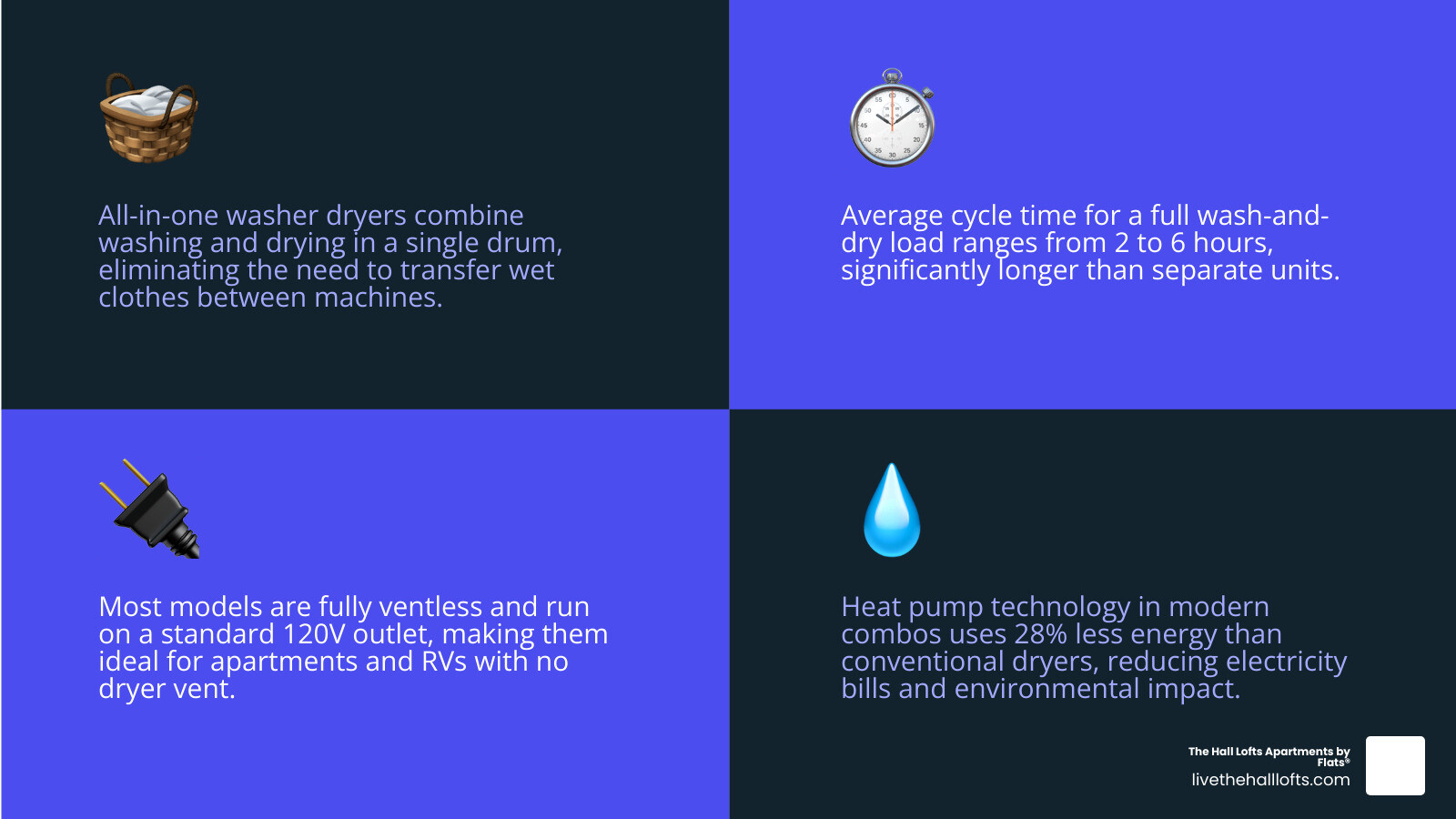
| Outlet needed | Standard 120V in most models |
| Cycle time | 2 to 6 hours for a full wash-and-dry cycle |
| Best for | Small apartments, condos, RVs, no-vent spaces |
| Not ideal for | High-volume laundry, large or bulky loads |
| Energy efficiency | High — especially heat pump models (28%+ less energy than standard dryers) |
These machines combine washing and drying into a single drum, so there's no transferring wet clothes between appliances. That matters more than it sounds — on average, people leave wet clothes sitting in a washer for 130 minutes before moving them to a dryer, which can lead to musty odors and bacterial growth. An all-in-one unit solves that problem automatically.
The catch? Drying takes longer than a dedicated dryer, and only one load can run at a time. For busy households doing multiple loads per day, that bottleneck adds up fast.
This guide breaks down exactly how these machines work, who they're right for, which brands lead the market in 2026, and what to watch out for before making a decision.
How All-in-One Washer Dryers Work
An all-in-one washer-dryer combo functions by performing both washing and drying cycles sequentially inside a single, enclosed drum. The washing cycle operates identically to a standard front-loading washing machine, using water, high-efficiency (HE) detergent, and mechanical rotation to clean fabrics. Once the rinse and high-speed spin cycles conclude, the machine transitions directly into the drying phase without requiring any physical transfer of the load.
The primary technological divergence occurs during this drying phase. Unlike traditional standalone dryers that pull in ambient air, heat it, and expel the moisture-laden exhaust through an external vent, most all-in-one units utilize ventless technology. This design allows the machines to operate in spaces completely devoid of external ductwork, relying instead on standard water drainage lines to remove extracted moisture.
Furthermore, many of these modern combination units are engineered to run on standard 120-volt electrical outlets. This is a significant departure from traditional standalone electric dryers, which typically require dedicated 240-volt electrical lines. While the lower voltage increases installation flexibility, it also contributes to the extended drying runtimes characteristic of combination appliances. To understand how these machines fit into a broader residential layout, home buyers often consult resources like The Ultimate Laundry Showdown: Washer Dryer All-in-One vs. Separate Units in 2026 - Best Dry N Dryers to evaluate infrastructure compatibility.
Vented vs. Ventless Condenser vs. Heat Pump Models
The drying performance, energy consumption, and installation requirements of an all-in-one machine depend heavily on the underlying drying mechanism. There are three primary types of drying systems found in combination units:
- Vented Combos: These rare models operate similarly to traditional dryers, heating air and exhausting the damp exhaust outside through a duct. While they offer faster drying times, they eliminate the primary benefit of flexible, ventless installation.
- Ventless Condenser Combos: A highly common traditional style, condenser models use a heating element to warm the air inside the drum. As the warm, damp air circulates, it passes through a condensing chamber where cool water is used to lower the temperature of the air. This temperature drop causes the moisture to condense into liquid water, which is then pumped out through the drain hose. While highly versatile, condenser models consume significant amounts of water during the drying phase to cool the condenser.
- Ventless Heat Pump Combos: The gold standard of modern combination technology, heat pump models operate as a closed-loop system. Instead of using a basic heating element, these machines utilize a compressor, refrigerant, and an evaporator to recycle air. The system heats the air to dry the clothes, pulls the damp air across an evaporator coil to condense and extract the moisture, and then reheats the dry air to send it back into the drum.
Cycle Times and Energy Efficiency
Drying cycles in ventless systems naturally require more time than those in traditional vented setups. Because ventless systems rely on moisture extraction and temperature differentials rather than forcefully blowing humid air outside, a complete wash-and-dry cycle can range from 2 to 6 hours. For example, testing indicates that older condenser models or heavily loaded machines can easily push past the 4-hour mark.
However, modern heat pump integration has vastly improved efficiency. According to Energy Star, heat pump dryers use at least 28 percent less energy than standard electric dryers. In rigorous product evaluations, modern heat pump combos dried standard 12-pound laundry loads in approximately 3.5 hours while utilizing half the energy of a traditional electric dryer. For smaller, everyday loads of 8 pounds, cycle times can drop closer to 2 hours, making the technology highly practical when managed with realistic expectations.
Are All-in-One Washer Dryers Good for Modern Homes?
The decision to purchase an all-in-one unit typically comes down to a balance of physical space and daily habits. For households seeking to optimize square footage, the space-saving design of a single-drum appliance is unmatched. By combining two full-sized appliances into one, home layouts can be reconfigured to allow for extra storage, larger closets, or more open living areas.
Additionally, the automatic cycle transition simplifies the laundry routine. The elimination of the "transfer step" prevents wet clothes from sitting in the drum for hours, which is particularly beneficial for busy individuals who might otherwise forget damp laundry. However, as noted in the All-in-One Washer-Dryer Combos Pros and Cons - Consumer Reports analysis, these units do not allow for parallel processing. In a traditional setup, one load can dry while a second load washes. With an all-in-one, the entire multi-hour cycle must finish before a new batch of laundry can begin.
Why All-in-One Washer Dryers Are Good for Small Spaces
In compact urban residences, historic renovations, and accessory dwelling units, space is a premium commodity. Traditional laundry setups require a side-by-side footprint of approximately 54 to 60 inches, or a vertical clearance that prevents the use of overhead shelving. An all-in-one unit can easily slip into a standard 24-inch closet, under a kitchen counter, or into a bathroom nook.
Because these machines are ventless, there is no need to cut exhaust holes through exterior walls—a task that is often physically impossible or legally prohibited in historic buildings and high-rise condominiums. For those exploring modern urban apartments, opting for properties with integrated solutions is highly desirable. Information regarding these layouts can be found by reviewing In-Unit Laundry Apartments, which highlights how compact appliance design maximizes living space.
When Are All-in-One Washer Dryers Good for Minimalist Lifestyles?
For individuals, couples, or households with low laundry volumes, the all-in-one machine aligns perfectly with a minimalist lifestyle. The "set-and-forget" capability allows users to start a load before leaving for work or going to bed, returning to fully clean and dry clothes.
To achieve optimal results, users must adjust to smaller load sizes. While a combo unit might have a washing capacity of 4.5 to 5.3 cubic feet, the effective drying capacity is often smaller. This is because clothes require more open air space to tumble and dry via condensation than they do to wash. Keeping loads to moderate sizes ensures that fabrics dry completely without emerging damp or wrinkled. For a complete breakdown of how to adapt laundry habits to these machines, the In-Unit Washer Dryer Complete Guide provides essential operation tips.
Comparing Top Brands and Models in 2026
The market for all-in-one washer-dryers has expanded rapidly, with major manufacturers introducing high-capacity, smart-enabled heat pump models that challenge traditional laundry configurations. The table below compares the leading options available in 2026:
| Feature | GE Profile UltraFast (PFQ97HSPVDS) | LG WashCombo (WM6998HBA) | Samsung Bespoke AI Combo (WD53DBA900H) |
|---|---|---|---|
| Capacity | 4.8 Cu. Ft. | 5.0 Cu. Ft. | 5.3 Cu. Ft. |
| Drying Tech | Ventless Heat Pump | Ventless Heat Pump | Ventless Heat Pump |
| Voltage | 120V | 120V | 120V / 240V |
| Average Cycle Time | ~2 hours, 12 minutes | ~2 to 2.5 hours | ~2 to 3 hours |
| Key Smart Feature | SmartDispense (50 oz reservoir) | AI DD (Fabric Sensor) | AI OptiWash & Dry |
| Lint Handling | Auto-clean filter system | Easy-reach manual filter | Auto-cleaning condenser |
These brands have focused heavily on reducing cycle times and improving user convenience. The GE Profile UltraFast, for example, has received praise in publications such as Fit Your Laundry Routine in One Machine with the Best All-in-One Washer Dryers We Tested for its rapid drying capabilities and high-capacity detergent reservoir.
At the same time, editorial reviews like The Best Washer-Dryer Combo (But We Don’t Recommend It) remind consumers that while these premium models represent substantial technological leaps, they still require a behavioral shift compared to separate units. For those seeking a deeper dive into the practical realities of daily operation, the Washer-Dryer Combo: Pros & Cons, and When It Makes Sense - Home Appliance Fixing Blog offers an objective look at long-term ownership.
Frequently Asked Questions About Washer-Dryer Combos
Do all-in-one washer dryers require venting?
No, the vast majority of modern all-in-one washer-dryers are completely ventless. They utilize condensation or heat pump technology to extract moisture from clothing and send it directly down the standard wastewater drain. This provides immense installation flexibility, allowing the machine to be placed anywhere with water hookups and a drain.
Can these machines handle large items like comforters?
While high-capacity models (ranging from 4.8 to 5.3 cubic feet) can successfully wash and dry twin- or full-size comforters, king-size bedding often exceeds the drying limits. Because the drum must have sufficient empty space for warm air to circulate, stuffing a massive comforter into the machine will likely result in damp patches and extremely long cycle times.
Are repairs more expensive for combo units?
Because all-in-one units combine complex plumbing, heating, and electronic systems into a single chassis, repairs can be more intricate than those for standalone machines. If a critical component fails, both the washing and drying functions may be unavailable until the unit is serviced. Regular maintenance, such as cleaning the lint filters and running monthly self-clean cycles, is vital to ensure long-term reliability.
Conclusion
All-in-one washer-dryers have evolved from niche, slow-performing appliances into highly efficient, smart-enabled machines suitable for modern urban living. For residents of premium historic renovations, such as the warehouse apartments at The Hall Lofts Apartments by Flats® in Minneapolis' North Loop, these appliances provide the perfect blend of historical preservation and contemporary convenience.
By eliminating the need for intrusive exterior venting, these machines allow historic brick-and-timber homes to feature fully functional, in-unit laundry systems. Combined with pet-friendly spaces (accommodating up to two pets per home), these living spaces offer an elevated, hassle-free lifestyle in one of the city's most vibrant neighborhoods. To explore available floor plans with premium amenities, view the options for an Apartment with Washer and Dryer in Unit and find the perfect match for a modern, streamlined routine.