Why Smart Lighting Control Matters for Modern Living
Smart lighting control systems allow for remote management of a home's lights through apps, voice commands, or automated schedules—replacing traditional switches with intelligent, network-connected devices that learn preferences and adapt to a resident's lifestyle.
Quick Overview: Top Smart Lighting Benefits
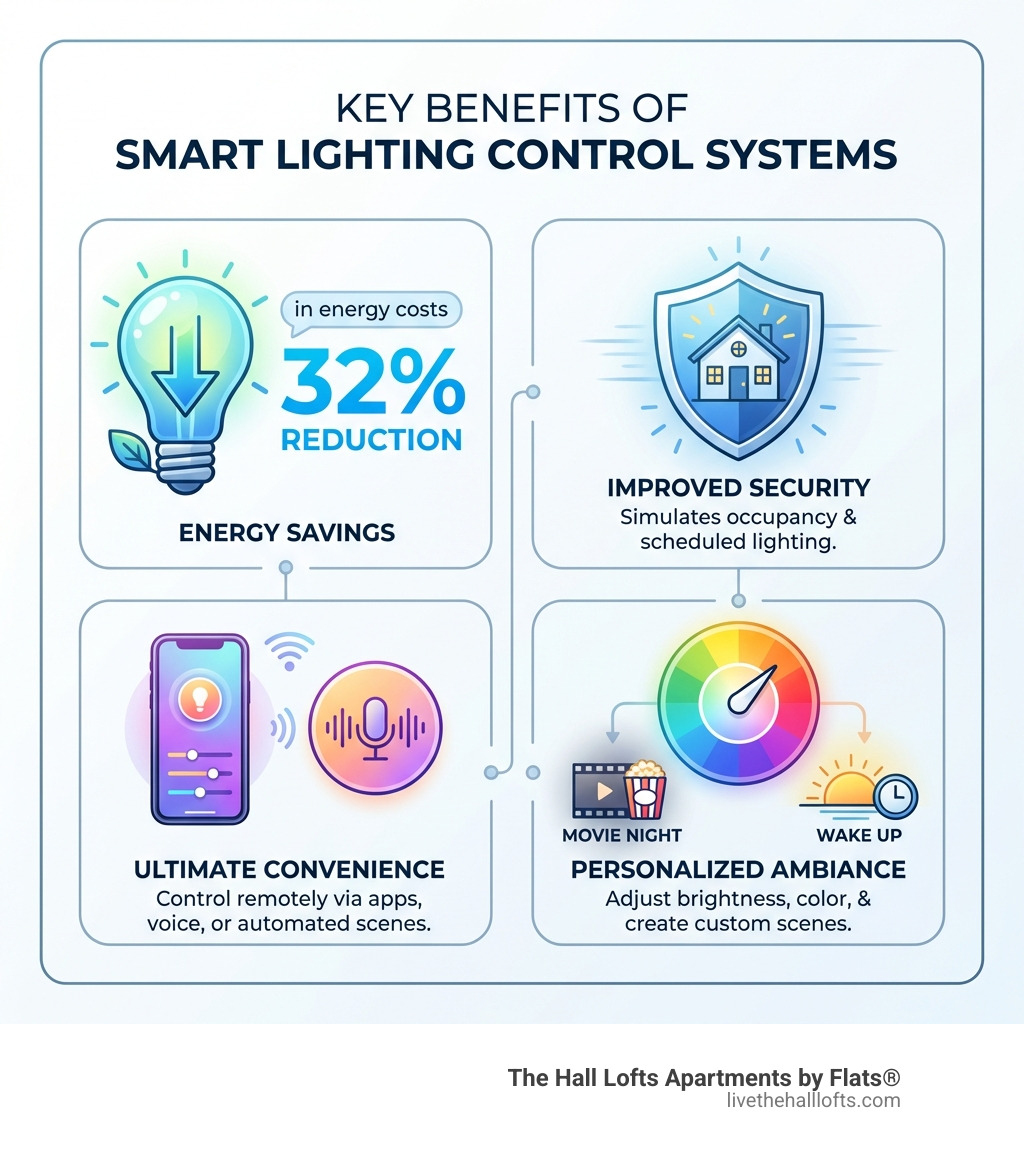
- Energy Efficiency: Automatic lighting systems with occupancy sensors reduce energy use by approximately 32%
- Improved Security: Scheduled lighting and vacation modes simulate occupancy when a home is empty
- Ultimate Convenience: Control lights from anywhere via smartphone, voice assistant, or automated scenes
- Personalized Ambiance: Adjust brightness, color temperature, and create custom scenes for any mood or activity
Here's the reality: lighting represents 19% of global energy use and 6% of all greenhouse emissions. In commercial and industrial sectors across the United States, 22% of energy consumption goes directly to lighting.
Smart lighting systems flip this equation on its head.
These intelligent networks connect bulbs, switches, and dimmers to a central hub or directly to Wi-Fi. The result is the ability to dim the lights for movie night, wake up to gradually brightening bulbs that mimic sunrise, or ensure a home looks occupied while traveling—all without touching a single switch.
For DIY enthusiasts ready to install a few smart bulbs or those seeking a professionally designed whole-home system, smart lighting control adapts to any space. The technology works equally well in historic lofts and brand-new apartments, offering wireless solutions that don't require opening walls or running new wiring.
The systems integrate seamlessly with voice assistants like Alexa and Google Assistant, climate control, security cameras, and audio systems. This creates a truly connected home where lighting responds intelligently to a person's presence, the time of day, and even the amount of natural sunlight streaming through the windows.
What is a Smart Lighting System?
A lighting control system is an intelligent, network-based system that integrates communication between various inputs and outputs related to lighting control, often utilizing one or more central computing devices. It is sometimes referred to as smart lighting control. These systems are primarily used to improve energy efficiency, meet building codes, and comply with green building and energy conservation programs. They also offer significant advantages in terms of convenience and security, providing the right amount of light where and when it is needed.
Core Components Explained
At its heart, a smart lighting control system comprises several key elements that work in concert to deliver intelligent illumination.
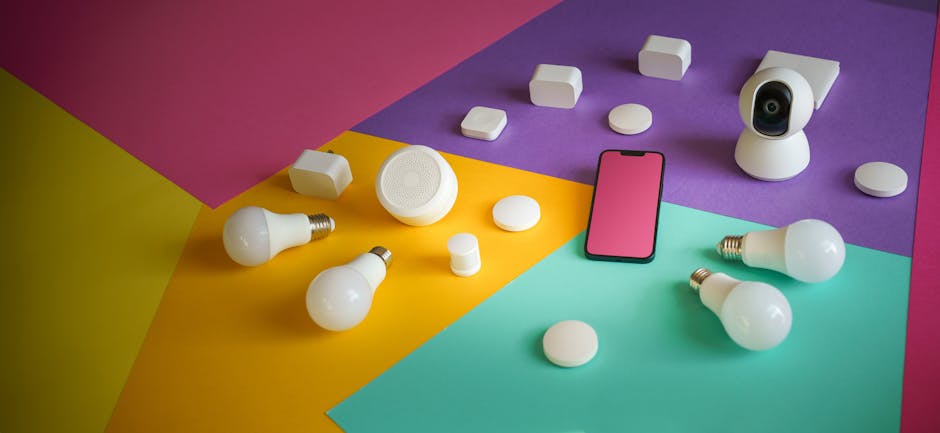
- Smart Bulbs: These are often LED lights that contain built-in wireless communication technology (like Wi-Fi, Bluetooth, Zigbee, or Z-Wave). They can change color, adjust brightness, and respond to commands from a control interface. LEDs themselves offer significant energy efficiency and a long lifespan.
- Smart Switches and Dimmers: These replace traditional wall switches and allow for remote control, scheduling, and scene activation. Smart dimmer switches can turn regular lights into smart lights and make smart bulbs even smarter, often supporting multiway circuits.
- Hubs and Bridges: For many smart lighting protocols, a central hub or bridge acts as the brain of the system, connecting smart devices to the home network and often to the internet. For instance, certain professional-grade bridges offer improved speed, capacity, and features, linking smart lights to a mobile app and enabling advanced automations. Some Bluetooth-based systems may not require a bridge for basic functionality.
- Control Interfaces: This is how users interact with the system.
- Mobile Apps: Most smart lighting systems come with dedicated smartphone or tablet applications, allowing for comprehensive control, scheduling, and scene creation from anywhere.
- Voice Assistants: Integration with platforms like Alexa, Google Assistant, or Apple HomeKit enables hands-free control using simple voice commands. Some in-wall control panels even include built-in voice assistants, eliminating the need for separate devices.
- Wall Keypads and Touchscreens: Neat interfaces allow for physical control directly from the wall. These keypads can often be customized to control not just lights but also music, locks, and thermostats, providing a streamlined aesthetic.
- Sensors: Occupancy sensors (passive infrared, ultrasonic, hybrid) detect presence and motion, automatically turning lights on or off. Daylight sensors measure ambient light levels, enabling systems to dim or switch off electric lights when natural light is sufficient.
Smart vs. Traditional Lighting: What's the Difference?
The contrast between smart lighting control and traditional lighting is like comparing a flip phone to a smartphone.
- Traditional Lighting: Characterized by simple on/off functionality, primarily controlled by manual wall switches. Once installed, its output (brightness, color temperature) is generally fixed. There is no remote access, scheduling, or dynamic adjustment based on external factors. While effective, it offers limited flexibility and no inherent energy-saving automation.
- Smart Lighting: This is where the magic happens. Smart lighting transcends basic illumination to offer:
- Remote Access: Lights can be controlled from anywhere in the world using a smartphone app. This makes it easy to turn off forgotten lights or turn them on before arriving home.
- Scheduling: Program lights to turn on or off at specific times, or even synchronize with sunrise and sunset.
- Scene Creation: Customize lighting presets for different activities or moods, such as "Movie Night," "Dinner Party," or "Wake Up" scenes.
- Dimming Capabilities: Fine-tune brightness levels to create the perfect ambiance, often with smooth, flicker-free dimming down to very low percentages.
- Color Tuning: Many smart lights can change color temperature, from warm white to cool white, and some can even produce a full spectrum of colors to match any mood or decor.
- Automation: Integration with sensors for occupancy detection, daylight harvesting, or even geofencing (lights turn on when a resident arrives home).
Traditional lighting is reactive, while smart lighting control is proactive, adaptive, and deeply integrated into a modern lifestyle.
The Transformative Benefits of Intelligent Lighting
Intelligent lighting lifts the living experience beyond mere illumination, offering convenience, security, well-being, and entertainment. Whether in a modern loft or a renovated warehouse apartment, these systems improve daily life.

Enhancing Energy Efficiency
One of the most compelling advantages of smart lighting control is its profound impact on energy consumption and environmental footprint. Lighting applications account for a significant portion of global energy use—19% of the world's energy and 6% of all greenhouse emissions. In the United States, commercial and industrial sectors use 65% of energy, with 22% of that specifically for lighting.
- Automatic Controls: Automatic lighting systems, including occupancy sensors and individual controls, can reduce energy use by approximately 32% compared to conventional systems. This is particularly effective in open-plan environments.
- Daylight Harvesting: This technique uses natural light from the sun to reduce the need for artificial lighting. Daylight sensors detect ambient light levels and automatically dim or switch off electric lights when sufficient natural light is available. This ensures optimal illumination while minimizing energy use.
- Occupancy Sensing: Motion or occupancy sensors detect when a space is occupied or vacant, automatically turning lights on when someone enters and off after they leave. Ultrasonic sensors are particularly effective, detecting all types of motion and movements not within the line of sight, which helps eliminate coverage gaps.
- Automatic Dimming: Beyond on/off, smart systems can automatically dim lights based on time of day, available daylight, or even scheduled preferences, further reducing energy use without compromising comfort.
- LED Efficiency: The widespread adoption of LED technology, which is inherently more energy-efficient than traditional incandescent or fluorescent bulbs, forms the foundation of most smart lighting systems. This combination leads to substantial reductions in energy consumption and greenhouse gas emissions.
By intelligently managing when, where, and how much light is used, smart lighting control plays a crucial role in minimizing unnecessary light and energy consumption.
The Ultimate in Convenience and Ambiance
Smart lighting control offers unparalleled convenience and the ability to craft the perfect atmosphere for any occasion.
- Scene Creation: It's possible to arrive home to a perfectly lit apartment, or change a living area for a cozy movie night with a single command. With smart lighting, custom "scenes" can be created and recalled to adjust multiple lights simultaneously. A "Movie Night" scene might dim the overhead lights and turn on accent lighting, while a "Wake Up" scene could gradually brighten bedroom lights to mimic a sunrise.
- Scheduling and Geofencing: Lights can be scheduled to turn on before a resident arrives home or turn off automatically upon departure. Geofencing can trigger lights based on a smartphone's location, ensuring the space is always welcoming.
- Voice Control: The ease of simply saying "Alexa, turn on the living room lights" or "Hey Google, dim the kitchen to 50%" adds a layer of effortless convenience to daily routines.
- Human-Centric Lighting (HCL): Beyond basic on/off, smart lighting can support well-being. Tunable white light systems allow adjustment of color temperature from warm to cool white (e.g., 1,800K–4,000K). Cooler, brighter light can boost focus during the day, while warmer, softer light can promote relaxation in the evening. This synchronization of interior light with the rhythms of the sun can personalize moments and transform experiences. The ability to adjust lighting to offer the best tone and brightness for different times of day—early mornings, afternoons, or evenings—improves comfort and productivity. More on how light affects well-being can be found in discussions on photonics.
- Color-Changing for Mood: For entertainment or ambiance, RGB (Red, Green, Blue) smart lights can produce millions of colors. Whether it's setting a festive mood for a party or creating a calming blue glow for relaxation, the possibilities are endless.
The ability to create any mood and atmosphere desired, coupled with convenient control, makes smart lighting control an essential element of modern, comfortable living.
A Guide to Smart Lighting Control Technologies
Understanding the underlying technologies is key to selecting a suitable smart lighting control system. This section explores different system types, communication protocols, and installation considerations.
Wired vs. Wireless: System Foundations
The choice between wired and wireless systems often depends on the project's scope and the existing infrastructure.
- Wired Systems: These systems involve physical wiring connecting components. They are known for their reliability, robustness, and often higher bandwidth, making them suitable for complex, large-scale installations, especially in new construction. However, they can be more challenging to install in existing buildings as they may require opening walls.
- Wireless Systems: These systems communicate via radio frequencies (RF) and are increasingly popular due to their flexibility and ease of installation.
- Retrofitting: Wireless solutions are ideal for retrofitting existing homes or apartments, like the renovated lofts of Minneapolis, as they don't require extensive rewiring. This means less disruption during installation. Some systems, for example, use proprietary RF technology, which operates independently of Wi-Fi for improved reliability.
- Flexibility: Wireless controls allow for switches and sensors to be placed in convenient locations without being tied to existing electrical boxes.
- Mesh Networks: Many wireless protocols, like Zigbee and Z-Wave, create mesh networks. In these networks, each device can communicate with its neighbors and relay signals, extending the range and reliability of the system.
While wired systems offer undeniable dependability, wireless smart lighting control provides significant benefits in terms of simplified installation and increased flexibility, making it a practical choice for many residential applications.
DIY vs. Professional Smart Lighting Control Solutions
The approach to implementing smart lighting control can range from a few self-installed smart bulbs to a fully integrated, professionally designed whole-home system.
- DIY Systems: These are typically accessible entry points into smart lighting control, often focused on single-room solutions. They can involve smart bulbs that connect directly to Wi-Fi or Bluetooth, controllable via a smartphone app, or starter kits with a few bulbs and a hub for simple setup. Installation usually involves screwing in a bulb or replacing a switch, followed by configuration through a mobile app. Certain platforms cater to DIY enthusiasts who prioritize local control and privacy. While excellent for specific applications, these systems may offer different scalability and feature sets compared to professionally installed solutions.
- Professional Systems: These are designed for comprehensive, bespoke integrations and are handled by qualified installers. They are built for extensive residential projects, capable of supporting hundreds of devices and integrating lighting, shades, climate, and more into a unified system. Professional design allows a system to grow with a resident's needs, offering advanced programming for complex scenes, schedules, and integrations. These systems often provide features like sun-tracking technology for natural light optimization, precise dimming, and robust wireless communication. The result is seamless integration, maximum reliability, advanced features, and custom aesthetics. This approach requires professional installation and programming for optimal performance.
For residents of modern apartments or lofts, a DIY approach can be a great way to start, while those seeking a truly integrated and sophisticated smart lighting control experience for their entire home may find professional solutions more suitable.
| Protocol | Range | Power Consumption | Device Limit | Hub Requirement |
|---|---|---|---|---|
| Wi-Fi | Medium (Router) | High | Varies | No (Direct) |
| Bluetooth | Short (Point-to-Point) | Low | Few | No (Direct) |
| Zigbee | Medium (Mesh) | Low | High | Yes |
| Z-Wave | Medium (Mesh) | Low | Medium | Yes |
Designing and Integrating Your System
Designing a smart lighting control system involves more than just picking out smart bulbs; it requires careful consideration of scalability, aesthetics, and how it will integrate with a broader smart home ecosystem.
Key Considerations for Installation
When planning a smart lighting control setup, several factors come into play, particularly for urban living spaces where efficiency and aesthetics are paramount.
- Assessing Needs: The first step is to identify which areas of a home would benefit most from smart lighting. Considerations include whether to automate an entire apartment or start with key rooms like the living area or bedroom, taking into account daily routines, entertainment habits, and security needs.
- Room-by-Room Plan: For a comprehensive system, a plan can be designed for each room, specifying desired light levels, color temperatures, and potential scenes. It's helpful to consider how lighting can improve specific tasks like cooking, reading, or working from home.
- Choosing a Protocol: As discussed, various protocols (Wi-Fi, Bluetooth, Zigbee, Z-Wave) have different strengths. Consider the number of devices, desired reliability, and potential for interference. For larger, more complex systems, a dedicated mesh network protocol like Zigbee or Z-Wave, often managed by a hub, can offer greater reliability than relying solely on Wi-Fi.
- Planning for Future Expansion: Even when starting small, selecting a system that allows for future growth is beneficial. Many professional systems can scale from a single room to hundreds of devices, allowing for phased installations without major renovations.
- Aesthetics: In modern lofts, the visual appeal of controls is crucial. Systems are available that offer designer controls in a variety of colors and finishes. Some manufacturers emphasize coordinating wall plates, receptacles, and other accessories to create a unified and neat look that complements an interior design. The design philosophy extends beyond just looks to encompass how a product works and is understood, ensuring the device is beautiful and intuitive.
Integrating with a Broader Smart Home
The true power of smart lighting control unfolds when it integrates seamlessly with other smart home devices and platforms, creating a truly intelligent living environment.
- Voice Assistants: Platforms like Amazon Alexa, Google Assistant, and Apple HomeKit act as central command centers. Linking a smart lighting system to these assistants provides hands-free control over lights, often alongside other smart home functions.
- Smart Climate Control: Integrating lighting with a Smart Climate Control system can improve comfort and energy efficiency. For example, lights could dim when the air conditioning kicks on, or adjust based on room temperature.
- Security Systems: Smart lighting can be a powerful deterrent. Lights can be programmed to turn on automatically if a security sensor is triggered, or to simulate occupancy with scheduled lighting changes when a resident is away, enhancing the security of the apartment.
- Audio-Visual Systems: For an immersive experience, integrate lighting with a home entertainment setup. Lights can dim when the TV turns on for a movie, or pulse with the rhythm of music for a party atmosphere.
- Creating Routines and Automations: Beyond simple on/off, complex routines can be created that involve multiple devices. For instance, a "Good Morning" routine could gradually brighten bedroom lights, raise motorized blinds, and start a coffee maker, all while adjusting a smart thermostat.
- Unified Control: A well-integrated system allows for the management of all smart devices from a single app or control panel, simplifying daily interactions with the home.
This interconnectedness transforms an apartment into a responsive, intuitive, and intelligent space, where different systems work together to improve a resident's lifestyle.
The Future of Lighting: Security and Emerging Trends
As smart lighting control technology continues to evolve, so do the considerations around its security and the exciting new possibilities it presents for home illumination.
Securing a Smart Lighting Control Network
The convenience of networked smart devices comes with inherent security implications. Protecting a smart lighting control system is crucial to safeguard privacy and the home network.
- IoT Security Risks: Like any Internet of Things (IoT) device, smart lights and their associated hubs can be potential entry points for cyber threats if not properly secured. Vulnerabilities could allow unauthorized access to a home network or personal data.
- Network Vulnerabilities: Weak passwords, outdated firmware, and unencrypted communication can expose a smart lighting system to risks.
- Mitigation Strategies:
- Strong Passwords: Using unique, complex passwords for smart lighting accounts and the Wi-Fi network is a best practice.
- Guest Networks: Setting up a separate guest Wi-Fi network for smart devices can isolate them from the primary network, adding an extra layer of security.
- Firmware Updates: Regularly checking for and installing firmware updates for all smart lighting components (bulbs, switches, hubs) is important. These updates often include critical security patches.
- Local Control Options: Some systems emphasize local control, meaning devices communicate directly within the home network without always routing through the cloud. This can reduce reliance on external servers and potential vulnerabilities.
- Reputable Brands: Selecting smart lighting products from well-known manufacturers with a track record of good security practices is recommended.
Taking these proactive steps allows for enjoying the benefits of smart lighting control with greater peace of mind.
What's Next in Home Illumination?
The landscape of smart lighting control is continuously innovating, with several exciting trends on the horizon.
- Matter Protocol: A significant development is the emergence of the Matter standard. This new interoperability protocol aims to unify smart home devices, allowing products from different brands to communicate seamlessly. This means less concern about compatibility and more choice for consumers.
- AI-Powered Automation: Artificial intelligence (AI) is set to make smart lighting even smarter. AI could enable predictive lighting, where systems learn habits and preferences over time, anticipating needs and adjusting lighting proactively. Imagine lights that adapt not just to a schedule, but to mood, the weather, or even the type of activity a person is engaged in, all without explicit commands.
- Advanced Sensors and Biometric Integration: Beyond simple occupancy and daylight sensors, future systems may incorporate more advanced sensors that monitor air quality, sound, or even biometric data to fine-tune lighting for optimal health and well-being.
- Li-Fi (Light Fidelity): This emerging technology uses visible light to transmit data, potentially offering ultra-fast, secure wireless communication through light fixtures. While still in its early stages for residential use, Li-Fi could transform how devices connect within a home.
- Advanced Human-Centric Lighting: Expect even more sophisticated human-centric lighting solutions that precisely mimic natural daylight cycles, offering dynamic color tuning and intensity shifts throughout the day to support circadian rhythms, improve productivity, and improve sleep quality.
These advancements promise an even more intuitive, personalized, and integrated smart lighting control experience, further blurring the lines between technology and comfortable living.
Conclusion
Smart lighting control systems are more than just a modern convenience; they are a fundamental upgrade to contemporary living, offering a blend of efficiency, security, and personalized ambiance that traditional lighting simply cannot match. From significantly reducing energy consumption and minimizing the environmental footprint to providing improved home security through simulated occupancy, the benefits are clear.
The ultimate convenience of controlling lights with a tap on an app, a voice command, or through intelligent automation transforms daily routines into seamless experiences. Whether setting the perfect mood for a quiet evening in a loft or ensuring a home is welcoming upon return, smart lighting control empowers residents to customize their environment like never before.
For those living in modern urban spaces, such as the renovated warehouse apartments in Minneapolis' North Loop, smart lighting control systems integrate perfectly with a lifestyle that values both historical charm and contemporary design. These systems offer wireless solutions that respect existing architecture while providing cutting-edge technology.
Intelligent illumination can transform a living space and represents the future of home comfort and efficiency. The available smart amenities show how smart lighting control can enhance life, making a home not just smarter, but cozier and more responsive to a resident's needs.