Why Minneapolis Exposed Brick Apartments Are Taking Over the Market
Exposed brick apartments Minneapolis buyers are choosing blend historic warehouse charm with modern urban living. These converted industrial buildings offer open floor plans, soaring ceilings, and authentic architectural character that standard apartments simply can't match.
Top Minneapolis Exposed Brick Apartment Areas:
- North Loop - Historic warehouse district with 724 Lofts and Robitshek Lofts
- Northeast Arts District - Creative hub featuring Expo and NordHaus communities
- Mill District - Riverfront living with Mission Lofts and Factory Lofts
- Warehouse District - Downtown proximity with Ironclad and Smyth Lofts
Currently, 639 loft apartments are available for rent in Minneapolis, with many featuring exposed brick walls, timber beams, and factory windows. These converted warehouses typically offer amenities like rooftop decks, fitness centers, and pet-friendly policies allowing up to two pets.
The appeal goes beyond aesthetics. Historic buildings like 724 Lofts (built in 1892, renovated in 2022) and Mission Lofts (converted from an 1886 Spanish Mission-style church) preserve Minneapolis's industrial heritage while meeting modern living standards. Features like 23-foot ceilings at Factory Lofts and original hardwood floors create living spaces that feel both spacious and authentic.
These adaptive reuse projects transform former grain elevators, textile factories, and warehouses into luxury residences. The North Loop and Northeast neighborhoods lead this change, offering walkable access to craft breweries, art galleries, and the Mississippi River trails.
Why Minneapolis Loves Exposed Brick Living
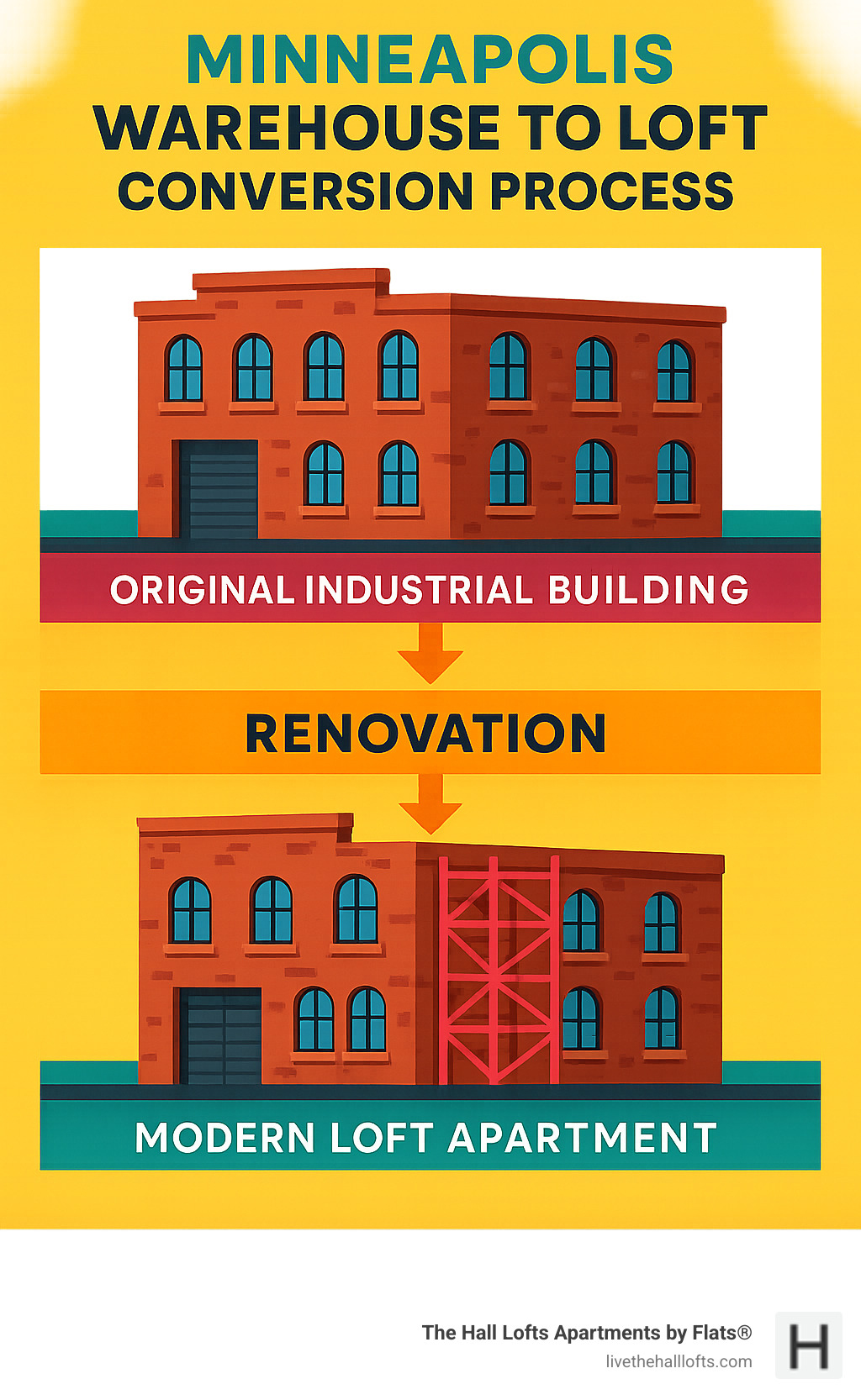
Minneapolis has acceptd exposed brick living because it perfectly captures the city's industrial heritage while meeting modern sustainability goals. The adaptive reuse of historic warehouses and factories preserves architectural character that would otherwise be lost to demolition.
These conversions showcase impressive architectural features that define loft living. High ceilings, often reaching 23 feet in buildings like Factory Lofts, create an airy atmosphere that standard apartments cannot replicate. Large factory windows flood spaces with natural light, while exposed timber beams and steel supports add structural drama to open floor plans.
The North Loop revival exemplifies this trend. Once a purely industrial district, this neighborhood now hosts dozens of converted warehouse apartments that maintain their historic character. Buildings listed on the National Historic Register, like 724 Lofts, blend 1890s industrial architecture with contemporary amenities.
Sustainability plays a major role in the appeal. Rather than tearing down historic structures, adaptive reuse projects preserve existing buildings while updating them with modern building codes and energy-efficient systems. This approach reduces construction waste and maintains the neighborhood's architectural integrity.
The urban lifestyle these buildings provide attracts residents seeking walkable communities with character. Unlike suburban developments, these converted warehouses sit within established neighborhoods featuring restaurants, breweries, and cultural venues. Residents can walk to Target Field, explore Mississippi River trails, or visit local art galleries.
Converted warehouse research shows that these properties often command premium rents due to their unique features and desirable locations. The combination of historic charm and modern convenience creates living spaces that feel both authentic and luxurious.
More info about Minneapolis Loft Apartments reveals how these conversions balance preservation with innovation, creating homes that honor the past while embracing the future.
Exposed Brick Apartments Minneapolis: Neighborhood & Building Roundup

Minneapolis offers several neighborhoods where exposed brick apartments Minneapolis buyers can find their perfect match. Each area brings distinct character while maintaining the industrial aesthetic that makes these homes special.
The diversity of converted buildings is remarkable. From former grain elevators like Ironclad (originally the Union Grain Elevator built in 1867) to textile factories like Robitshek Lofts, each building tells a unique story through its architecture. Mission Lofts stands out as a converted 1886 Spanish Mission-style church, complete with original stained glass windows and repurposed pews.
Pet-friendly policies are standard across most buildings, typically allowing up to two pets per unit. Many properties feature dedicated amenities like rooftop dog parks and on-site pet washing stations, recognizing that urban dwellers often share their loft spaces with furry companions.
Transportation access varies by neighborhood, with North Loop properties offering the best walkability scores. The Minneapolis Skyway system provides weather-protected access to downtown, while Cedar Lake Trail connects residents to recreational opportunities. Most buildings include secure parking, addressing the practical needs of car-owning residents.
Renovated Loft Apartments showcase how modern updates improve historic spaces without compromising their character. These renovations typically include updated electrical systems, modern HVAC, and contemporary kitchen appliances while preserving original brick walls and wooden beams.
North Loop Exposed Brick Apartments Minneapolis Highlights
The North Loop leads Minneapolis in warehouse conversions, offering the highest concentration of exposed brick apartments Minneapolis buyers seek. This historic district sits steps from Target Field and provides easy access to Mississippi River trails.
724 Lofts represents the gold standard for historic preservation. Built in 1892 and renovated in 2022, this 49-unit building maintains its National Historic Register status while offering modern amenities. The property features exposed brick walls, wooden beams, and high ceilings that create dramatic living spaces. Residents enjoy rooftop patios with herb gardens and dual fitness centers across the campus-style layout.
Robitshek Lofts occupies a converted textile factory building with just 12 unique units. Each apartment features original hardwood floors, factory windows, and exposed brick walls that tell the story of Minneapolis's industrial past. The building's downtown location provides views of Target Center and Target Field.
The Archive takes a unique approach by changing residential corridors into art gallery spaces. This 8-story building houses 200 apartments plus 20 live-work spaces, allowing creative professionals to combine home and studio. The property displays over 100 commercial artworks throughout common areas, honoring the North Loop's artistic heritage.
These North Loop properties benefit from proximity to established restaurants, bars, and entertainment venues. The Mississippi River National Recreation Area provides 72 miles of trails for outdoor enthusiasts, while the downtown business district offers employment opportunities within walking distance.
Northeast Exposed Brick Apartments Minneapolis Finds
Northeast Minneapolis brings a different flavor to exposed brick living, emphasizing the area's reputation as an arts district. This neighborhood features craft breweries, independent galleries, and cobblestone streets that create a more bohemian atmosphere than the North Loop's urban sophistication.
Expo sits within the St. Anthony Falls Historic District, offering luxury apartments with full downtown skyline views. The property features heated outdoor pools, rooftop dog parks, and 24-hour leasing availability. The historic district location provides access to the iconic Stone Arch Bridge and walking trails along the Mississippi River.
NordHaus positions itself as a gateway to Northeast's cultural scene. Located within walking distance of craft breweries, cafes, and art galleries, this property emphasizes the neighborhood's creative energy. Residents can walk historic cobblestone streets and bike over the Stone Arch Bridge while enjoying modern amenities like fitness centers and rooftop decks.
The Northeast location appeals to residents seeking a more relaxed urban experience. While still providing downtown access, the neighborhood maintains a community feel with local businesses and cultural venues. The area's artistic heritage attracts creative professionals who appreciate both the industrial architecture and the supportive arts community.
Factory Lofts caters specifically to University of Minnesota students, offering 3- and 4-bedroom units with 23-foot ceilings and radiant heated floors. Each bedroom includes a private bathroom, addressing privacy concerns in shared housing. The property features gaming rooms, workout studios, and sky lounges that support both study and social activities.
Stand-Out Architectural Features & Modern Amenities

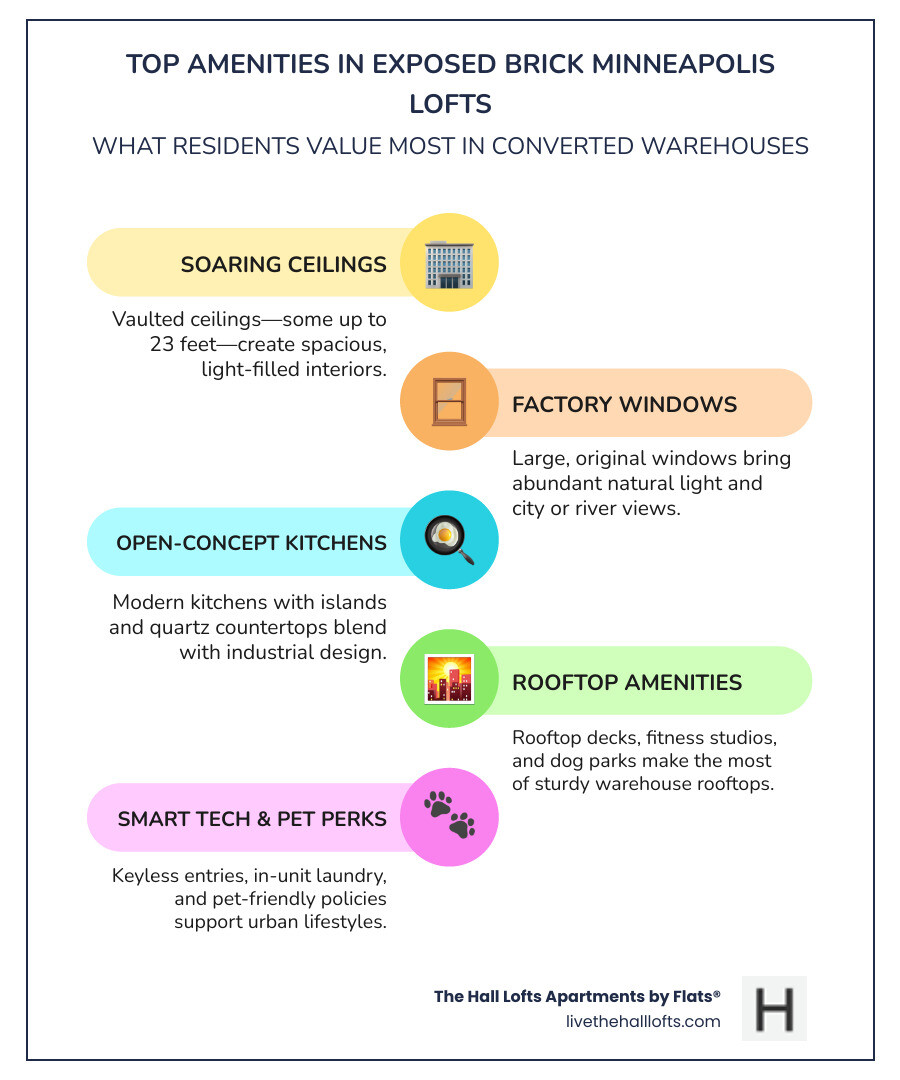
The architectural drama of exposed brick apartments Minneapolis conversions lies in their authentic industrial features. Soaring ceilings, some reaching 23 feet, create cathedral-like spaces that make standard apartments feel cramped by comparison. Original factory windows, often floor-to-ceiling, flood interiors with natural light while providing urban views.
Exposed brick walls serve as both structural elements and design features. These walls, built to support heavy industrial equipment, now anchor open-concept living spaces with their rich textures and warm tones. Steel beams and timber supports remain visible, creating interesting ceiling patterns that add visual depth to loft interiors.
Modern amenities seamlessly integrate with historic architecture. Open-concept kitchens feature contemporary appliances and quartz countertops while maintaining the industrial aesthetic. Islands and breakfast bars use the expansive floor plans that warehouse conversions provide.
Rooftop amenities take advantage of these buildings' sturdy construction. Many properties feature rooftop decks with fire pits, grilling areas, and herb gardens. Some buildings include rooftop pools, fitness studios, and entertainment spaces that would be impossible in traditional apartment buildings.
In-unit laundry has become standard in most conversions, addressing practical needs while maintaining the loft aesthetic. These washers and dryers often integrate into custom cabinetry or designated utility areas within the open floor plans.
Pet amenities reflect the urban lifestyle these buildings support. Up to two pets are typically welcome, with many properties featuring rooftop dog parks, on-site pet washing stations, and nearby access to urban parks and trails.
Smart-home technology appears in newer conversions and renovations. Controlled keyless entry, automated package management, and app-based maintenance requests bring these historic buildings into the digital age.
More info about Industrial Warehouse Apartment details how these conversions balance historic preservation with modern convenience, creating homes that honor their industrial heritage while meeting contemporary living standards.
What Buyers Should Know Before Committing

Before purchasing exposed brick apartments Minneapolis properties, buyers should understand the unique considerations these historic buildings present. While the character and charm are undeniable, converted warehouses require different maintenance approaches than standard residential buildings.
Insulation can be challenging in buildings with exposed brick walls. Historic structures often lack the insulation standards of modern construction, potentially leading to higher heating and cooling costs. However, many conversions address this through strategic insulation placement that maintains the exposed brick aesthetic while improving energy efficiency.
Moisture control requires attention in brick buildings. Proper ventilation and humidity management prevent issues with the masonry and protect residents' belongings. Quality conversions include updated HVAC systems that address these concerns while maintaining comfortable living conditions.
Mortar repointing may be necessary over time as historic buildings age. This maintenance preserves the structural integrity of brick walls while maintaining their appearance. Buyers should factor this potential expense into their long-term ownership costs.
HOA rules in converted buildings often include provisions for historic preservation. These guidelines may limit exterior modifications or require specific materials for repairs. While these rules protect property values and historic character, buyers should review them carefully.
Historic tax credits may be available for qualifying properties, providing financial incentives for preservation-focused renovations. These credits can offset renovation costs and support property values in historic districts.
Soundproofing varies significantly between buildings. Some conversions include modern sound-dampening materials, while others maintain the open acoustics of industrial spaces. Buyers should consider their noise tolerance and lifestyle needs when evaluating properties.
Parking arrangements differ from suburban developments. Most buildings include secure parking, but spaces may be limited or available at additional cost. Urban locations often provide alternative transportation options that reduce parking needs.
Walkability scores tend to be excellent in neighborhoods with converted warehouses. These areas typically offer restaurants, shops, and entertainment within walking distance, reducing transportation needs and enhancing urban living.
More info about Apartments in Historic Buildings provides detailed guidance on navigating the unique aspects of historic property ownership while maximizing the benefits these special buildings offer.
Frequently Asked Questions about Exposed Brick Apartments
Are exposed brick apartments in Minneapolis harder to maintain?
Exposed brick apartments Minneapolis properties require different maintenance approaches than standard apartments, but they're not necessarily more difficult to maintain. The key is understanding how to care for historic materials properly.
Brick walls need periodic inspection for mortar condition and potential moisture issues. Quality conversions address these concerns during renovation with proper sealing and ventilation systems. Modern HVAC systems help control humidity levels that could affect masonry over time.
Cleaning exposed brick requires gentle methods to preserve the material's integrity. Avoid harsh chemicals or pressure washing that could damage historic mortar. Regular dusting and occasional professional cleaning maintain the walls' appearance without causing damage.
Temperature control can be more challenging in buildings with exposed masonry, but proper insulation techniques address this during conversion. Many buildings use spray foam insulation behind drywall sections while leaving decorative brick areas exposed, balancing aesthetics with energy efficiency.
Do exposed brick apartments Minneapolis buyers choose usually allow pets?
Most exposed brick apartments Minneapolis properties welcome pets, typically allowing up to two pets per unit. The durable materials common in warehouse conversions, like concrete floors and brick walls, actually make these spaces ideal for pet owners.
Pet amenities are common in converted buildings. Many properties feature rooftop dog parks, on-site pet washing stations, and nearby access to urban trails and parks. The open floor plans provide plenty of space for pets to move around comfortably.
Pet policies vary by building but generally include reasonable restrictions. Weight limits, breed restrictions, and pet fees are typical considerations. Some buildings require pet deposits or monthly pet rent, while others include pet accommodations in standard lease terms.
The urban location of most converted warehouses provides excellent access to veterinary services, pet stores, and dog parks. Many residents appreciate the walkable neighborhoods that make pet ownership convenient without requiring a car for every outing.
What modern amenities come standard in most exposed brick lofts?
Modern exposed brick apartments Minneapolis conversions typically include comprehensive amenity packages that rival luxury apartment buildings. In-unit laundry is standard in most conversions, addressing practical needs while maintaining the loft aesthetic.
Fitness centers appear in most larger buildings, often featuring exposed brick walls and industrial design elements that complement the building's character. Some properties include specialized amenities like Finnish cedar saunas, yoga studios, or virtual sports simulators.
Rooftop amenities take advantage of these buildings' sturdy construction. Common features include rooftop decks with fire pits, grilling areas, outdoor kitchens, and seating areas with city views. Some buildings include rooftop pools, hot tubs, or even herb gardens for residents.
Technology integration brings historic buildings into the digital age. Controlled keyless entry, automated package management, high-speed internet, and app-based maintenance requests are increasingly common in converted properties.
Community spaces often include elements like coffee bars, co-working areas, gaming rooms, and event spaces. These amenities support the urban lifestyle while fostering resident community within the building.
Security features typically include controlled access, on-site management, and secure parking. Many buildings offer concierge services and 24-hour emergency maintenance to ensure resident safety and convenience.
Conclusion
Exposed brick apartments Minneapolis represent the perfect marriage of historic charm and modern comfort. These converted warehouses, factories, and unique buildings preserve the city's industrial heritage while creating distinctive living spaces that standard apartments simply cannot match.
From the North Loop's warehouse district to Northeast's arts community, Minneapolis offers diverse neighborhoods where exposed brick living thrives. Each converted building tells its own story through preserved architectural elements like soaring ceilings, factory windows, and authentic brick walls.
The Hall Lofts exemplifies this trend, offering modern urban living in renovated warehouse spaces that blend historical charm with contemporary design. Features like in-unit laundry and pet-friendly policies address practical needs while maintaining the industrial aesthetic that makes these homes special.
Whether drawn to the artistic heritage of converted textile factories, the dramatic scale of former grain elevators, or the unique character of repurposed churches, Minneapolis provides exceptional options for those seeking authentic urban living with modern conveniences.
Ready to explore these distinctive living spaces? The Hall Lofts invites you to experience the perfect blend of historic character and contemporary comfort. Schedule a tour today and find why exposed brick apartments Minneapolis buyers find irresistible.
Explore floor plans and schedule your tour at LiveTheHallLofts.com