

What to Know About Historic Minneapolis Apartment Rentals
Historic Minneapolis apartment rentals offer something that new construction simply cannot replicate — the character of buildings that have shaped the city for over a century.
Here is a quick look at the most notable historic apartment neighborhoods and buildings in Minneapolis:
| Neighborhood | Known For | Example Buildings |
|---|---|---|
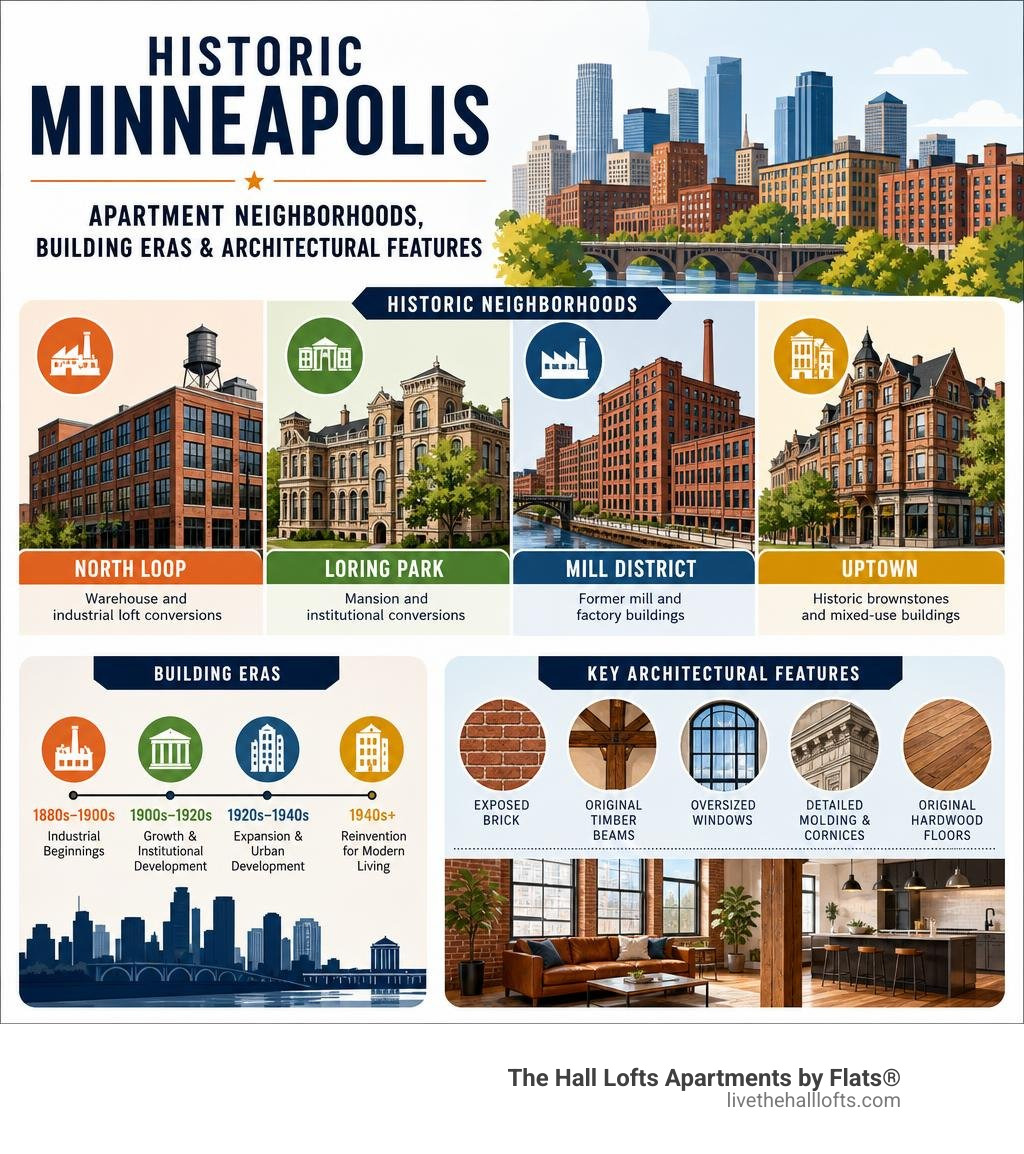
| North Loop | Warehouse and industrial loft conversions | 724 Lofts, Creamette Historic Lofts, Smyth Lofts, Heritage Landing |
| Loring Park | Mansion and institutional conversions | The Abbey, 430 Oak Grove, 225 Place |
| Mill District | Former mill and factory buildings | Mill and riverfront corridor lofts |
| Uptown | Historic brownstones and mixed-use buildings | The Park Apartments |
Most historic rentals in Minneapolis date back to the city's industrial peak between 1880 and 1920. Many have been carefully converted from warehouses, factories, and institutional buildings into loft-style apartments — preserving exposed brick, original timber beams, and oversized windows while adding modern finishes.
Minneapolis is a strong renter's city, with 52% of residents renting rather than owning. The rental market is diverse, ranging from compact studios to spacious multi-bedroom lofts. Historic buildings tend to offer more square footage than comparable modern units, highlighting their unique architectural character.
Whether the draw is soaring ceilings, original hardwood floors, or a neighborhood steeped in history, Minneapolis has a deep stock of historic rentals worth exploring.
Neighborhood Hotspots for Historic Minneapolis Apartment Rentals
Minneapolis features several distinct neighborhoods where historic architecture has been thoughtfully preserved for residential living. Each area offers a unique historical background, from industrial shipping hubs to elegant residential districts.
The North Loop (Warehouse District)
Once the center of the city's shipping and manufacturing industries, the North Loop is now one of the most celebrated neighborhoods for warehouse conversions. Buildings constructed in the late 19th and early 20th centuries have been transformed into residential spaces. This neighborhood is highly sought after by those looking for authentic Historic Lofts for Rent Minneapolis. The streets are lined with brick-and-timber structures that once housed manufacturing giants, now serving as modern residences just steps from the Mississippi River.
Loring Park
For those who prefer a neighborhood characterized by classic elegance and green spaces, Loring Park is a prime location. This area features historic brownstones, grand apartments, and converted institutional buildings. Some properties are directly connected to restored 19th-century mansions, offering a park-side lifestyle with immediate walkability to cultural landmarks like the Walker Art Center and local colleges.
The Mill District
Located along the riverfront, the Mill District contains the historic stone structures that once earned Minneapolis the title of flour milling capital of the world. These former mills feature massive stone walls, curved structural elements, and direct access to the Stone Arch Bridge). Living here provides a direct connection to the early industrial history of the city.
Uptown
Uptown offers a diverse mix of classic brick brownstone apartments. These properties typically feature vintage layouts, including cozy sunrooms, built-in cabinetry, and retro tiling. It is an ideal spot for residents who appreciate early 20th-century residential architecture within a highly walkable commercial and dining district.
Architectural Features and Modern Updates
The enduring appeal of historic Minneapolis apartment rentals lies in the physical details of the buildings. Unlike modern, standardized construction, historic properties showcase craftsmanship and materials that are virtually impossible to replicate today.

Standard features in these properties often include:
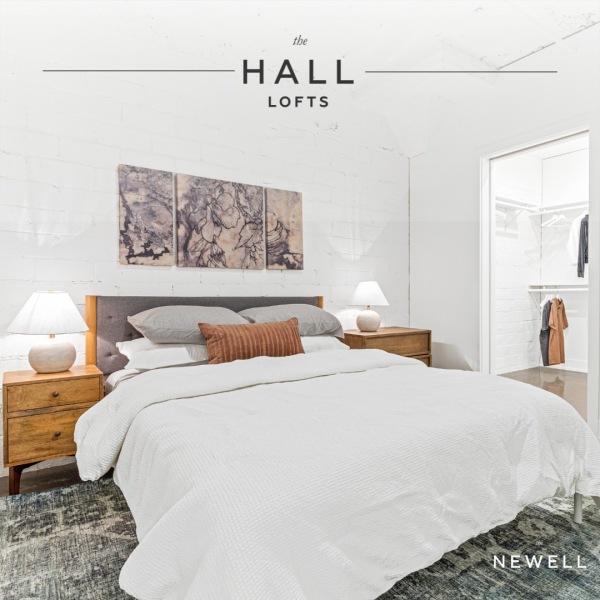
- Exposed Brick and Stone: Solid exterior walls are left exposed on the inside, showing decades of natural weathering and character.
- Old-Growth Timber Beams: Massive support beams made of dense, historic wood provide structural integrity and visual warmth.
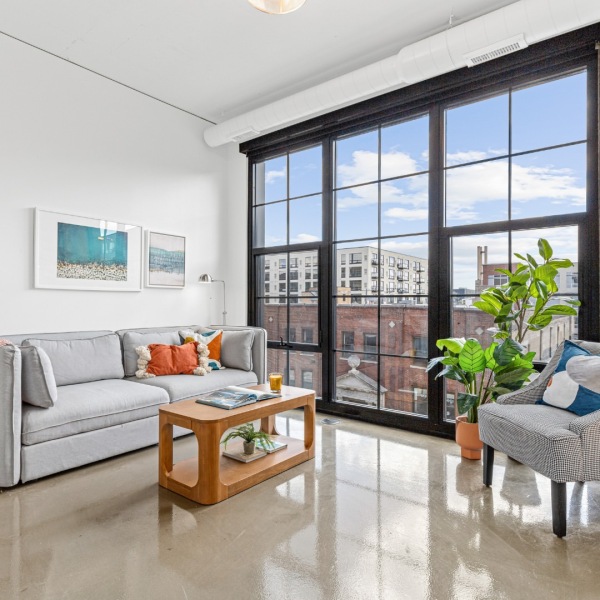
- Oversized Industrial Windows: Originally designed to maximize natural light for factory workers, these large windows flood modern living spaces with sunshine.
- Refinished Hardwood Floors: Many buildings retain their original maple or oak flooring, carefully restored to highlight decades of character.
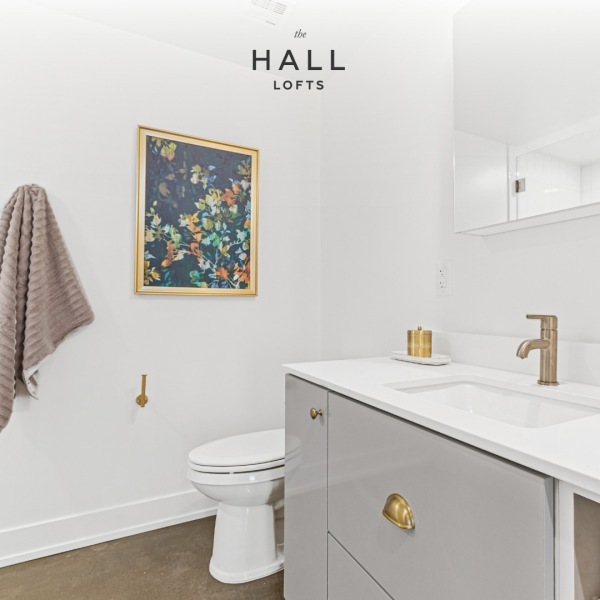
- Vintage Plumbing and Built-ins: Select properties preserve clawfoot bathtubs, original cabinetry, and vintage tilework.
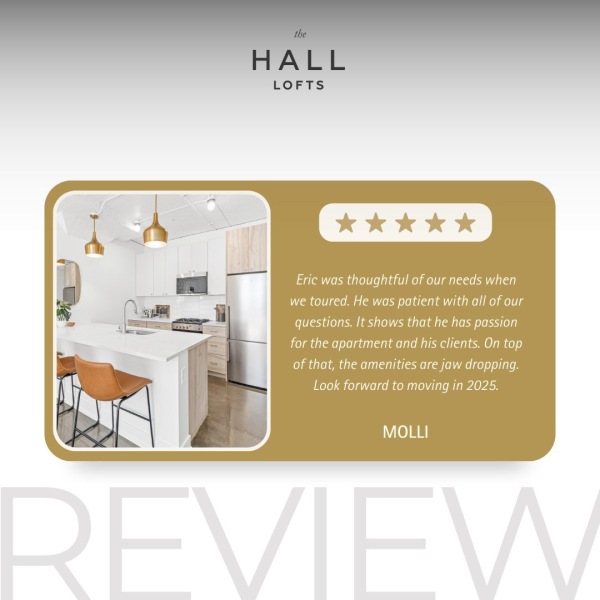
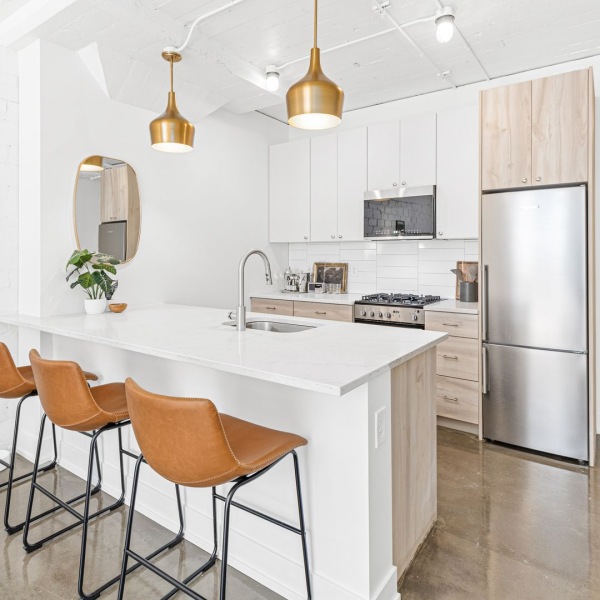
To make these spaces comfortable for modern living, developers focus on high-quality adaptive reuse. This process integrates contemporary conveniences into the historic fabric. Renovations frequently introduce updated kitchens with stone countertops, energy-efficient appliances, and essential in-unit laundry. When exploring Apartments in Historic Buildings, residents can enjoy the perfect balance of classic aesthetics and modern functionality.
Floor Plans, Sizes, and Rental Market Comparisons
The floor plans available in historic buildings differ significantly from those in modern developments. Due to the original industrial or commercial layouts of these structures, homes often feature open-concept designs with soaring ceilings ranging from 10 to 14 feet.
In the broader Minneapolis rental market, studio apartments represent approximately 13% of the inventory, while one-bedroom layouts make up 55%, and two-bedroom homes account for 27%. In historic conversions, one-bedroom units are highly popular and typically offer more space than their modern counterparts.
| Apartment Type | Average Square Footage (Historic Lofts) | Average Square Footage (Modern Units) | Market Characteristics |
|---|---|---|---|
| Studio | 450 – 600 sq. ft. | 400 – 500 sq. ft. | Open layouts, often featuring original built-ins |
| 1-Bedroom | 850 – 1,077 sq. ft. | 650 – 800 sq. ft. | Massive windows, high ceilings, separate or lofted bedrooms |
| 2-Bedroom | 1,200 – 1,400 sq. ft. | 950 – 1,100 sq. ft. | Exposed brick walls, split-level options, dual suites |
| 3-Bedroom / Penthouse | Up to 2,200 sq. ft. | 1,200 – 1,500 sq. ft. | Multi-level layouts, original timber columns, expansive views |
Because of the generous square footage and authentic architectural character, Minneapolis Loft Apartments typically carry a premium of approximately 10% to 15% over comparable conventional apartments in the city. However, many residents find that the increased volume of space, natural light, and structural sound insulation more than justify the premium.
Living in a Historic Building: Policies and Considerations
Living in a historic building is a unique experience that requires a basic understanding of how these structures operate. The same elements that give a building its charm can also influence daily living conditions.

Before moving in, it is helpful to consult an Industrial Warehouse Apartments Guide to understand the nuances of adaptive-reuse properties.
- Sound Insulation: One of the greatest benefits of historic buildings is acoustic privacy. Heavy timber framing and thick multi-wythe brick walls act as natural sound barriers, making these homes significantly quieter than modern buildings with thin drywall partitions.
- Layout Variations: Because these buildings were not originally designed as apartments, individual units often feature unique quirks, such as structural columns in unexpected places, curved brickwork, or split-level platforms.
Pet Policies in Historic Minneapolis Apartment Rentals
Most historic communities are highly welcoming to pets, particularly in outdoor-friendly areas like the North Loop and Loring Park. The standard policy in these buildings typically allows a maximum of two pets per household. To maintain the restored flooring and common areas, properties usually require a standard pet deposit and modest monthly pet rent.
Maintenance and Utilities in Historic Minneapolis Apartment Rentals
Utility management in older buildings has improved significantly with modern technology. While some classic brownstones still utilize comfortable radiator steam heating, larger warehouse conversions generally feature fully integrated, modern HVAC systems. Original single-pane windows are often preserved for historical compliance but are reinforced with interior storm glazing to prevent drafts during Minnesota winters, ensuring excellent energy efficiency.
Frequently Asked Questions About Historic Rentals
What is the average size of a historic loft in Minneapolis?
One-bedroom historic lofts typically range from 850 to 1,077 square feet, while two- and three-bedroom floor plans can span up to 2,200 square feet. These homes provide more physical volume and floor area than typical modern apartments.
How do utility costs compare in older buildings?
While older structures originally had a reputation for being drafty, high-quality historic renovations resolve this issue. Modern insulation, updated heating and cooling systems, and secondary window glazing keep utility costs highly competitive with newer construction.
Are historic apartments pet-friendly?
Yes. The vast majority of historic apartment communities in Minneapolis welcome pets, typically adhering to a standard two-pet limit per household. Many of these buildings are located near off-leash dog parks and scenic riverfront trails.
Conclusion
Choosing a historic rental means embracing the stories, craftsmanship, and architectural integrity of the past. For those seeking the pinnacle of this lifestyle, the renovated warehouse apartments in the North Loop represent the ideal match. These properties seamlessly blend historical charm with contemporary design, offering features like in-unit laundry and welcoming pet policies.
Explore the exceptional living spaces available today by visiting the North Loop Apartments page to find a home that perfectly balances timeless character with modern comfort.