Why Finding Industrial Lofts for Rent Is Harder Than It Looks
Industrial lofts for rent are some of the most sought-after living spaces in major cities right now — and they're not always easy to track down.
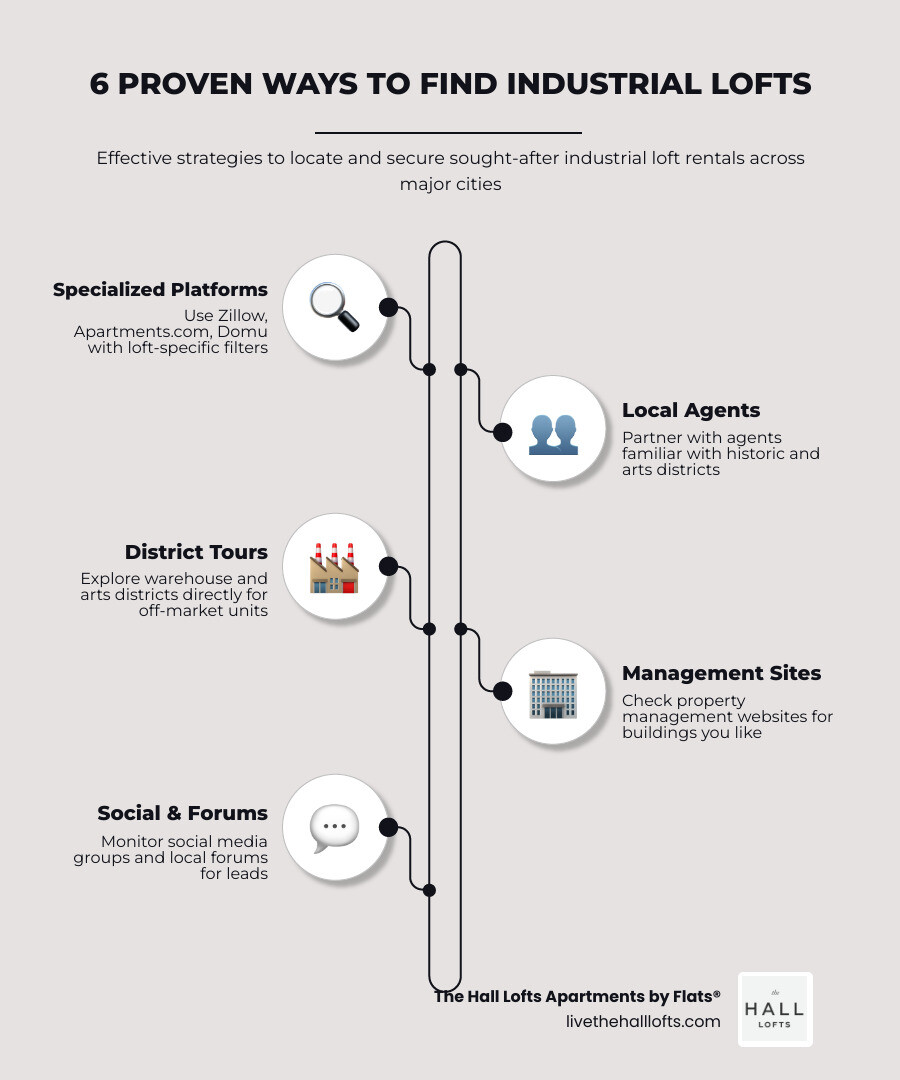
Here are the most effective ways to find one:
- Use specialized rental platforms with loft-specific filters (Zillow, Apartments.com, Domu)
- Work with a local real estate agent who knows historic and arts districts
- Explore warehouse and arts districts directly — many buildings lease units without major listings
- Search property management websites for buildings you already know and like
- Check social media groups and local forums for off-market leads
- Watch for move-in specials like look-and-lease deals, which signal available inventory
These spaces draw strong demand. Atlanta alone has over 214 loft rentals listed at any given time. Dallas neighborhoods like Deep Ellum attract renters looking for historic warehouse character. Minneapolis' North Loop has converted 19th-century warehouses into modern residences. Los Angeles' Arts District is packed with converted factories from the 1920s.
What makes the search tricky is that industrial lofts are spread across niche neighborhoods, marketed through different channels, and often go fast. Knowing where to look — and what to look for — makes all the difference.
What Defines Industrial Lofts for Rent?
An industrial loft is a residential unit adapted from a former commercial or industrial building, such as a manufacturing plant, textile mill, or storage warehouse. Unlike standard apartments, which rely on defined rooms, drywall partitions, and uniform layouts, industrial lofts prioritize open-concept living.
The structural bones of the building remain visible, serving as the primary design aesthetic. To understand the core differences between these spaces and conventional multi-family homes, renters can explore this Industrial Apartments Complete Guide.
Several key characteristics set these properties apart from typical apartments:
- Soaring Ceilings: Often reaching heights of twelve to over twenty feet, creating a sense of volume and scale.
- Open Floor Plans: Minimal interior walls allow residents to define living, sleeping, and working areas using furniture placement, rugs, or temporary partitions.
- Industrial Materials: Structural elements like load-bearing pillars, heavy timber support beams, and exposed ductwork are left uncovered.
- Resilient Flooring: Many historic conversions feature durable, polished surfaces. Those interested in the aesthetic and practical benefits of these surfaces can consult this guide to Lofts with Concrete Floors.
Architectural Features of Industrial Lofts for Rent
The visual appeal of industrial lofts lies in their architectural authenticity. Original features are preserved during the conversion process rather than covered with plaster or drywall. Exposed brick walls showcase decades of historic weathering, while solid wood beams reveal the industrial craftsmanship of the late 19th and early 20th centuries.
Massive multi-pane industrial windows are another hallmark of these spaces, designed originally to flood factory floors with natural light before modern electricity. Today, these windows provide exceptional natural illumination and expansive urban views.
For a deeper look into how these structural details integrate into daily living, the Warehouse Loft Style Apartments overview highlights the balance of historical preservation and modern residential design. Specific historical examples, such as those detailed in the Biscuit Co Lofts Unit 312 for Lease in Downtown Los Angeles Arts District Presented by DLXco, show how historic factories constructed in the 1920s have transitioned into modern residential spaces.
Historic Conversions vs. New Construction
When searching for industrial lofts for rent, renters generally encounter two distinct categories: authentic historic conversions and new-construction loft replicas.
| Feature | Historic Conversions | New Construction |
|---|---|---|
| Architectural Character | Original brick, timber beams, historic factory windows, unique layouts. | Uniform layouts, replicated industrial finishes, modern materials. |
| Sound Insulation | Thick masonry walls, though timber ceilings can sometimes transmit sound. | Modern acoustic barriers and specialized subflooring. |
| Building Amenities | Often retrofitted with rooftop decks, basic fitness rooms, or courtyard spaces. | State-of-the-art gyms, integrated package systems, and smart-home tech. |
| Maintenance & Utilities | Historical windows and high ceilings can lead to variable heating and cooling needs. | Energy-efficient HVAC systems and double-pane insulated windows. |
Authentic conversions offer unmatched historical charm, but they require a realistic understanding of historic building systems. On the other hand, new-construction lofts mimic the visual elements of industrial design—such as high ceilings and concrete finishes—while utilizing modern building standards.
To compare these options in detail, renters can refer to resources on Apartments in Historic Buildings and Renovated Loft Apartments.
Proven Strategies for Finding Loft Rentals
Securing an industrial loft requires a more targeted approach than finding a standard suburban apartment. Because these properties are concentrated in specific urban pockets and are highly sought after, relying solely on broad internet searches can result in missed opportunities.
A successful search combines digital tools, local exploration, and direct outreach to property management companies. For a comprehensive overview of the search process, the Industrial Warehouse Apartments Guide provides structured advice on navigating urban rental markets.
1. Utilize Specialized Rental Platforms
Broad-market rental websites can sometimes bury loft listings under standard apartment categories. To streamline the search, renters should target platforms that allow precise architectural filtering.
Using advanced search tools to filter by keywords such as "loft," "exposed brick," or "concrete floors" helps isolate authentic spaces. For example, those targeting specific Midwestern markets can find curated listings through resources like Loft Apartments for Rent in Minneapolis MN.
2. Partner with Local Real Estate Agents
In highly competitive metropolitan areas, leasing agents and real estate professionals often have access to listings before they are syndicated to public search portals. Agents specializing in urban neighborhoods understand the nuances of local buildings, including which properties offer live-work zoning or specific utility structures.
Reviewing specific lease transactions, such as the details found on 1855 Industrial St Unit: 315 | Reichling \ Pickard, demonstrates how local representation can help renters secure highly specific layouts in historic factory conversions.
3. Explore Historic and Arts Districts
Many historic warehouse conversions are concentrated in designated arts and industrial districts. In Minneapolis, the historic North Loop stands out as a premier hub for restored industrial architecture. Walking through these neighborhoods allows renters to identify converted buildings that may not advertise heavily online.
For a detailed look at localized options in the Upper Midwest, the Historic Warehouse Lofts Minneapolis guide highlights the specific neighborhoods where historic manufacturing hubs have been successfully transformed into residential communities.
4. Search Property Management Websites Directly
Some of the most desirable loft buildings are managed by specialized real estate firms that list available units exclusively on their own websites. By bypassing third-party listing aggregators, renters can access real-time availability, accurate lease terms, and direct application portals.
Reviewing official site plans and Floor Plans directly from the property manager ensures that renters receive the most up-to-date layout dimensions and utility details before scheduling an in-person tour.
5. Leverage Social Media and Local Forums
Online community groups, neighborhood forums, and social media marketplaces can be valuable sources for finding off-market loft rentals. Current tenants looking to break a lease or find a subletter often post listings in localized groups before the property management company lists the unit publicly. Monitoring these platforms allows renters to find unique spaces in historic districts with less competition from the general public.
6. Monitor Market Trends and Move-In Specials
The rental market experiences seasonal shifts, and property managers frequently offer leasing incentives to maintain high occupancy rates. Renters should watch for "look-and-lease" specials, where application fees are waived or rent concessions are applied if an application is submitted shortly after touring. Monitoring these trends closely allows renters to secure premium spaces during periods of increased inventory.
Rental Rates and Market Trends Across Major Cities
The cost and availability of industrial lofts for rent vary significantly based on geographic location, historic preservation standards, and local zoning policies.
| City | Key Historic Districts | Common Layout Configurations | Notable Structural Features |
|---|---|---|---|
| Minneapolis, MN | North Loop, Warehouse District | Studio, 1-Bed, 2-Bed, 3-Bed | Heavy timber beams, original brickwork, oversized multi-pane windows |
| Dallas, TX | Deep Ellum, Cedars | Open-concept studios, live-work spaces | Polished concrete floors, exposed ductwork, rooftop community decks |
| Los Angeles, CA | Arts District, Downtown LA | Industrial live-work lofts, multi-level units | High concrete ceilings, vintage factory windows, integrated EV charging |
| Houston, TX | East End, Downtown | Restored warehouse layouts, multi-bedroom lofts | Private courtyards, exposed masonry, structural steel pillars |
Because industrial conversions are finite resources tied to historic building stock, these properties often command premium positioning in their respective local markets. To explore specific structural variations and layout configurations across different historic properties, renters can reference detailed listings such as those found on 1855 Industrial St Los Angeles, CA 90021 | MLS 26661345.
Regional Price Variations for Industrial Lofts for Rent
The desirability of localized neighborhoods directly influences rental trends and lease structures. In areas with high demand and limited historic building stock, rental markets remain highly competitive. Local regulations can also impact leasing; for instance, certain municipal jurisdictions enforce specific tenant protections or emergency pricing regulations during high-demand periods.
In the Midwest, the North Loop neighborhood of Minneapolis has established itself as a premier destination for loft living, combining historic preservation with immediate access to transit, dining, and cultural venues. Renters seeking a comprehensive look at local building histories, neighborhood amenities, and available properties in this region can consult the Minneapolis Industrial Lofts Guide.
Key Considerations Before Leasing an Industrial Loft
While the aesthetic appeal of high ceilings and exposed brick is undeniable, living in an industrial conversion requires a clear understanding of the building's physical infrastructure.

Before signing a lease, renters should evaluate how practical factors like parking, utility submetering, and pet guidelines align with their daily routines. For a foundational overview of what to expect, the guide to Warehouse Apartments outlines the essential structural differences of these unique properties.
Parking, Utilities, and Building Amenities
Industrial buildings constructed in the late 19th or early 20th centuries were not designed with modern residential vehicle parking in mind. Consequently, parking configurations can vary greatly:
- Tandem Parking: Some properties utilize tandem spaces, requiring coordinated parking arrangements.
- EV Charging: Modernized conversions increasingly integrate electric vehicle charging stations within historic parking structures.
- Utility Submetering: Due to the open volume of lofts and historic building designs, utility structures can differ from standard apartments. Some buildings utilize submetering, while others charge a flat monthly service fee covering heating, cooling, gas, and waste services.
- Retrofitted Amenities: Historic properties often feature creative amenity integrations, such as rooftop pools, fitness centers, and community gardens housed in former manufacturing spaces.
Renters can review specific examples of how these amenities are integrated into historic properties by examining detailed property listings, such as 1850 Industrial Street #106, Los Angeles, CA 90021 | Rodeo Realty.
Pet Policies and Lease Terms
Pet policies in industrial lofts are typically influenced by the building's flooring and common area layouts. Polished concrete and sealed hardwood are highly durable, making many loft buildings pet-friendly. However, lease terms generally restrict occupancy to a maximum of two pets per unit to maintain a comfortable living environment for all residents.
Additionally, renters should verify the zoning status of the property. True industrial conversions often carry live-work zoning, allowing residents to operate creative studios or commercial businesses directly out of their living spaces.
In certain historic districts, buildings may also benefit from preservation acts—such as the Mills Act in California—which encourage historic upkeep and influence how properties are managed and leased. Those interested in the long-term benefits of these unique spaces can read more about Converted Warehouse Apartments.
Frequently Asked Questions About Industrial Lofts
What is the difference between a "hard loft" and a "soft loft"?
A hard loft is an authentic historic conversion of an existing industrial building, featuring original structural elements like concrete, brick, and timber. A soft loft is a newer residential building designed to mimic the industrial aesthetic, featuring high ceilings and open layouts but built with modern residential materials.
Are utility costs higher in an industrial loft due to the high ceilings?
Heating and cooling costs can vary depending on the building's insulation and window efficiency. While soaring ceilings create a larger volume of air to heat or cool, many modern conversions utilize energy-efficient HVAC systems or include heating and cooling costs within a structured monthly utility fee.
Can industrial lofts be used for commercial purposes?
Properties with designated live-work zoning permit residents to run professional businesses, creative studios, or offices out of their residential units. Renters should always review local zoning ordinances and specific lease terms before operating a commercial enterprise.
Conclusion
Finding the perfect industrial loft requires a blend of targeted research, neighborhood exploration, and an appreciation for historic architecture. For those seeking a sophisticated urban lifestyle in Minneapolis' historic North Loop, The Hall Lofts Apartments by Flats® offers beautifully renovated warehouse spaces that seamlessly blend historical character with contemporary design, featuring in-unit laundry and thoughtful, pet-friendly environments.
Find your next industrial warehouse apartment and experience the perfect balance of historic charm and modern convenience.