What Is Contemporary Urban Living?
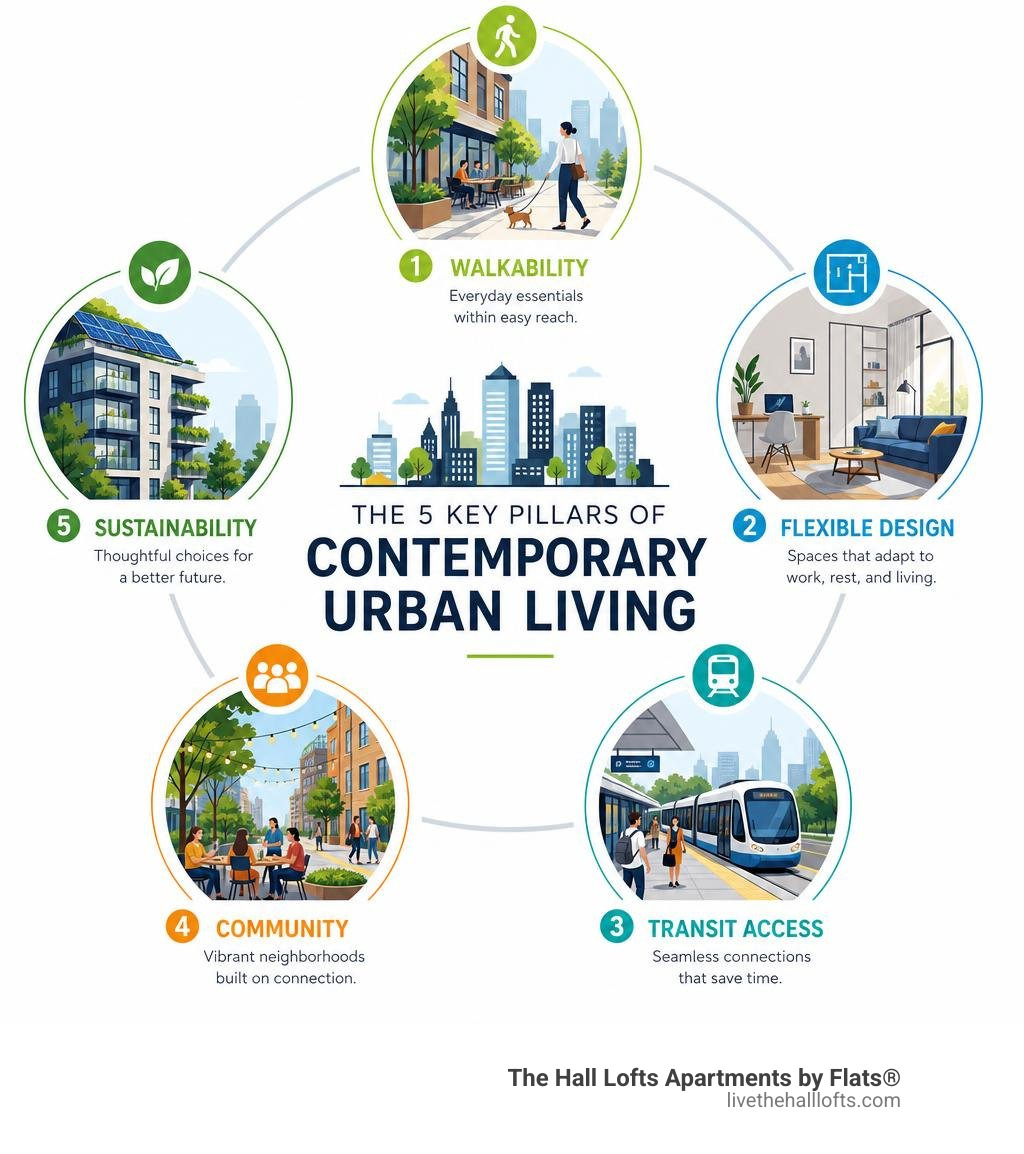
Contemporary urban living is a modern lifestyle centered on walkability, well-designed spaces, and seamless access to work, culture, and community — all within a compact city footprint.
At a glance, it means:
- Living close to transit, dining, shopping, and entertainment
- Homes designed for flexibility — work, rest, and socializing in one space
- Buildings that blend smart technology, natural materials, and efficient layouts
- Neighborhoods with distinct character, history, and a strong sense of place
- Reducing commute time so daily life feels less like logistics and more like living
More people are choosing city living not just for convenience, but for the quality of life it offers. Research shows that 68% of urban residents in major cities prioritize walkability and access to mixed-use developments when choosing where to live. And it adds up fast — proximity to work and amenities can give residents back nearly 178 hours a year in time they'd otherwise spend commuting.
But contemporary urban living is more than just location. It's a design philosophy, a lifestyle choice, and increasingly, an architectural statement. From converted warehouse lofts with exposed brick and timber beams to high-rise apartments with floor-to-ceiling windows and smart home systems, the way people live in cities has been completely reimagined.
This guide breaks down everything worth knowing — from design trends and space-saving innovations to what makes a neighborhood truly livable in 2026.
Defining Contemporary Urban Living in Modern Cities
In dense metropolitan areas, the definition of a successful residential environment has shifted. No longer is a home measured solely by its square footage; instead, its value is defined by its connectivity, surrounding infrastructure, and integration into the local neighborhood fabric.
Walkability and Mixed-Use Developments
Walkability is the cornerstone of the modern metropolitan experience. Highly integrated neighborhoods utilize mixed-use design to place residential units directly above or adjacent to retail, dining, and professional services. This structural arrangement minimizes car dependency, fosters spontaneous social interactions, and ensures that daily necessities are accessible on foot. Projects like Centropolitan by Cordia – Cordia champion this "10-minute city" concept, demonstrating how combining residential spaces with ground-floor commercial amenities directly enhances daily efficiency.
Transit Accessibility and Commute Reductions
Proximity to reliable transit networks—such as light rail systems, dedicated bike lanes, and shared mobility hubs—is a primary driver for choosing Modern Urban Apartments. By bypassing heavy traffic, residents gain hours of personal time every week. This seamless physical connectivity links residential enclaves directly to major employment hubs, cultural districts, and recreational parks.
The Philosophy of Contemporary Urban Living Design
At its core, the design philosophy of contemporary city homes emphasizes living with less but better. This approach represents an evolution of traditional minimalism, moving away from sterile, cold surfaces toward raw sophistication and intentional imperfection.
Rather than hiding the structural elements of a building, modern urban design celebrates them. Key characteristics of this aesthetic include:
- Honest Materials: The strategic use of exposed concrete, weathered timber, and brushed metals.
- Tactile Contrast: Pairing smooth, high-precision surfaces with rough, textured finishes to create depth.
- Earthy Palettes: Grounding industrial structures with graphite greys, deep charcoal, and warm, organic tones.
This philosophy creates spaces that feel authentic, sophisticated, and deeply connected to the metropolitan landscape.
Work-Live Integration in Contemporary Urban Living Spaces
With over 50% of urban dwellers seeking flexible work-live arrangements, residential layouts have adapted to accommodate hybrid schedules. Modern residences now incorporate dedicated home offices, quiet alcoves, and shared on-site coworking lounges.
In neighborhoods like the North Loop of Minneapolis, developments offer tailored Urban Living Spaces Minneapolis that support productivity without sacrificing residential comfort. These spaces feature high-speed connectivity, reduced visual noise by concealing utility lines, and flexible seating arrangements that transition seamlessly from a professional daytime setting to a relaxed evening environment.
Architectural Innovations and Space Optimization
Dense metropolitan environments require creative solutions to address spatial constraints. Architects and interior designers are moving away from rigid, fixed-room layouts in favor of highly adaptable, fluid environments.
| Layout Type | Structural Characteristics | Primary Benefits | Typical Features |
|---|---|---|---|
| Traditional Layout | Fixed walls, dedicated-purpose rooms, standard swinging doors | High acoustic privacy for individual rooms | Separate kitchen, closed-off bedrooms, standard hallways |
| Modular Plug-In Layout | Movable partitions, multi-functional furniture, sliding wall panels | Maximized spatial utility, adaptable footprints | Sliding doors, built-in convertible desks, hidden wall beds |
Innovative residential concepts, such as those showcased in Van B. Very urban living. - Bauwerk , utilize physical plug-in modules. These custom-engineered architectural inserts can be opened, closed, or reconfigured to transform a room from a spacious living area into a private bedroom or a functional workspace within seconds.
Additionally, the use of high-quality sliding door partitions allows residents to visually partition off areas of a home—such as separating a kitchen from a dining room—without permanently reducing the open-plan feel of the apartment.
Smart Home Technology and Sustainability
Modern urban residences leverage advanced technology to promote resource conservation and enhance daily comfort. High-density residential developments naturally contribute to lower per-capita resource consumption, a benefit that is further amplified by green building practices.
Key technological integrations include:
- KNX Smart Systems: As utilized in premium developments like the Continental Apartments , these integrated systems automate lighting, climate control, and exterior sun-shading to optimize energy use based on real-time occupancy.
- E-Mobility Infrastructure: On-site car-sharing programs, electric bike charging stations, and dedicated underground parking spots equipped with rapid e-vehicle chargers.
- Efficient Heating and Cooling: Utilizing district heating, modern heat pumps, and advanced insulation to achieve high energy efficiency ratings.
Biophilic Elements and Natural Light
To balance the density of city environments, contemporary architecture prioritizes biophilic design—the integration of natural elements into the built environment. This connection to nature has been shown to improve mental wellbeing and air quality within high-density areas.
Architects maximize natural light by installing expansive floor-to-ceiling windows, which are paired with under-floor heating and concealed ventilation systems to keep views unobstructed. On a larger scale, developments incorporate shared outdoor spaces such as rooftop gardens, landscaped inner courtyards, and vertical green walls. Prominent examples, such as the architectural approaches discussed by Nolita Harbour in How Tadao Ando Designed Minimalist Luxury Living at 152 Elizabeth Street - Nolita Harbour , demonstrate how incorporating water features, natural stone, and multi-story living green walls can create a serene transition from the busy city streets to a peaceful indoor sanctuary.
Interior Design Trends in High-Rise and Loft Homes
The interiors of modern high-rise apartments and industrial lofts reflect a desire for curated, deeply personal spaces that serve as private sanctuaries.

Warm Minimalism and Color Drenching
While classic industrial styles can sometimes feel cold, contemporary trends lean toward "townhouse warmth." Designers achieve this by layering soft, handwoven textiles made of wool, linen, and cotton over clean architectural lines.
As explored by Conran and Partners brings townhouse warmth to a Canada Water penthouse - Interior Designer Magazine , modern high-rise design often utilizes "color drenching"—using rich, enveloping hues like deep sky blues or warm terracotta across walls, ceilings, and woodwork to create a cozy, cocoon-like atmosphere. Low-silhouette, custom furniture is strategically placed to preserve panoramic skyline views while softening the surrounding concrete or steel structures. This aesthetic is highly sought after in Contemporary Design Apartments.
Reimagining Historical Buildings for Modern Use
One of the most prominent trends in urban centers is the adaptive reuse of historic buildings. Former industrial warehouses, factories, and commercial structures are systematically transformed into Contemporary Urban Lofts.
This preservation process honors the building's history by leaving original architectural features intact, such as:
- Exposed brick walls displaying decades of character
- Heavy timber support beams and original hardwood ceilings
- Large, multi-pane factory windows that flood the space with light
These historic elements are seamlessly paired with modern necessities, including premium kitchen islands, integrated appliances, and updated utility systems, allowing residents to enjoy historic charm alongside modern functionality.
Luxury and Boutique Residential Concepts
In dense urban markets, luxury is increasingly defined by boutique scale, material precision, and spatial clarity rather than sheer size. Buildings with a limited number of residences offer higher levels of privacy, personalized design details, and architectural integrity. From hand-selected marble countertops to precision-crafted metal hardware, every element is chosen to ensure longevity and timeless appeal.
Frequently Asked Questions About Modern City Lifestyles
How do walkable neighborhoods enhance daily life?
Walkable neighborhoods place dining, retail, public transit, and parks within easy walking distance. This layout significantly reduces the reliance on personal vehicles, minimizes time spent in traffic, and fosters a stronger connection to the local community through daily face-to-face interactions.
What are the benefits of living in a converted warehouse?
Living in a converted warehouse offers a unique combination of historic character and spatial volume. These properties typically feature high ceilings, massive windows, exposed brick, and structural wood beams. When choosing Urban Loft Apartments, residents get to experience a home with rich local history paired with modern interior layouts and premium finishes.
How does smart home technology integrate into urban apartments?
Smart home technology is integrated directly into the building's infrastructure. Systems like KNX automate climate control, lighting, and window shades to maximize energy efficiency. Many modern buildings also feature digital parcel lockers, smartphone-controlled building entry, and smart appliances that can be managed remotely.
Conclusion
Contemporary urban living represents a thoughtful balance of history, innovation, and convenience. By prioritizing walkability, flexible design, and high-quality materials, modern residential spaces allow people to experience the energetic pace of the city while maintaining a calm, private sanctuary at home.
For those looking to experience this lifestyle firsthand, The Hall Lofts Apartments by Flats® offers an exceptional residential experience in the heart of Minneapolis’ historic North Loop. Listed on the National Historic Register, the building features beautifully renovated warehouse apartments that masterfully blend original historical charm—such as exposed brick and timber beams—with contemporary design.
Residents enjoy premium modern amenities, including convenient in-unit laundry and welcoming, pet-friendly spaces (accommodating up to two pets per home). Situated in a highly walkable neighborhood steps from premier dining, local boutiques, and scenic riverfront trails, it represents the very best of modern city living.
To learn more about these unique residences, Explore converted warehouse apartments and discover a perfect blend of history and modern design.