

Understanding Downtown Minneapolis Loft Options
Downtown Minneapolis lofts offer a unique blend of historical character and modern urban living, but choosing between them requires understanding key differences in architecture, location, and lifestyle features.
Quick Comparison of Downtown Minneapolis Loft Options:
| Factor | What to Consider |
|---|---|
| Architecture | Historic conversions with 12-20 ft ceilings vs. modern new construction |
| Neighborhoods | North Loop (dining), Mill District (riverfront), Warehouse District (nightlife) |
| Building Age | Late 1800s-early 1900s conversions vs. contemporary builds |
| Features | Exposed brick and original beams vs. sleek modern finishes |
| Amenities | Rooftop decks, fitness centers, in-unit laundry, pet-friendly spaces |
The change of Minneapolis's industrial past into residential spaces began in the 1990s and 2000s. Former flour mills, textile factories, and warehouses from the late 1800s have been converted into living spaces that preserve exposed brick walls, original wooden beams, and oversized factory windows. These historic details now complement modern conveniences like in-unit laundry and high-speed internet.
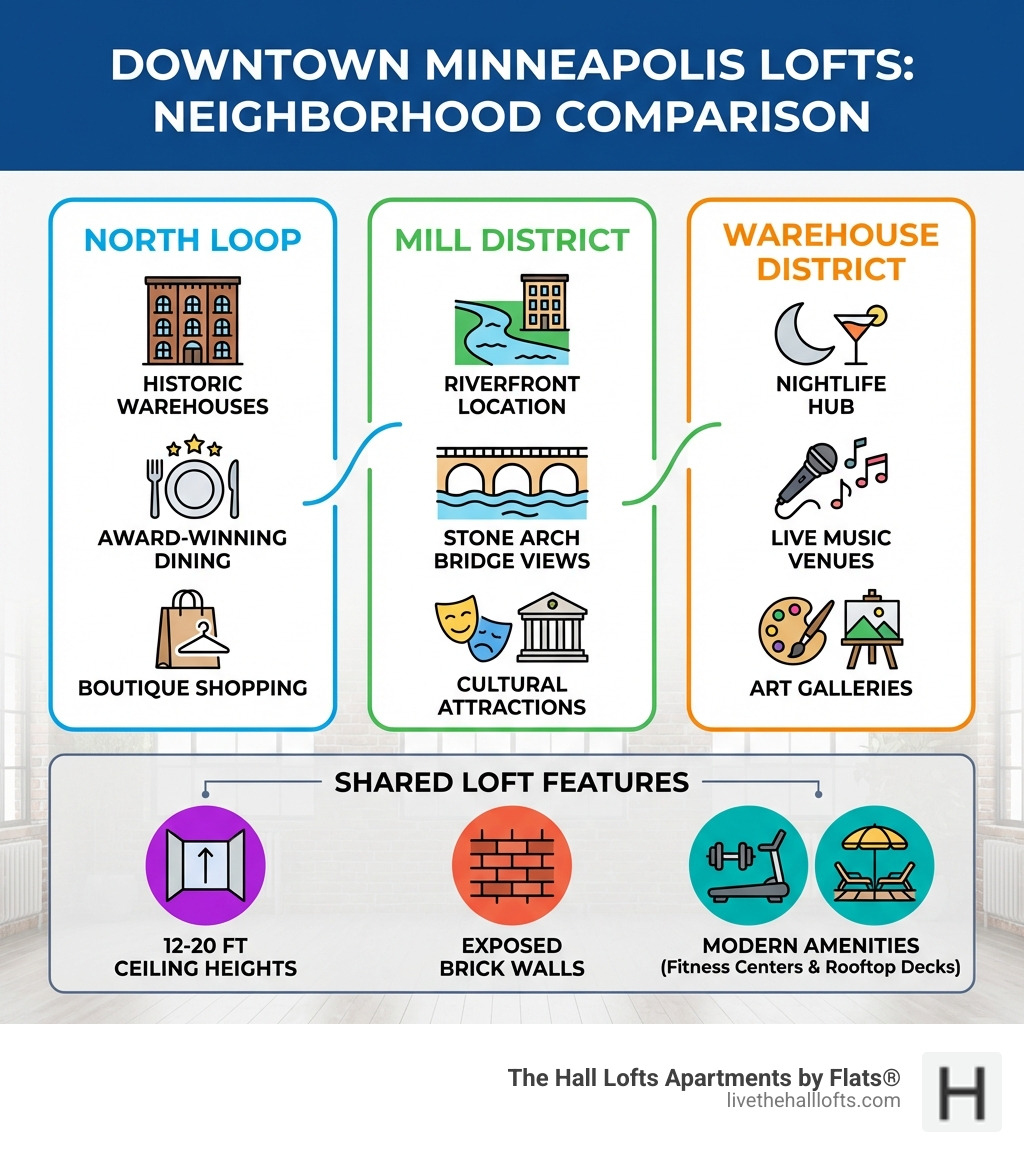
Each neighborhood offers distinct advantages. The North Loop features cobblestone streets and James Beard award-winning restaurants. The Mill District provides Mississippi Riverfront access and views of the Stone Arch Bridge. The Warehouse District delivers vibrant nightlife and art galleries.
Understanding these differences helps prospective residents find a space that matches lifestyle priorities—whether that's historic charm, river views, entertainment access, or pet-friendly features with two-pet policies.
Architectural Character and History of Local Conversions
When discussing downtown Minneapolis lofts, the term often refers to a distinctive architectural style shaped by the city's industrial past. These homes are defined by features that reflect their origins while supporting contemporary living.
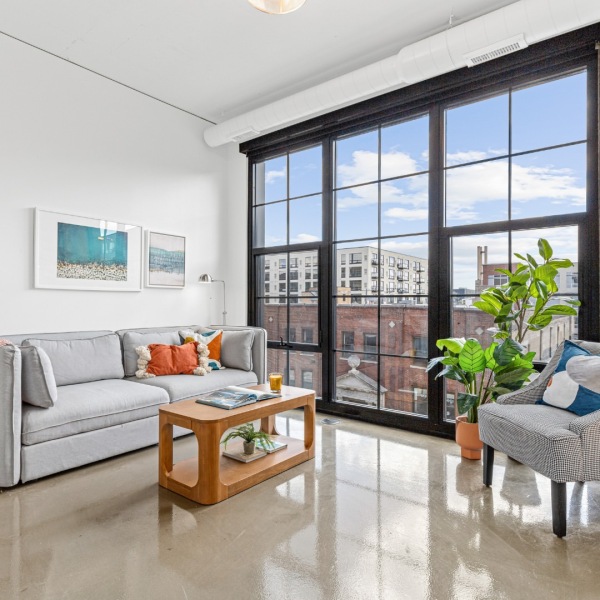
A defining characteristic of a downtown Minneapolis loft is its generous proportions. Ceiling heights often range from 12 to 20 feet, creating an expansive sense of space compared with conventional apartments that typically feature ceilings around 8 to 10 feet. This height contributes to the open atmosphere associated with loft living.
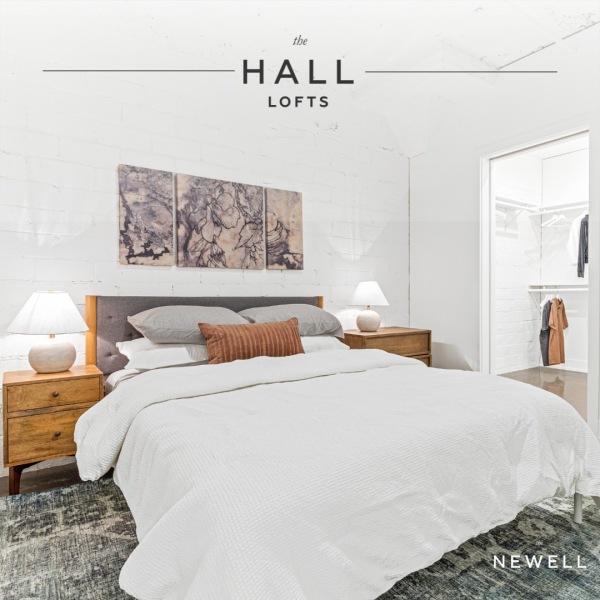
Beyond ceiling height, signature materials often reveal a building's original purpose. Exposed brick walls are a hallmark of many conversions, offering a textured backdrop that dates back to the late 1800s or early 1900s in some buildings. Original wooden beams may remain visible overhead, and many lofts feature durable concrete or hardwood floors. For related details, see exposed brick apartments Minneapolis guide, apartments with high ceilings, and lofts with concrete floors.
Large, oversized factory windows are another defining element. These windows were originally designed to maximize natural light for industrial workspaces and now bring substantial daylight into residential lofts while highlighting city views.
The history of loft conversions in Minneapolis is closely tied to adaptive reuse. This movement gained momentum locally during the 1990s and 2000s as former flour mills, textile factories, and warehouses—many built in the late 1800s and early 1900s—were repurposed into residences. These structures, designed to withstand industrial use, often proved well-suited to open layouts and long-lasting materials.
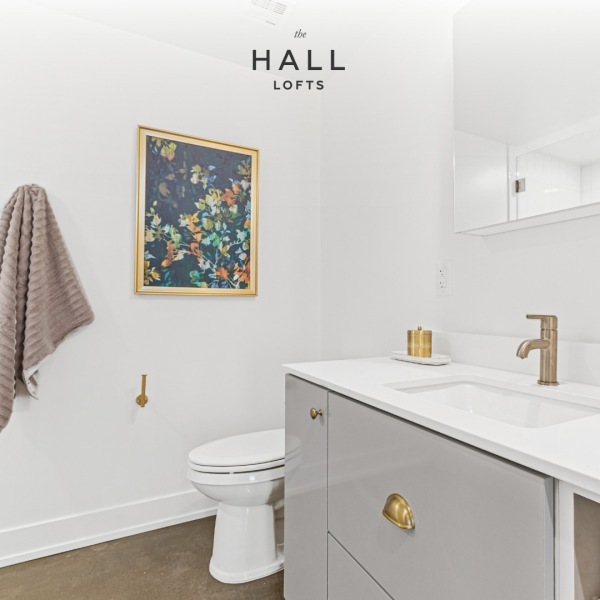
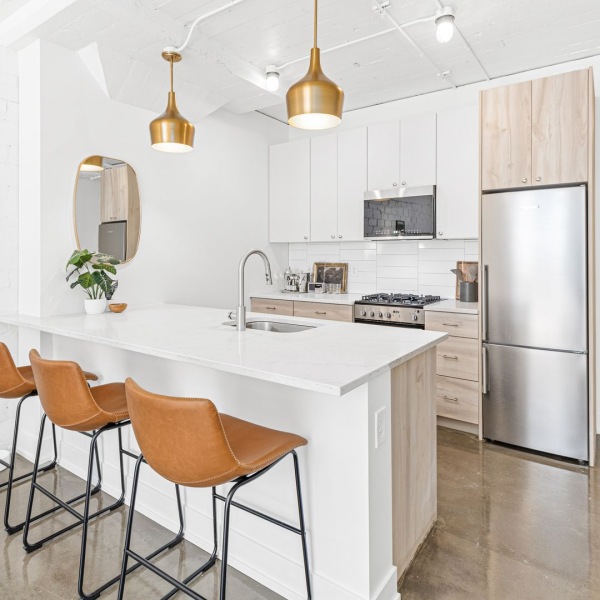
A notable example of this tradition is The Hall Lofts, comprising three buildings including two renovated warehouses and one newly constructed building, blending historic character with contemporary design in the North Loop neighborhood. This property reflects the broader pattern of adaptive reuse found throughout downtown Minneapolis, where former industrial buildings have been thoughtfully converted into modern residences that preserve original architectural details.
These properties represent ongoing efforts to preserve architectural heritage while meeting current urban living needs. More information is available in historic lofts for rent Minneapolis.
All property managers and real estate transactions, whether rental or purchase, must comply with fair housing laws. These laws prohibit discrimination based on protected characteristics and support equal access to housing opportunities. For more information, visit HUD Fair Housing resources.
Comparing Neighborhoods for Downtown Minneapolis Lofts
Choosing a downtown Minneapolis loft also means choosing a neighborhood. Each district offers a distinct style of urban living.
| Neighborhood | Defining Characteristics | Key Attractions/Lifestyle |
|---|---|---|
| North Loop | Historic warehouses, cobblestone streets, industrial-chic aesthetic | Acclaimed restaurants, boutique shopping, Target Field, nightlife, art galleries |
| Mill District | Mississippi Riverfront, skyline views, historic stone architecture | Stone Arch Bridge, Guthrie Theater, Mill City Museum, Gold Medal Park, river trails, cultural attractions |
| Warehouse District | Entertainment-focused downtown core | Nightlife, live music venues, diverse dining, art galleries, central downtown access |
The North Loop: Dining, Shopping, and Warehouse Conversions
The North Loop is a well-known destination for loft living in Minneapolis. Many loft conversions are located in restored warehouses that retain historic character. Cobblestone streets and a concentration of dining, boutique retail, and arts destinations shape the neighborhood’s day-to-day feel. Target Field is also nearby.
For area-specific options, see North Loop lofts for rent.

The Mill District: Riverfront Access and Cultural Landmarks
Just east of the North Loop, the Mill District is defined by proximity to the Mississippi Riverfront and views near the Stone Arch Bridge. Cultural institutions such as the Guthrie Theater and the Mill City Museum are central features of the area, and Gold Medal Park provides additional outdoor space. This neighborhood combines river trails and historic architecture with downtown convenience.
For more, visit lofts for rent in Mill District Minneapolis.
The Warehouse District: Entertainment and Downtown Energy
The Warehouse District is known for nightlife, live music venues, and a wide range of dining. Loft buildings in this area often share industrial character while placing residents close to downtown events and venues.
Across these neighborhoods, public transit options—including light rail and bus routes—support walkable access to many downtown destinations, with grocery, shopping, and services available throughout the area.
Essential Amenities and Lifestyle Considerations
Living in a downtown Minneapolis loft combines distinctive design with building features that shape daily routines.
In-unit laundry is a common convenience in many downtown Minneapolis lofts, reducing reliance on shared facilities. Community amenities vary by building and may include rooftop decks with city views, fitness centers, and co-working lounges. Some newer developments also include additional shared spaces designed for recreation and gathering.
Many downtown loft buildings are pet-friendly, and policies commonly allow up to two pets per apartment. Durable concrete or hardwood floors can be practical for day-to-day upkeep. Some properties also include pet-oriented amenities such as washing stations or proximity to nearby parks. Pet deposits, monthly pet rent, and any weight or breed restrictions vary by building, so reviewing an individual policy is important. Additional information is available at Minneapolis pet friendly rentals and dog friendly apartments Minneapolis.
Parking availability also varies. Some loft buildings include underground garages, while others rely on nearby parking facilities.
Open layouts can support flexible use of space, including work-from-home setups. Large factory windows typically provide strong natural light, and updated mechanical systems in renovated buildings are designed to support year-round comfort.
Digital accessibility is an ongoing consideration for housing providers and online services. Accessibility feedback and accommodation requests can be submitted through Zillow accessibility feedback.
Frequently Asked Questions about Urban Living
When considering downtown Minneapolis lofts, questions often focus on day-to-day living in these distinctive spaces.
How do seasonal changes affect downtown Minneapolis lofts?
Minneapolis has distinct seasons, and loft features such as high ceilings and large windows can influence comfort throughout the year. Many renovated loft buildings include modern HVAC systems designed to support consistent indoor conditions across seasons.
A notable winter convenience in downtown Minneapolis is the Skyway system. Some buildings offer direct skyway connections, which can make it easier to access parts of downtown.
In warmer months, rooftop decks and nearby trails (including along the Mississippi Riverfront) are common ways residents engage with outdoor space.
What are the noise considerations in downtown Minneapolis lofts?
Historic loft buildings often feature exposed brick walls, concrete floors, and open layouts. These surfaces can create a more open acoustic environment that some residents associate with classic loft character. Area rugs, window treatments, and other soft materials are commonly used to shape sound within a space.
Noise levels can vary by location and time of day, particularly in areas with a strong entertainment presence.
Are most lofts in the city pet-friendly?
Many downtown Minneapolis lofts are pet-friendly, and policies commonly allow up to two pets per apartment. Some buildings also provide amenities such as pet washing stations or convenient access to nearby green space. Pet deposits, monthly pet rent, and any applicable restrictions vary by property, so reviewing the building's policy is important.
Conclusion
Exploring the diverse world of downtown Minneapolis lofts reveals a rich mix of history, architectural distinction, and modern urban living. From the raw, industrial charm of exposed brick and towering ceilings to the vibrant pulse of distinctive neighborhoods, each loft option offers a distinct lifestyle experience.
Whether the draw is the culinary destinations and cobblestone streets of the North Loop, the riverfront views of the Mill District, or the nightlife and live entertainment of the Warehouse District, there is a loft suited to a wide range of preferences. These historic buildings, once cornerstones of Minneapolis's industrial past, have been thoughtfully transformed into contemporary homes, complete with sought-after amenities like in-unit laundry, fitness centers, and pet-friendly policies.
Understanding the nuances of architectural character, neighborhood atmosphere, and practical considerations like seasonal impacts and noise management supports an informed decision. The Hall Lofts, with a blend of renovated warehouse character and contemporary design in Minneapolis' North Loop, reflects the city’s ongoing loft conversion tradition.
To explore more and find the next urban home, visit the main page on Downtown Minneapolis Lofts.