Why the Minneapolis Warehouse District is the Ultimate Urban Playground
The minneapolis warehouse district, also known as the North Loop, is a vibrant neighborhood located just northwest of the downtown business district along the Mississippi River. Once an industrial shipping hub filled with brick factories, this historic area has transformed into a premier urban destination. Today, it is famous for its converted loft apartments, award-winning dining, local boutiques, and major entertainment venues.
Here is a quick look at what defines the district:
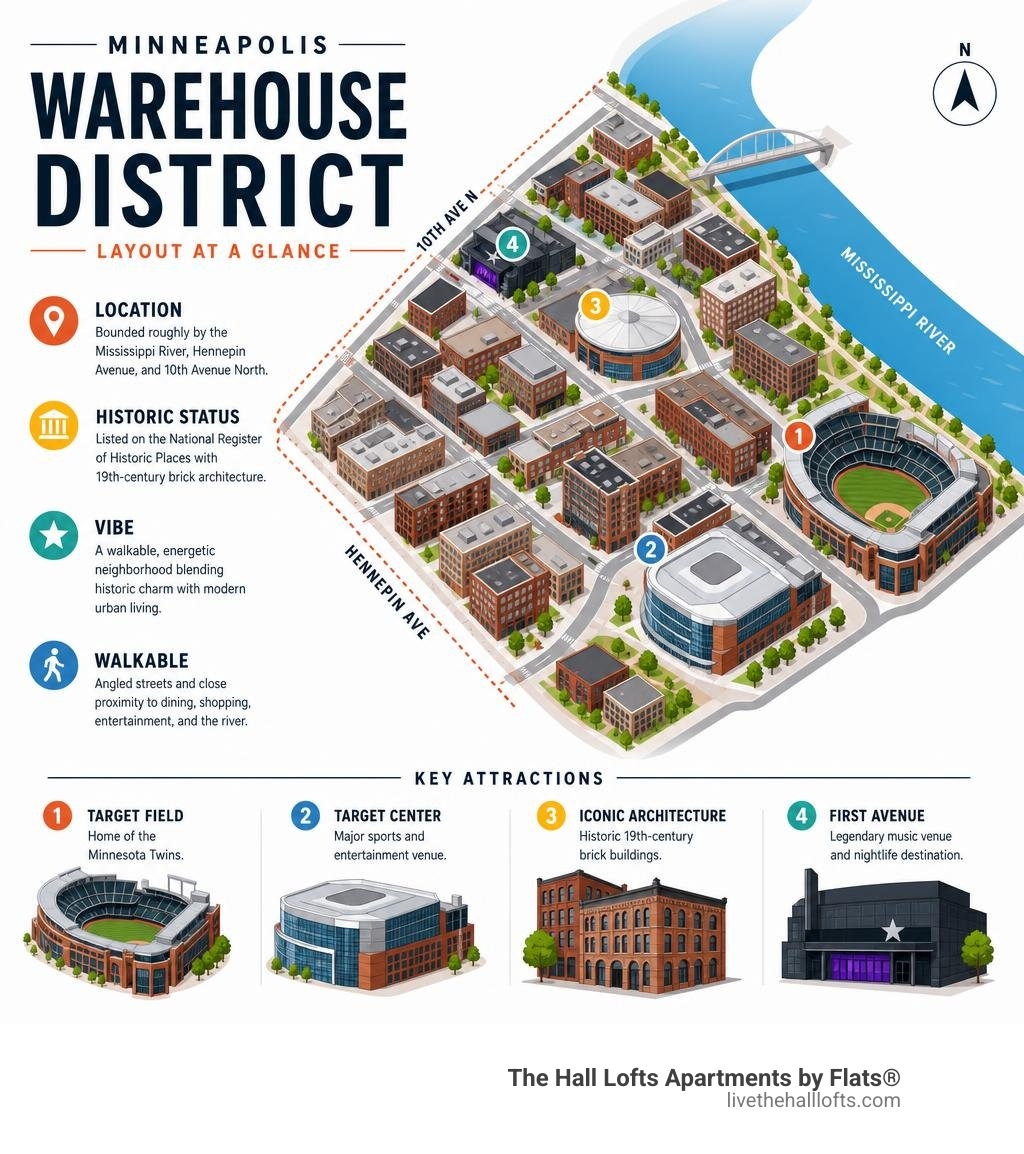
- Location: Bounded roughly by the Mississippi River, Hennepin Avenue, and 10th Avenue North.
- Historic Status: Listed on the National Register of Historic Places, featuring beautifully preserved 19th-century brick architecture.
- Key Attractions: Home to Target Field (Minnesota Twins), the Target Center, and iconic music venues like First Avenue.
- Vibe: A walkable, energetic neighborhood blending historic charm with modern luxury living, trendy breweries, and boutique shopping.
This neighborhood offers a unique lifestyle that is hard to find anywhere else in the Midwest. The historic brick buildings that once stored wholesale goods now house some of the city's best restaurants, creative office spaces, and modern residences.
Walking down the angled streets, the energy of a community that honors its past while embracing the future is palpable. It is a place where visitors and residents can grab a craft coffee in a renovated 1900s warehouse, shop for designer home goods, and walk to a major league baseball game all in the same afternoon.
History and Architecture of the Minneapolis Warehouse District

The foundation of the minneapolis warehouse district is deeply rooted in the late 19th and early 20th centuries. During this era, Minneapolis emerged as a primary commercial hub and distribution center for the Upper Midwest. The rapid expansion of the railroad network allowed businesses to ship and receive wholesale goods on a massive scale, turning the area into a bustling jobbing center.
To understand how this industrial engine evolved into a residential and commercial hotspot, exploring the History — MPLS Warehouse District archives reveals a story of incredible growth, mid-century decline, and eventual revival. Today, those same structures serve a new purpose, beautifully preserved as Historic Warehouse Lofts Minneapolis.
Industrial Origins and Railroad Expansion
The industrial boom began in earnest following the completion of the railroad network in 1867. This connection linked Minneapolis flour mills and manufacturing plants directly to national markets. Because land values were lower northwest of the central business district and offered immediate proximity to the rail lines, wholesalers quickly set up shop here.
The scale of this commercial hub was staggering:
- Wholesale trade originating from the district grew from $24 million in 1880 to $280 million by 1907.
- By 1919, wholesale trade reached the historic milestone of $1 billion.
- By 1920, approximately 300 warehouse businesses operated within the neighborhood.
Archival records, such as the Photo, Print, Drawing Minneapolis Warehouse District collection at the Library of Congress, showcase the sprawling rail yards and massive multi-story masonry structures that dominated the landscape during this golden age of distribution.
Architectural Styles in the Minneapolis Warehouse District
The physical environment of the district is defined by its heavy masonry construction and diverse architectural styles. Most buildings stand six to eight stories high, built to withstand the immense weight of stored machinery, dry goods, and hardware.
Rather than being purely utilitarian, these warehouses reflected the popular architectural trends of the late 1800s and early 1900s. Prominent architects of the era, including Cass Gilbert, Charles E. Bell, Warren Hayes, and Harry Wild Jones, were commissioned to design these commercial palaces.
Key architectural styles represented in the district include:
- Chicago Commercial: Characterized by large, uniform windows, steel frames, and brick cladding.
- Richardsonian Romanesque: Notable for heavy stone arches, rough-textured brickwork, and deeply recessed entryways.
- Italianate and Queen Anne: Featuring decorative cornices, ornamental brickwork, and arched window openings.
- Classical Revival: Displaying symmetrical facades, decorative columns, and formal entryways.
Today, these architectural details have been meticulously preserved. Many of these historic structures have been thoughtfully repurposed into Converted Warehouse Apartments, where residents enjoy original elements like exposed timber pillars, original brickwork, and soaring ceilings.
The Modern Evolution of the North Loop

The decline of the district began in the late 1920s and accelerated mid-century. Increased shipping rates, the rise of trucking, and manufacturers opting to ship directly to buyers left many of the massive warehouses vacant. However, this period of decline laid the groundwork for an incredible era of urban renewal and preservation.
For a detailed look at the geographical boundaries and modern transformation of this community, the North Loop, Minneapolis Wikipedia page provides an excellent overview. The shift from industrial to residential use paved the way for the highly sought-after Warehouse Loft Style Apartments that characterize the neighborhood today.
The 1980s Art Scene and Revitalization
Before the trendy boutiques and high-end restaurants arrived, artists saved the Warehouse District. In the 1970s and 1980s, the spacious layouts and massive open spaces of the vacant warehouses attracted a wave of local creatives, painters, and sculptors.
The epicenter of this cultural shift was the Wyman Building on First Avenue North. At its peak, this single building housed more than twenty contemporary art galleries, drawing thousands of visitors for weekend gallery openings. This artistic energy proved that the old industrial zone could become a vibrant public space, sparking the initial interest in residential conversions. More details on this transition can be found in the Minneapolis Warehouse District Guide.
Demographics and 21st-Century Growth
The 21st century brought unprecedented population growth and investment to the North Loop. What was once a quiet industrial zone after business hours has become one of the most densely populated and energetic residential neighborhoods in Minneapolis.
The demographic shift over the past few decades highlights this dramatic transformation:
| Year | Neighborhood Population | Percent Increase (Decade over Decade) |
|---|---|---|
| 1980 | 338 residents | -- |
| 2000 | 1,514 residents | -- |
| 2010 | 4,291 residents | 183.2% |
| 2020 | 7,540 residents | 75.7% |
This surge in residential density has fueled a commercial boom, bringing daily conveniences, parks, and local businesses straight to the doorsteps of neighborhood residents.
Top Attractions and Entertainment Venues
From professional sports to legendary music venues, the district is a major cultural powerhouse. Whether looking for daytime activities or late-night entertainment, the comprehensive guide on What to Check Out in the North Loop & Warehouse District highlights the best spots to visit.
Sports and Music Landmarks
The district is home to some of the most famous entertainment landmarks in the Midwest:
- Target Field: Opened in 2010, this open-air stadium is the home of the Minnesota Twins. It hosts more than 80 home games a year, bringing baseball fans right into the heart of the neighborhood.
- Target Center: Hosting over 1,000,000 guests annually, this arena completed a major $140 million renovation in 2017. It is home to the Minnesota Timberwolves and Minnesota Lynx, alongside major concert tours.
- First Avenue: Perhaps the most famous music venue in Minnesota, First Avenue is known for its exterior painted with silver stars commemorating iconic artists. It played a starring role in Prince's 1984 film Purple Rain.
- The Fillmore: A gorgeous 36,000-square-foot music venue that opened in 2020, bringing top-tier national touring acts to the neighborhood.
- Fine Line Music Cafe: An intimate live music venue that has hosted legendary acts and private events for decades.
For music and sports enthusiasts who want to live steps away from these legendary venues, exploring Industrial Lofts for Rent is the perfect way to join the neighborhood.
Dining and Shopping in the Minneapolis Warehouse District
The culinary and retail scene in the North Loop is nationally recognized. The neighborhood's historic spaces provide the perfect backdrop for innovative dining concepts and curated shopping experiences.
- Dining: The neighborhood features world-class dining, including wood-fired Italian at Bar La Grassa, modern French fare at Maison Margaux, Argentinian steakhouse dining at Porzana, and upscale comfort food at Borough and Parlour.
- Shopping: High-end boutique shopping thrives here. Highlights include MartinPatrick3 for custom menswear and home goods, PARC and Requisite for minimalist apparel, and James & Mary Laurie Booksellers, which houses over 120,000 books and 30,000 vintage records.
- Breweries: Craft beer lovers can take a self-guided tour of local favorites like Fulton Brewing and Inbound Brew Co., both offering spacious taprooms in converted industrial spaces.
To learn more about the best places to eat, shop, and live in this bustling micro-neighborhood, check out the Warehouse Apartments for Rent Guide.
Navigating and Experiencing the Neighborhood
Getting to and around the minneapolis warehouse district is incredibly easy thanks to its central location and robust transit infrastructure. The local community organization at the MPLS Warehouse District provides resources, maps, and updates to help visitors and residents navigate the streets.
Transit and Accessibility
The neighborhood is designed for ease of movement, offering multiple transit and walking options:
- Light Rail: The Target Field Station serves as a major transit hub, connecting riders to both the Blue Line (serving the airport and Mall of America) and the Green Line (connecting to downtown St. Paul).
- Bus Routes: High-frequency bus routes, including Route 7 and Route 14, run directly through the neighborhood.
- Biking & Walking: The neighborhood features dedicated bike lanes and direct connections to the Grand Rounds Scenic Byway and Mississippi River trails.
For those considering making the move to this highly accessible area, the Industrial Apartments Complete Guide provides excellent tips on choosing a residential space close to major transit lines.
Community Events and Late-Night Safety
The vibrant community spirit of the neighborhood is supported by active local programs and events. During the summer, the neighborhood streets host pop-up picnics, farmers markets, and fitness classes.
To support the late-night economy, the Mpls Downtown Improvement District runs the Warehouse District Live program. Every Friday and Saturday night from 11:00 PM to 3:00 AM, a dedicated Ambassador Program patrols key areas. These ambassadors are easily identifiable and provide:
- Directions and neighborhood information
- Safety escorts to vehicles or transit stations
- Welfare checks and direct communication with safety services
This active community presence ensures that the district remains a welcoming and energetic urban playground at all hours. For more details on neighborhood safety resources and community events, refer to the Complete Warehouse Apartment Guide.
Frequently Asked Questions about the Warehouse District
What is the history of the Warehouse District?
The district began as a major commercial and wholesaling hub in the late 19th century, spurred by the arrival of the railroad in 1867. During its peak period of significance from 1865 to 1930, it served as the primary distribution center for the Upper Midwest. After declining mid-century, it was revitalized in the 1980s by local artists and has since evolved into a premier residential and entertainment district.
What are the boundaries of the North Loop?
The North Loop is roughly bounded by the Mississippi River to the north and east, Hennepin Avenue to the south, and 10th Avenue North to the west. The streets run at a unique 45-degree angle relative to the rest of the city grid because they were originally aligned parallel to the Mississippi River to accommodate early industrial shipping.
Why is the district on the National Register of Historic Places?
The Minneapolis Warehouse Historic District was added to the National Register of Historic Places in 1989. It contains 159 historic buildings and three structures across a 30-block area, with 139 classified as contributing resources. It represents the largest concentrated collection of late 19th- and early 20th-century commercial wholesaling and shipping architecture in the state of Minnesota.
Conclusion
The minneapolis warehouse district successfully honors its rich industrial past while serving as a model for modern urban living. The historic brick facades and timber-framed warehouses that once drove the region's economy now provide the backdrop for a creative, energetic, and highly walkable community.
For those looking to experience this unique lifestyle firsthand, The Hall Lofts Apartments by Flats® offers renovated warehouse apartments in the heart of the North Loop. Combining historic charm with contemporary design, these homes feature modern amenities like in-unit laundry and welcoming, pet-friendly spaces accommodating up to two pets. To find the perfect space in this historic neighborhood, explore the Industrial Warehouse Apartments Guide and start planning your move today.